

























































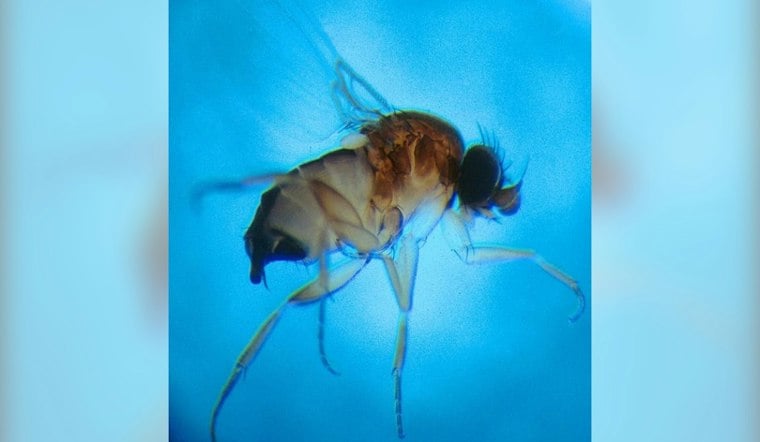
A mushroom pest with a decades-long history in southeastern Pennsylvania is challenging Chester County growers, with state officials saying the scuttle fly can destroy up to 40% of a crop in a single year. Sher-Rockee Mushroom Farms in Upper Oxford Township is testing insecticide-treated netting originally developed to kill malaria-carrying mosquitoes in Africa as growers search for alternatives to older chemical controls.
The scale of the threat and Sher-Rockee's response were reported by CBS News Philadelphia, which valued the region's mushroom industry at $1.3 billion. The mid-sized, family-owned farm produces roughly 200,000 pounds of mushrooms per week and worked with Swiss health technology company Vestergaard to adapt the treated nets for the 12-day spawning phase, according to CBS News. The report said the nets kill flies within 10 to 30 minutes of contact and that Sher-Rockee had lost nearly half its crop to the pest two years before installing them.
Why a Banned Pesticide Set the Stage
The current problem is not new. Penn State researchers say phorid flies have affected southeastern Pennsylvania mushroom farms since the 1940s. Growers used diazinon for decades before the EPA ruled in 2012 that the pesticide could no longer be used in mushroom production; Penn State researchers subsequently reported sharp year-over-year increases in phorid-fly populations across the region.
The insect at the center of the outbreak, the mushroom phorid fly known scientifically as Megaselia halterata, feeds on mushroom mycelium. Its larvae feed exclusively on mushroom mycelium, and adult female flies are specifically drawn to the aroma of active mycelial growth in compost during the early spawning phase, Penn State Extension explains.
State Steps In With Quarantine and Grant Money
Pennsylvania regulators have escalated their response. The state has required mushroom farms in Kennett and New Garden townships to perform high-temperature steam pasteurization, or a steam-off, between crop cycles to destroy adult flies, eggs and larvae, according to the Commonwealth of Pennsylvania. Penn State reports $500,000 in state grant funding, while CBS reports that the American Mushroom Institute helped secure $250,000 for phorid-fly mitigation.
The scale of what's at stake explains the urgency. A 250-square-mile area around Kennett Square in Chester and Berks counties produces more than half of all mushrooms grown in the United States, yielding more than 400 million pounds annually across hundreds of nearby commercial farms, Penn State Extension reports. Pennsylvania's mushroom industry is valued at $1.3 billion.
No Health Risk, but Neighbors Notice
Despite crop damage and swarms that can drift for miles on wind currents, officials say the flies do not pose a human-health threat. The Chester County Conservation District says they do not bite, spread human or animal diseases or create a public-health risk.
What the latest research and rules mean
Penn State Extension describes phorid flies as a nuisance pest, not a health concern: They do not sting, bite or vector human diseases. The extension service says infestations have reached more than 150 neighborhoods covering 242 square miles, helping explain why complaints extend beyond farm properties. The Pennsylvania Department of Agriculture's revised quarantine order, effective March 23, 2026, requires all Chester County mushroom growers to steam-treat mushroom houses and the growing medium between crops, along with adopting one of five additional fly-control treatments. The requirement represents the state's latest expansion of controls after diazinon was withdrawn from mushroom production.
The fly problem is adding to other operational pressures on growers. Hoodline has reported on the region's reliance on migrant labor, another challenge for farms operating in one of the country's most concentrated mushroom-growing areas.



