

























































The State Department announced it will continue denying visas to Mahmoud Abbas and other Palestinian officials, blocking the Palestinian Authority and Palestine Liberation Organization leader from traveling to New York for next week's United Nations General Assembly. It marks the second consecutive year the Trump administration has kept Abbas from addressing the world body in person, extending a punitive visa policy first imposed in August 2025.
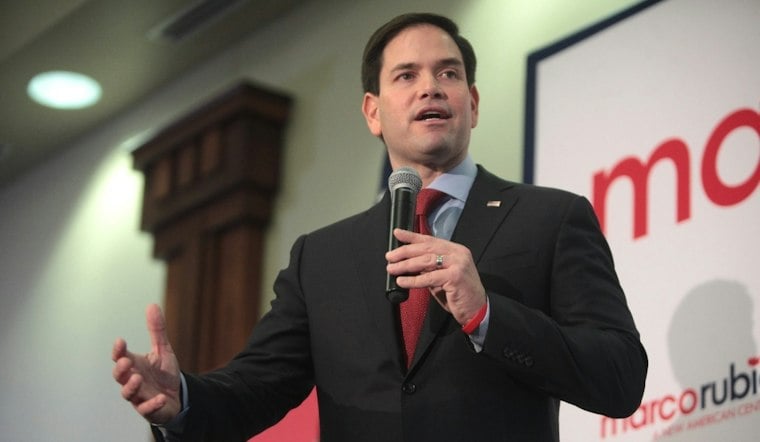
According to The New York Times, the State Department cited actions by Palestinian governing and political groups to justify the renewed denials, pointing specifically to attempts to bring cases before international tribunals and what it described as efforts to internationalize the Israeli-Palestinian conflict. The Times reported that Secretary of State Marco Rubio made the initial decision not to issue visas to Palestinian officials in August 2025, with the department at that time demanding that the PLO and Palestinian Authority consistently repudiate terrorism, end incitement to terrorism in education, and address the Hamas-led attack in Israel on October 7, 2023. The department also cited contacts between Palestinian officials and the International Criminal Court as part of its justification, and it suspended almost all types of visitor visas for Palestinian passport holders at that time, per the same account.
The Times reported that the State Department was extending those punitive visa measures, citing concerns about the Palestinian groups' practices and alleged payments to terrorists. The Trump administration broadly opposes Palestinians bringing cases to the International Criminal Court or International Court of Justice, the paper noted.
A Legal Obligation Washington Says It Can Override
The visa denial sits in tension with decades-old U.S. treaty commitments. The 1947 UN Headquarters Agreement addresses access to United Nations headquarters in New York, according to the New York City Bar Association.
The State Department maintains a long-standing position that Washington retains national security, anti-terrorism, and foreign policy exceptions under domestic immigration law that allow it to deny entry visas despite those host-country obligations, per CBC News. Even for delegates who are granted entry, State Department procedures have included geographic travel restrictions for some foreign officials.
Not the First Time a Palestinian Leader Has Been Shut Out
Questions about visa access for officials seeking to address the UN have arisen beyond the current case. The issue has also surfaced amid heightened bilateral tensions.
Last year's blockade prompted its own workaround. After the Trump administration denied visas to Abbas and roughly 90 members of the Palestinian delegation in September 2025, the UN General Assembly voted 145 to 5 to permit Abbas to address world leaders via a pre-recorded video link, according to The Guardian. That resolution let Abbas participate virtually while still barring his delegation from attending a simultaneous high-level two-state summit hosted by France and Saudi Arabia. Human rights groups including Democracy for the Arab World Now urged the General Assembly that same August to temporarily relocate its annual sessions to Geneva to counter U.S. visa denials against Palestinian representatives, arguing the move would uphold the 1947 Headquarters Agreement, per DAWN.
The Law Behind the Sanctions, and a Widening Global Split
A primary justification cited by the U.S. government for sanctioning Palestinian Authority officials is the continuation of payments associated with imprisoned Palestinians and families of deceased Palestinians, according to J Street. The 2018 Taylor Force Act conditions United States economic assistance to the Palestinian Authority on ending payments for acts of terrorism, including payments associated with imprisoned Palestinians and families of deceased Palestinians. The visa fight also unfolds alongside separate domestic legal pressure.
The renewed ban also lands as the diplomatic map around Palestinian statehood keeps shifting. Several Western states declared formal recognition or readiness to recognize Palestine during UN proceedings, according to the Straits Times. Those moves stand in contrast to Washington's continued exclusion of the one leader whose government those nations are increasingly recognizing.
Next week's General Assembly session in New York will once again test how the UN navigates a host country that is legally bound to admit delegates yet willing to invoke security exceptions to keep them out. Hoodline has also covered the broader security and political backdrop of this year's gathering, including plans for a UN Plaza rally over antisemitism concerns and local reaction to Mayor Mamdani's remarks on Israeli leadership.





