

























































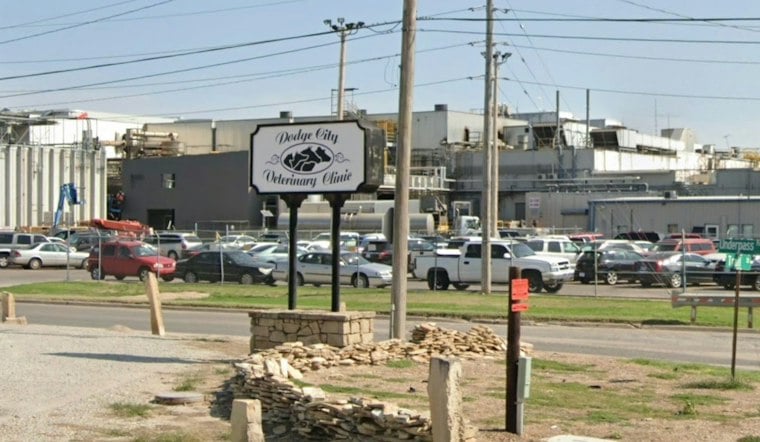
Cattle slaughter numbers across the country dropped sharply this week after federal immigration agents swept through southwest Kansas meatpacking communities, and industry groups say the disruption is already rippling through supply chains from feedyards to grocery store meat counters. Estimated daily U.S. cattle slaughter fell to 90,000 head on Thursday, down from 107,000 head just a week earlier, as workers missed shifts amid fear following the enforcement actions, curtailing operations at plants in Dodge City and Liberal.
Slaughter Numbers Plunge as Workers Stay Home
The drop, tracked through USDA daily slaughter estimates, was detailed by The Cattle Site, which reported the decline followed a wave of federal enforcement at plants that anchor the region's beef economy. Southwest Kansas is home to four major beef processing facilities that together account for roughly 22% of the nation's total grain-fed beef supply, according to Kansas Livestock Association and USDA statistics cited by KCUR. That concentration means any disruption in Dodge City, Garden City or Liberal is felt far beyond Kansas.
The volatility showed up almost immediately in commodity markets. Chicago Mercantile Exchange live cattle futures dropped 2.55 cents per pound on Tuesday after rumors of ICE raids spread among traders, before rebounding 2.90 cents the next day as the market reassessed processing delays, the same outlet reported. Four major packing plants across Liberal, Garden City and Dodge City employ more than 10,000 residents combined, and shifts were partially delayed Wednesday after unmarked federal vehicles conducted traffic stops along worker transit routes, according to The Iola Register.
Cattle Groups Say Costs Are Already Piling Up
The Oklahoma Cattlemen's Association issued a joint statement with the Kansas Livestock Association and Texas Feeders Association describing reports of thousands of fed cattle slated for shipment to processors being delayed, causing millions of dollars in lost revenue, according to the joint statement covered by KOSU. The groups said they respect federal authorities' responsibility to enforce the law, but stressed that the cattle industry and rural communities depend on a stable workforce, and that sudden workforce disruptions can create immediate consequences for animal welfare, industry operations and the broader economy.
The statement described a chilling effect the groups say goes well beyond any single detention, warning that ICE operations have had a massive chilling effect on legal, documented and skilled workers. The groups said the resulting disruptions are creating multiple supply-chain chokepoints, spanning feedyards, dairies, processors, feed and grain companies, transportation hubs and community services. They added that harm from the operations tends to last days and weeks after the enforcement actions themselves conclude, and warned the disruptions will ultimately lead to higher beef prices for consumers.
No Advance Notice for Local Officials
Municipal leaders and law enforcement in Dodge City, Garden City and Liberal issued their own joint statement confirming federal authorities gave them no advance notification before the operations began, according to the Kansas Press Association. Local leaders emphasized that city police had no operational control over the federal enforcement activity and urged federal officials to respect due process and communicate clearly with affected employers and communities, according to the joint statement cited by KOSU. The same officials said any enforcement should be conducted lawfully, orderly and transparently.
Kansas U.S. Sen. Jerry Moran spoke with Department of Homeland Security Secretary Markwayne Mullin about coordinating federal agents with local law enforcement, according to the JC Post. Sen. Roger Marshall also made public statements about coordination with local law enforcement. Moran said Mullin told him the warrants involved individuals charged with criminal activity. The attention to coordination reflects the economic stakes for a state where meatpacking underpins entire local economies.
Anxiety Spreads Into Schools
The disruption has not stayed confined to processing plants. Dodge City Public Schools sent a message to families this week. In Great Bend, families were asked to update contact information, and community anxiety was acknowledged, per the Great Bend Post. These developments underscore how enforcement concerns have touched family life beyond the plant floor.
The Texas Cattle Feeders Association, one of the three groups behind the joint industry statement, represents feedyards across Texas, Oklahoma and New Mexico that market roughly six million fed cattle annually, accounting for more than 25% of total U.S. fed cattle production. Federal immigration enforcement across Kansas falls under ICE's Enforcement and Removal Operations Chicago Field Office, which oversees a six-state region including Illinois, Indiana, Wisconsin, Missouri, Kentucky and Kansas, a jurisdiction Hoodline detailed in coverage of workplace disruptions elsewhere in that same field office territory.
Drought and Import Policy Add to the Squeeze
Cattle producers say the enforcement disruptions are landing on top of an already strained industry. Drought conditions continue across much of Oklahoma and the surrounding region, forcing some producers to haul water to their animals and consider selling cattle earlier than planned, according to the joint statement reported by KOSU. Meanwhile, the Trump administration's plans to import more beef to bring down historically high retail prices could cost Oklahoma producers in the long term, the groups said.
Hoodline previously reported that President Trump ordered a 90-day expansion of imported ground beef quotas in August, a move that drew opposition from groups including R-CALF USA and the National Cattlemen's Beef Association. That decision followed a summer in which Tyson had already shut beef plants in Illinois and Utah as the national cattle herd hit a 75-year low. Cattle industry groups argue that ICE-related workforce disruptions are compounding costs that were already mounting for producers before the enforcement sweeps began.





