

























































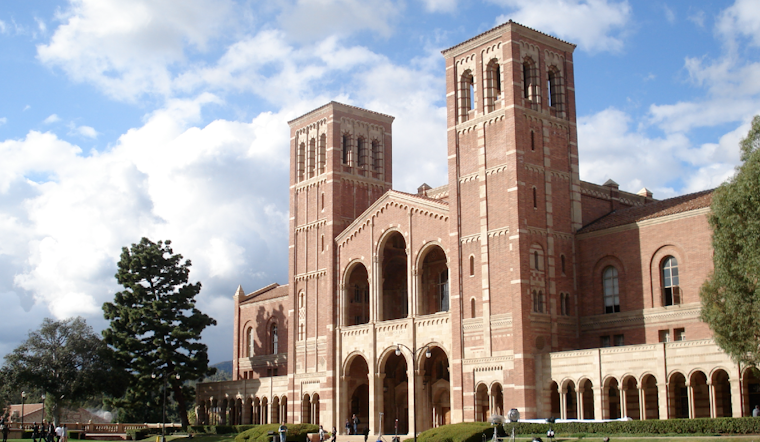
Los Angeles's only Hispanic classical theater festival is coming back to Westwood this fall, and every performance is free to attend. LA Escena, now in its fifth edition, runs from September 17 through October 5 at UCLA's Macgowan Hall, bringing local and international artists together to reinterpret centuries-old Spanish-language drama for contemporary audiences.
According to Secret Los Angeles, the festival is organized by UCLA's Diversifying the Classics program and requires advance ticket reservations even though admission is free. The initiative behind it was established in 2014 under UCLA Professor Barbara Fuchs, who was named the Humanities Division's inaugural associate dean for public and engaged humanities in September 2025, according to UCLA. LA Escena itself debuted in 2018 as the city's first Hispanic classical theater festival, and has run biennially ever since, with prior editions in 2020, 2022 and 2024.
Opening Night and a Bawdy Comedy of Manners
The festival opens on September 17 at 7 p.m. in Macgowan Hall's Little Theater with “Historias Amorosas No Tan Ejemplares o Lo Que Pasa en el Sarao se Queda en el Sarao,” a production by Paola Izquierdo drawing on the works of Sor Juana and María de Zayas. The piece leans into love, lust, humor and heartbreak, per the seed story's rundown of the festival lineup.
The next night, September 18 at 7 p.m. in the Little Theater, brings “La Casa de Empeños,” Christian Nájera Jiménez's adaptation inspired by Sor Juana Inés de la Cruz's “Los Empeños de una Casa.” Later that same evening, at 8:30 p.m., the Spanish troupe Jóvenes Clásicos performs “Canciones de Olmedo,” a musical adaptation of Lope de Vega's “El Caballero de Olmedo” featuring 10 original songs. The Málaga-based company has a history with the festival: it previously recorded the same musical adaptation at Antonio Banderas's Teatro del Soho CaixaBank for a virtual broadcast during LA Escena's 2020 edition, according to Vida Económica.
A Scholarly Lecture and a Second Jóvenes Clásicos Show
On September 19, Macgowan Hall's Little Theater hosts two very different offerings. At 7 p.m., Los Angeles company theatre dybbuk presents “La Celestina: An Illuminated Lecture,” exploring class, gender and identity through a blend of dramatic reading, live music and scholarly commentary. The production reprises one that premiered in April 2026 at the Philosophical Research Society with commentary from Professor Fuchs, according to theatre dybbuk. At 8:30 p.m. the same night, Jóvenes Clásicos returns with “Amar Después de la Muerte,” set during the War of the Alpujarras and examining the impact of Spanish history on the Morisco community.
Also on September 19, at 4 p.m. in the Studio Theater, the festival presents “Donde Comen Dos, Comen Tres,” a new English-language adaptation by Abe Zapata Jr. based on Lope de Vega's “El Perro del Hortelano.” Set in 1940s Los Angeles, the play follows a Mexican-American family farm after its owner dies. The adaptation grew out of the Golden Tongues initiative, co-founded in 2013 by Fuchs and Jon Lawrence Rivera of Playwrights' Arena, which commissions local writers to reimagine 17th-century Spanish comedia in contemporary Southern California settings. That body of work was collected in 2024 in “Golden Tongues: Adapting Hispanic Classical Theater in Los Angeles,” a Bloomsbury/Methuen Drama anthology of seven adaptations touching on gentrification, racial identity and political scandal.
Closing Weekend Turns to Power, Lies and a Hidden Identity
September 20 brings a double bill to the Studio Theater. At 2 p.m., “Beast Among Men” — Nicholas Pilapil's modern adaptation of Calderón de la Barca's “Life Is a Dream” — explores politics, power, secrets and ambition through a story connecting a sex worker and a politician. Pilapil received the Golden Tongues commission from Playwrights' Arena and UCLA's Diversifying the Classics in September 2025 to write the piece, according to information from Nicholas Pilapil. At 3:30 p.m. that same day, “The Liars” takes the stage — Roger Q. Mason's modern adaptation of Alarcón's “La Verdad Sospechosa,” following a social media influencer whose lies to protect his lifestyle and online fame eventually catch up with him.
The festival closes on October 5 with “The King Born a Woman,” a virtual reading streaming live from New York at 4 p.m. Pacific time. The play follows King Charles “the Fair,” who hides a secret about his identity while his kingdom faces unrest. It is presented in collaboration with Diversifying the Classics as part of “Hispanic Golden Age Classics,” an ongoing multi-year partnership between UCLA and New York's Red Bull Theater that produces world-premiere English translations and staged readings of overlooked early modern Spanish dramas.
A Historic Venue Rooted in Westwood
All of the in-person performances take place at Macgowan Hall, the UCLA School of Theater, Film and Television's primary theatrical complex since it opened in 1963. The building, home to the Little Theater and Studio Theater and named for theater scholar Kenneth Macgowan, houses the nation's first university program to combine theater, film and television studies, according to the UCLA School of Theater, Film, and Television.
UCLA's push to widen access to Hispanic classical literature extends beyond the stage. In August 2026, the university announced a new initiative led by Fuchs and scholars from the Universidad Nacional Autónoma de México to adapt 17th-century Spanish plays like Lope de Vega's “Fuente Ovejuna” into illustrated children's books, part of an effort to bring the same source material to younger, Spanish-speaking readers. With reservations required but no cost to attend, LA Escena's fifth edition gives Los Angeles audiences three weeks to catch a decade of scholarship and adaptation play out on a Westwood stage.





