

























































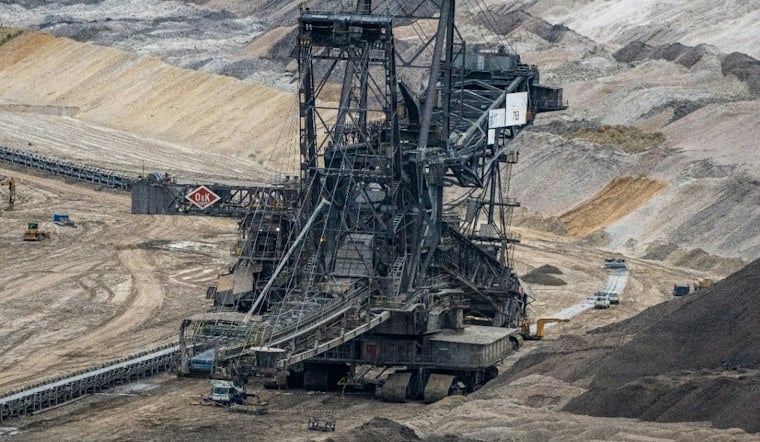
Ohio regulators have approved a 149-megawatt solar farm paired with 149 megawatts of battery storage on a former coal mine in Vinton County. The Ohio Power Siting Board authorized Hamden Energy LLC on August 20, projecting 300 construction jobs and 11 permanent operating positions, according to the Ohio Power Siting Board.
The approved permit calls for the project to occupy 945 acres within a larger 1,336-acre footprint in Clinton Township, according to the Ohio Power Siting Board. State rules require minimum setbacks of 300 feet from non-participating residences and 150 feet from public roads. The developer, Recurrent Energy, proposed the project on land that was once part of the Sands Hill strip mine, and no parties in the case formally opposed it, as reported by Columbus Underground.
The project would put a new energy facility on land shaped by Vinton County's extractive-industrial history. Ali Trunzo, Recurrent Energy's senior development manager, told Columbus Underground that “Developing a solar project on reclaimed land is an excellent opportunity to harvest another one of the area's abundant resources to power Ohio while providing supplemental tax revenue to support a legacy energy community.”
Reclamation Comes First
The approval does not permit Recurrent Energy to begin construction immediately. Surface mining permit holder Cheyenne Resources must first complete the property's required reclamation, a condition confirmed by both Michigan Grid and Columbus Underground. Recurrent Energy has agreed to wait until that work is finished. About 25 people commented in the case docket or spoke at a June 10 local hearing; the most common concern was whether reclamation would be completed in time, according to Canary Media.
What Public Records Show About Mine Reclamation
State reclamation programs remain a substantial undertaking. According to the Ohio Department of Natural Resources, Ohio continues to operate programs addressing abandoned mine lands. The work required at former mine sites helps explain why completion of Cheyenne Resources' required reclamation is a central condition of the solar project's approval.
ODNR spokesperson Andy Chow confirmed that Cheyenne Resources, which holds the surface mining permit for the property, remains responsible for that work. The dynamic echoes an earlier Vinton County solar project: Ohio regulators approved Invenergy's 125-megawatt Vinton Solar Energy Center back in 2018, and the facility remains in pre-construction.
A Different Siting Context
Former mine land and industrial brownfield projects tend to draw less opposition than proposals sited on active farmland, where critics have often raised concerns about taking cropland out of production. Solar advocates counter that the technology can coexist with some farming practices and that solar installations occupy less land statewide than Ohio's golf courses. Still, brownfield and mine-land projects can cost more to build than greenfield sites because of site conditions and remediation needs, according to RMI, and Hamden Energy may require specialized construction methods and equipment to adapt to the site's soils and terrain. Trunzo declined to provide cost information about the project.
State lawmakers have tried to smooth that path. Ohio House Bill 15, signed into law in May 2025, created Priority Investment Areas on former coal mines and brownfields, according to the The Nature Conservancy. Ohio has more than 70,000 acres that might qualify as priority investment areas, according to RMI data, and rules from the Ohio Department of Development took effect two months before this story, with two sites designated through late August, one of them combining former coal mine land with an industrial site. Brian Bohnert said Ohio has started to identify its first priority investment areas under the program, per Canary Media, as cited by Columbus Underground.
The Broader Siting Environment
The 2021 law known as Senate Bill 52 erected extra hurdles for solar and wind power that it did not impose on fossil fuel generation, and Ohio clean energy developers continue to face bans or project vetoes under that law. State regulators have blocked projects based on unanimous local government opposition. Vinton County's willingness to host Hamden Energy — its board of commissioners did not move to block the project — stands out against that backdrop.
The approval comes as Ohio regulators pursue multiple types of generation. On the same day the board authorized Hamden Energy, it approved Chestnut Run Energy LLC's proposed 1,300-megawatt natural gas-fired power plant in Carroll County, according to the Ohio Power Siting Board. The contrast highlights the range of projects being considered as electricity demand is projected to grow.
The Next Policy Test
The Ohio Senate passed Senate Bill 294 in the spring, and the bill is now before the Ohio House of Representatives. Industry advocates warn the measure could create another barrier for renewable projects, as Hoodline previously reported. The Ohio Environmental Council, which participated in the Hamden Energy case, has argued that projects using former mining land can help add sustainable and affordable generation; the group also cautioned that unresolved siting problems could contribute to higher energy costs as demand rises.
The timing of Hamden Energy's power delivery after construction remains a future consideration. Former mine lands and industrial brownfields are part of the broader clean-energy siting discussion.





