

























































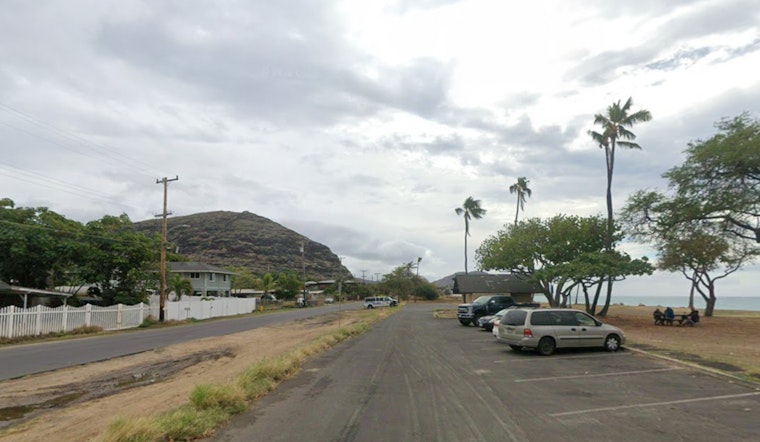
Roughly 65 people living near Lualualei Beach Park on Oahu's Waianae Coast had struck a deal to clean up their encampment and stay put, but the city moved ahead with a Stored Property Ordinance enforcement operation there this week anyway. Residents say they were notified weeks in advance, yet the sweep still landed as a blow after months of preparation aimed at avoiding exactly this outcome.
The enforcement, conducted by the City and County of Honolulu, followed a cleanup agreement involving residents, a nonprofit supporting them, and local lawmakers, according to Hawaii News Now. That agreement had allowed residents to remain in the area if they kept it clean and worked with the nonprofit, with conditions that included removing trash, keeping bathroom areas and walkways clear, and working with an outreach group on weekly check-ins. Chan, who has lived at Lualualei Beach Park for 20 years, said another city sweep of the area had become overwhelming.
A Deal That Didn't Hold Off the City
Lena Suzuki, a member of the Suzuki Foundation, had requested additional dumpsters and bins to help residents clean up ahead of the enforcement but did not receive a response to that request, the outlet's report notes. She said she was frustrated that the sweep would still move forward despite the agreement her organization had helped broker. Tropical Storm Lala made it more difficult for residents to maintain the area in the weeks before enforcement, adding another obstacle to a cleanup effort already running against the clock.
The city had planned the sweep for months, and stored property ordinances are set ahead of time, meaning the September date was not a surprise addition to the calendar. Residents were told about the September enforcement during a cleanup on July 11, and they later received a checklist and resources meant to help them prepare for what was coming. City officials say areas being cleaned are not meant for permanent living, and that they will connect people with housing and other resources as part of the operation.
Outreach Continues at Nearby Chapel
The city says it will continue outreach efforts even as enforcement proceeds, and lawmakers have said residents were expected to work toward permanent housing rather than returning to the park. People can connect with available services and receive hot meals at outreach held Mondays and Wednesdays from 5 to 6 p.m. at Paradise Chapel in Maili, giving displaced residents a consistent point of contact even after their belongings are cleared.
Honolulu City Councilmember Andria Tupola has pushed for stricter enforcement at Lualualei Beach Park for years, having introduced a resolution in October 2023 urging the Department of Parks and Recreation and Honolulu Police Department to address unsanitary conditions and illegal encampments there. Tupola also established the Restore, Reconnect, Revive outreach initiative in 2021 to pair community cleanups with social service referrals across West Oahu's District 1.
Bigger Investments, Tighter Rules
The city's firmness at Lualualei tracks with a broader pattern of capital investment and tightened enforcement along the Waianae Coast. Honolulu completed a $400,000 renovation of the park's public restrooms, nearly destroyed in a January 2024 arson fire, and held a community blessing ceremony to mark their reopening in July, a project Hoodline previously covered. The city also ordered a two-week closure of the park in September 2024 for deep maintenance and Stored Property Ordinance enforcement, an operation that closed a half-mile stretch between the wastewater plant and Ala Poko Street.
Under Chapter 29 of the Revised Ordinances of Honolulu, city crews must provide written notice at least 24 hours before impounding personal items left on public property, and impounded belongings must be held for 30 days so owners can retrieve them, according to the ACLU of Hawaii. Retrieving items carries a $200 reclamation fee, though waivers can be requested. Honolulu's City Council has separately advanced Bill 53, which would create criminal penalties, including fines up to $2,000 or 30 days in jail, for unauthorized shopping cart use, a measure Hoodline reported on last month.
Questions Over Where People Go Next
Long-term shelter construction at Lualualei itself has been ruled out because the park sits in a high-risk flood zone, which is why state and city officials selected Kea'au rather than Lualualei for a community-focused kauhale shelter village. That leaves displaced residents dependent on programs like the city's Crisis, Outreach, Response and Engagement unit, which the City Council voted to audit in September 2025 amid concerns it had become more of a medical triage service than a pipeline into permanent housing, as reported by Honolulu Civil Beat.
The tension between enforcement and housing capacity comes even as the island's overall unsheltered numbers have dropped. Oahu's 2026 Point-in-Time count recorded a 20% decrease in unsheltered homeless individuals, one of the most significant reductions in recent years, according to KHON2. But for the roughly 65 people who called Lualualei Beach Park home this week, that citywide progress offered little certainty about where they would sleep once the sweep was complete.





