

























































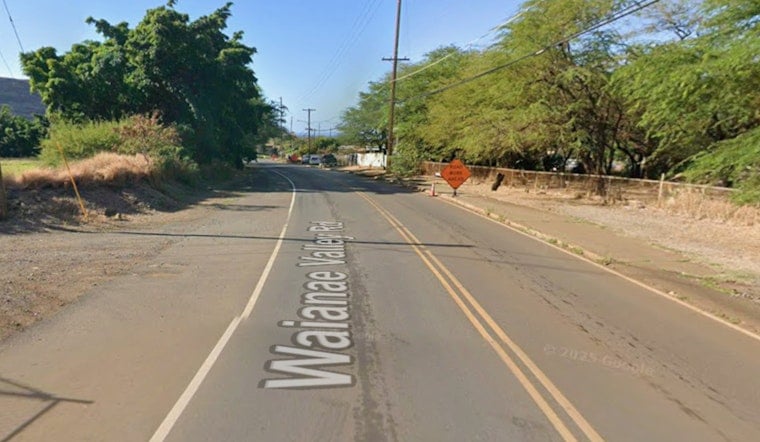
A Waianae family that survived a mass shooting on Waianae Valley Road in August 2024 is now suing the City and County of Honolulu, claiming that years of ignored warnings about an illegal party venue next door allowed a deadly rampage to unfold. The Keamo family has also named the widow of gunman Hiram Silva in the lawsuit, arguing that city agencies were negligent enough to set the stage for fatal violence.
The suit, filed as both a federal civil rights case and a state court lawsuit, centers on the so-called Silva Dome, an unpermitted party venue the Silvas built illegally around 2018 on agricultural property, according to Hawaii News Now. The Silvas reportedly rented out the dome for parties at rates between $3,000 and $5,000 a night, according to the outlet's reporting. Attorney Michael Green, representing the Keamo family, said, “There were threats to kill our clients. They just passed the buck.”
Years of Warnings Before the Attack
City records reviewed by Civil Beat show that during a March 2021 inspection of the Silva Dome, Hiram Silva told a city building inspector he had a gun in his car — but Honolulu Department of Planning and Permitting Director Dawn Apuna said the inspector never contacted police because Silva made no explicit threat. The inspector instead issued a violation notice for the unpermitted tent structure and left. The following month, in April 2021, the city building department told the Silvas the dome was illegal and should be removed, and Silva separately made a recorded threat against the Keamo family, per Hawaii News Now's account. The city did not enforce the removal order despite additional complaints, the outlet reports.
DPP officials have said inspectors lack legal authority to enter private land without an owner's consent, and cannot cite illegal venue operators unless an inspector personally witnesses an active unpermitted event — a constraint that, per Civil Beat's reporting, left the department with little practical ability to shut down the Silva Dome even after violations piled up. The department also routinely prioritized short-term rental enforcement over event spaces like the dome, according to the same reporting. The dome reportedly had other serious violations during the COVID-19 pandemic as well.
The August 2024 Attack
The shooting unfolded on August 31, 2024, after the Keamos confronted the Silvas about reckless driving during another party at the dome, Hawaii News Now reports. Hiram Silva then drove a bulldozer loaded with fuel barrels into his neighbors' house during a mah-jongg party, according to the outlet. Civil Beat's reporting adds that Silva fired bullets into four 55-gallon fuel drums mounted on his front-end loader while ramming vehicles into the family's carport, partially collapsing the structure.
Silva opened fire during the attack, killing three young women — Courtney Raymond-Arakaki, Cherell Keamo and Jessyca Amasiu — and wounding two other people, per Hawaii News Now. Rishard Keamo-Carnate then shot and killed Silva in self-defense, using a gun the family had purchased because of Silva's earlier threats. Honolulu Police Chief Arthur Logan confirmed that Silva carried two unregistered firearms, a pistol and a long gun, during the attack, while Keamo-Carnate fired a legally registered handgun, according to Civil Beat.
No Charges for the Man Who Stopped the Shooter
Honolulu Prosecuting Attorney Steve Alm declined to file criminal charges against Keamo-Carnate, concluding he acted in lawful self-defense and defense of others, Civil Beat reported in September 2024. Keamo-Carnate had initially been arrested on suspicion of second-degree murder the night of the shooting before prosecutors cleared him. An official toxicology and autopsy report released in December 2024 found that Silva was intoxicated when he launched the attack, according to Hawaii News Now, findings that raised further investigative questions about how he obtained his weapons.
The Family's Legal Argument
Michael Green said the Silvas were making significant money from the dome and viewed his clients as a threat to that business. In the lawsuit, the Keamo family's attorneys allege that police and other city agencies were negligent enough to create the conditions for fatal violence. The complaint states that the August 2024 tragedy was not unforeseeable, arguing the city's refusal to enforce its own laws allowed the misconduct to escalate. Attorney Peter Hsieh said the shooting was highly likely preventable if DPP and the Honolulu Police Department had done their jobs.
The city has declined to comment on the lawsuit, and Silva's widow has also declined to comment. David Lazar said he needed more information about the case, adding that police would apologize and improve if it turned out the department had mishandled it. The city is expected to argue in federal court that any agency neglect would not rise to the level of a civil rights violation.
A High Legal Bar for Municipal Liability
The federal portion of the case will be closely watched because it is expected to be the first test of whether the alleged neglect constitutes a civil rights violation. Under 42 U.S.C. Section 1983, known as the Monell doctrine, establishing municipal liability requires plaintiffs to prove a city custom or policy demonstrated deliberate indifference to constitutional rights rather than basic negligence, according to Lawfare. Federal courts do not allow vicarious municipal liability for the actions of individual employees, which sets a high bar for the Keamo family's federal claim.
The case arrives against a backdrop of documented dysfunction at the city's permitting agency. Honolulu's Department of Planning and Permitting was hit by a federal corruption probe in 2021 in which five former department employees were indicted for taking bribes to accelerate permits and overlook code violations, Civil Beat has reported, noting that the Honolulu Ethics Commission had warned of lax oversight as early as 2012.
Legislative Fallout
The shooting also spurred state lawmakers to act. Hawaii State Representative Darius Kila pushed for legislative reforms to clarify the state's self-defense laws and remove ambiguity around a resident's right to use deadly force on private property without a duty to retreat, though six related self-defense bills failed to receive committee hearings during the 2024 legislative session. Separately, Representative Diamond Garcia announced plans to introduce legislation requiring mandatory written follow-up documentation from city inspectors whenever residents file nuisance property complaints, after neighbors reported feeling repeatedly ignored by municipal authorities.





