

























































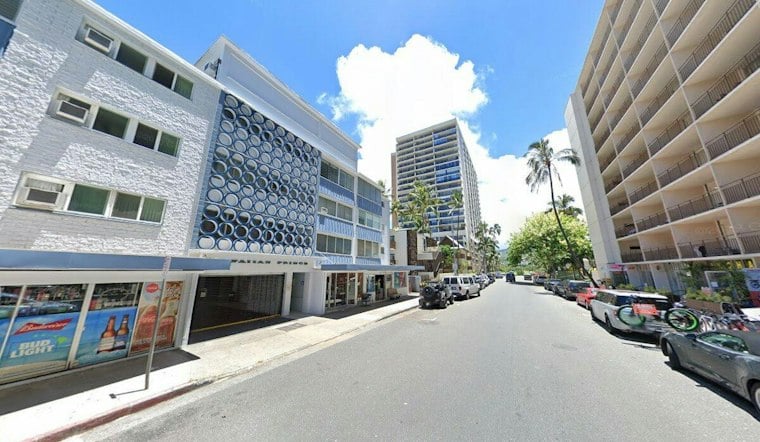
Shareholders at the Hawaiian Prince, a Waikīkī housing cooperative built in 1959, are facing a one-time special assessment of $3,770 per unit and higher monthly maintenance charges through the end of 2026. The documented increase for the Campagnas was from $1,216 to $1,844 per unit, an increase of approximately 152%. For one couple who owns two units, the first bill under the new charges came to $11,234.
How the Hawaiian Prince charges add up
Don and Eileen Campagna own two units at the Hawaiian Prince. According to Honolulu Civil Beat, their monthly charge for each property rose from $1,216 to $1,844. With the $3,770-per-unit special assessment included, their first bill for both units totaled $11,234. Eileen Campagna said the couple planned to pay the assessment by the end of 2026, the report said. Hawaiiana Management Co., which manages the property, set July 1, 2026, as the assessment deadline.
The Hawaiian Prince is built on land leased from the Queen Emma Foundation, meaning shareholders pay lease payments in addition to maintenance fees and property taxes, according to Civil Beat’s reporting. The cooperative’s board approves its annual budget, maintenance fees and special assessments, so recurring charges and one-time assessments are decided within the same governance structure.
Questions about reserves and financial records
Insurance adds another cost pressure
Insurance costs can add pressure to association budgets.
A reserve-fund study reviewed by Civil Beat showed the Hawaiian Prince's reserve balance at $168,000 in December 2025. Hawaiiana attributed the decline to rising operating costs and the use of reserve funds to meet the association's financial obligations, according to the report.
Board vice president William Dawbarn questioned how clearly Hawaiiana explained its spending, saying, "Hawaiiana take our monthly fees, but they don't really show where it's all going." Hawaiiana disputed claims that financial information had been withheld or that the board lacked access to records, saying it provided monthly financial statements and reports to the board. Shareholder Molly Collins said she had repeatedly asked Hawaiiana to arrange a forensic audit; Hawaiiana said it supported one if the board chose to pay for it. Shareholder Juan Galindo said the board made the best decision by addressing the shortfall and restoring the building’s finances. Shareholders have also discussed changing property managers, according to Civil Beat.
A Statewide Pattern Of Housing Fee Strain
The Hawaiian Prince's price shock lands inside a broader statewide pattern: more than 42% of Hawaiʻi residents pay some type of monthly housing association fee, amounts described in the report as among the highest in the nation. Industry guidance cited in that coverage recommends keeping maintenance fees and reserve contributions in line with inflation, generally between 3% and 5% per year — far below the approximately 152% increase documented at the Hawaiian Prince.
That fee pressure sits alongside already-strained housing costs across the islands. According to Next City, about 56% of local renters spend more than 30% of their incomes on rent, while nearly 41% of homeowners with mortgages spend more than 30% of their income on monthly owner costs. Housing cooperatives are designed to operate on an at-cost basis, meaning monthly charges are supposed to rise only with actual increases in operating costs, Next City reports.
Oversight Gaps And A Push For Reform
A legislative task force established in July 2023 met for three years and completed its work in June, ultimately issuing 10 recommendations. Among them: the Department of Commerce and Consumer Affairs should impose stronger minimum monetary fines and sanctions on repeat offenders who deny document requests, and the law should be amended to improve timely and affordable access to association records.
Housing cooperatives like the Hawaiian Prince, however, have a different legal structure from condominiums. Condominium and co-op boards, the outlet notes, are typically composed of volunteer residents who often have little or no property-management training — a structural gap that can leave shareholders exposed when costs spike suddenly.
A Different Model Taking Shape On Kauaʻi
Hawaiʻi's cooperative housing stock has shrunk dramatically over four decades: the state had roughly 53 co-ops with about 2,832 total units in 1984. Four properties on Oʻahu currently operate as affordable co-ops for lower-income residents in Liliha, ʻAiea and Mililani, according to Next City's reporting.
On Kauaʻi, residents at the Courtyards at Waipouli — an 82-unit complex with a 10-year rent-with-option-to-purchase period — have spent about a year and a half trying to buy the complex and convert it into an affordable housing cooperative. If completed, it would be the first affordable housing cooperative created on Kauaʻi and the first in decades for the state, per the same report. Under the cooperative model, residents buy shares in the corporation that owns the building, with those shares granting the right to occupy a unit rather than traditional homeownership.





