

























































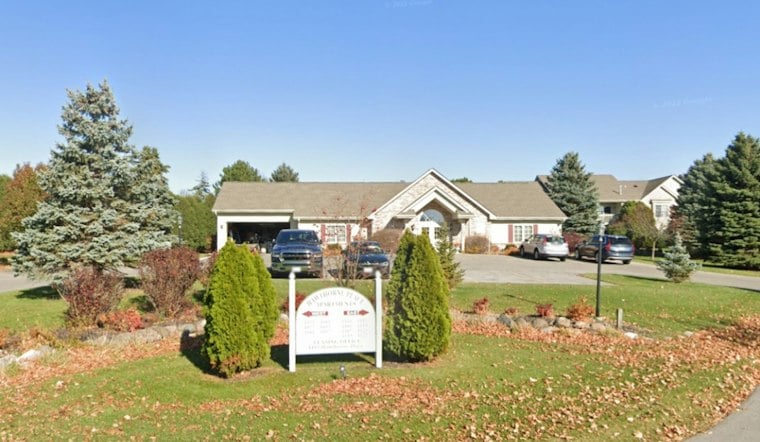
A Waukesha County judge has barred the villages of Pewaukee and Dousman from collecting fire and EMS fees that property owners challenged as unauthorized property taxes. The decision resolves a lawsuit brought by a senior-apartment owner and leaves the villages to determine how to fund the services without the invalidated charges.
Circuit Judge Zachary Wittchow issued the summary judgment decision on September 4 in Hawthorne Place LLC v. Village of Dousman, according to Heartland Post. TMJ4 News reported that the court rejected the villages' approach to charging for emergency-service readiness through a property-based formula, treating the charges as unlawful taxes rather than valid special charges.
Mike Heise, owner of Hawthorne Place, an independent senior apartment complex in the Village of Pewaukee, filed the lawsuit in 2024. Pewaukee had introduced its Emergency Service Equivalents, or ESE, formula in 2022; Hawthorne Place was assessed four times the amount billed to a normal resident under that system. Heise paid $145,000 in 2022, or roughly $150 per month per resident, according to TMJ4.
A Senior Housing Bill That Kept Climbing
The ESE formula charged Hawthorne Place and Quail Court at higher rates because the villages determined the properties were more likely to use emergency services, according to a station report. WMC Litigation Center filings from September 2024, cited by WisBusiness, said Pewaukee's formula charged senior-living housing units 475% more per year than single-family homes, with facilities paying tens of thousands of dollars annually.
How Other Emergency-Service Fees Work
The available research does not establish a comprehensive list of Wisconsin municipalities using emergency-service fees, but it shows a different model in North Shore Fire and Rescue. Its 2026 fee schedule lists charges for specific EMS services, including $155.60 for resident basic life support service or treatment without transport—an incident-based charge distinct from Pewaukee's invalidated village-wide formula. The Wisconsin Department of Health Services says approximately 1 million EMS runs are submitted to the state's WARDS database annually. That figure provides statewide scale for EMS activity, but the supplied research does not identify the voter, budget or legal process used by other municipalities to set their fees.
Heise advocated for Pewaukee to change its fee policy before ultimately joining other plaintiffs in suing both villages in 2024. He said the fee increase was unreasonable and required legal action, and he described the charges as camouflaged taxes. The lawsuit, per a WMC Litigation Center court filing, included Heise, residential landlord KKNN Quail LLC, statewide trade group Wisconsin Manufacturers & Commerce, and Lee Bleecker, who owns a Dousman trucking company.
Why Two Villages Chose Fees Over Ballots
Dousman enacted its fire fee through Ordinance 419 after local voters rejected an August 2022 referendum that would have allowed the village to exceed state property-tax levy limits to fund fire services, according to Heartland Post. Pewaukee board members considered a referendum in 2022 but instead adopted Chapter 93 and its ESE formula; the resulting charge appeared on property owners' annual tax bills.
The ruling relied on Wisconsin law governing special charges and a 1989 Wisconsin Court of Appeals precedent, which held that a charge for services rendered must be tied to services actually performed rather than emergency personnel simply being available. As described by Heartland Post, Wittchow concluded that the villages' formulas spread the cost of general emergency readiness across property owners and therefore operated as unlawful property taxes.
A Pattern of Struck-Down Fees in Pewaukee
The ruling follows an earlier dispute over a separate Pewaukee transportation utility fee. The Wisconsin Court of Appeals struck down that fee in 2024 after a lawsuit brought by WMC Litigation Center; a Waukesha County judge held the village in contempt in February 2025 for failing to return collected funds. The U.S. Department of Housing and Urban Development and the U.S. Department of Justice also launched a joint preliminary investigation into Pewaukee's fire and EMS fee methodology, according to a Facebook post from the Waukesha Freeman.
Scott Manley, WMC Executive Vice President of Government Relations, said on September 8 that the ruling sends a clear message that local governments must adhere to state law when seeking additional revenue, as reported by WisPolitics. WMC represented the plaintiffs through its Litigation Center throughout the case.
Richard Peterson, a former Hawthorne Place resident, told TMJ4 that the ruling was long overdue. TMJ4 reported that Pewaukee and Dousman did not respond to its inquiries about the lawsuit.
A Statewide Squeeze on Local Budgets
The dispute reflects the fiscal pressure facing Wisconsin municipalities, where strict state levy limits tied to net new construction constrain property-tax revenue, according to Heartland Post. The villages' next steps—including whether they appeal to the Wisconsin Court of Appeals and how they replace the lost fee revenue—remain unresolved.



