

























































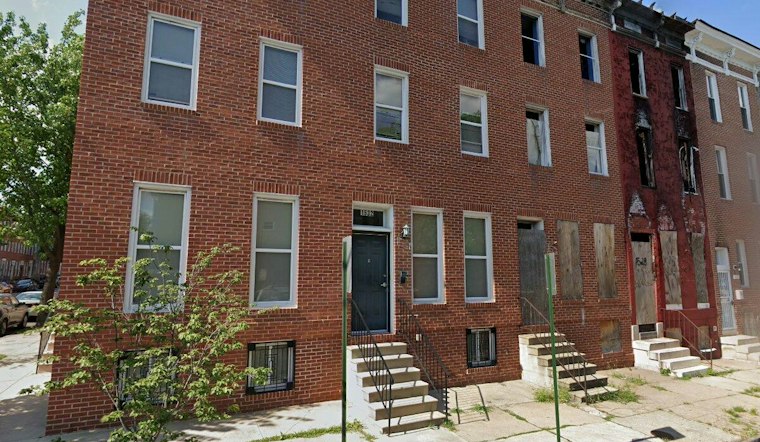
The Baltimore Station opened its first transitional housing program built specifically for women veterans this week, 37 years after the West Baltimore nonprofit began serving people experiencing homelessness. The 10-bed program occupies two townhouses on the organization's Baker Street campus and will provide free housing, meals, clothing and hygiene supplies. Move-ins are expected to begin at the end of October.
Planning for the program took about four years, according to WMAR 2 News, which reported on the ribbon-cutting. Kim Callari said women veterans had told the organization they struggled to find resources tailored to their needs, and described them as a population with significant resource needs, the station reported.
The Baltimore Station has provided therapeutic residential treatment, transitional housing and other services primarily to male veterans since its founding in 1989. The organization says three citizens began by handing out blankets and sandwiches to people experiencing homelessness in South Baltimore before opening a renovated firehouse on West Street in 1991, according to The Baltimore Station. The firehouse remains its primary residential and clinical headquarters. The Baker Street site was acquired in 2010 and developed from a former rectory and row houses into a 48-bed facility for homeless men. The new women’s program is housed in townhouses on that property.
Who Qualifies and What They'll Receive
Eligible participants must be women veterans who are homeless and unemployed, according to the same report. A substance use disorder is not an admission requirement, though the nonprofit can support participants facing substance use challenges. In addition to housing at no cost, participants can access case management, therapeutic programming, life-skills classes and other services.
As of the ribbon-cutting, no women veterans had yet moved into the facility, and the organization expects to begin moving participants in at the end of October. Callari said the program's success depended on outside support, crediting funding from the Department of Veterans Affairs alongside community organizations, individual donors and partners for making the project possible.
A Veteran's Perspective on the New Housing
Marguerite Stubbs, a 28-year Army veteran who served on nine deployments and traveled to 92 countries, attended the opening as third junior vice commander and chair of Disabled American Veterans' Women Veterans Committee. WMAR reported that Stubbs, a survivor of military sexual trauma who has experienced two traumatic brain injuries and lives with post-traumatic stress disorder, urged women veterans to advocate for themselves and seek physical and mental health resources.
Stubbs described the townhouses as a place for women to come off the streets, receive assistance and connect with resources, according to the station's report.
Why the Timing Matters Nationally
The Baltimore Station's shift comes as federal data shows women veterans are the fastest-growing segment of the veteran population, currently making up about 10% of living U.S. veterans and projected to reach 18% by 2040, according to the Department of Veterans Affairs. Most veteran assistance infrastructure was historically built around male service members, leaving gaps that programs like Baker Street's are now trying to close. VA research also indicates that 1 in 5 female veterans reports experiencing military sexual trauma during service, and that women affected by it are nine times more likely to suffer from post-traumatic stress disorder — a primary risk factor for homelessness — according to testimony submitted to the Maryland General Assembly.
Nationally, the number of unhoused female veterans fell 16% from 3,980 in 2023 to 3,329 in 2024, reversing a 24% increase recorded between 2020 and 2023, per the VA's homelessness data. Locally, municipal figures cited by the Frederick County Government estimate Baltimore City's unhoused veteran population at around 420 people, with female veterans making up roughly 3% of that total, or about 13 women — meaning the new 10-bed program could absorb a significant share of that local need. The federal government has also leaned into the issue, with the VA announcing $1.17 billion in national homelessness grants for fiscal year 2027 in September, including $318 million through its Grant and Per Diem program earmarked for transitional housing and specialized units for women veterans.
What Local Counts and Other Programs Show
Baltimore’s latest official count provides a citywide measure, not a separate figure for women veterans: the Baltimore City Mayor’s Office of Homeless Services reported that its 2025 count showed a 2% decrease in the veteran population experiencing homelessness. The count did not specify how many were women veterans, according to the Mayor’s Office. VA Maryland Health Care announced on September 17, 2026, that it awarded $30,960,805 in fiscal year 2027 grants to 16 Maryland community organizations serving veterans who are homeless or at risk; the announcement does not identify The Baltimore Station as a recipient. A separate example outside Maryland is Boston’s New England Center and Home for Veterans, which describes a 24-bed women’s dormitory for female-identified veterans within its transitional housing services. Its description mentions specialized veteran-centered services but does not state comparable employment or substance-use admission rules, or identify the program’s funding source, according to VA Maryland Health Care and the New England Center and Home for Veterans.
Parallel State Efforts
The Baker Street expansion follows a separate March grant of $160,000 that The Baltimore Station received from the Maryland Department of Health through the Sheila E. Hixson Behavioral Health Services Matching Grant Program, intended to expand behavioral health treatment to National Guard members and veterans with Other Than Honorable discharges. That state program was created to address behavioral healthcare gaps among Maryland service members and veterans.
What Comes Next for the Program
Callari urged women veterans—and people who know a woman veteran who is struggling—to contact The Baltimore Station. The goal is to provide a safe place to live and resources to rebuild, WMAR reported, while the nonprofit continues its existing services for male veterans.
The organization is starting with a small program, with the possibility of adding services in the future, potentially including a facility for women veterans with children. Callari said the program's future was bright, according to WMAR.





