

























































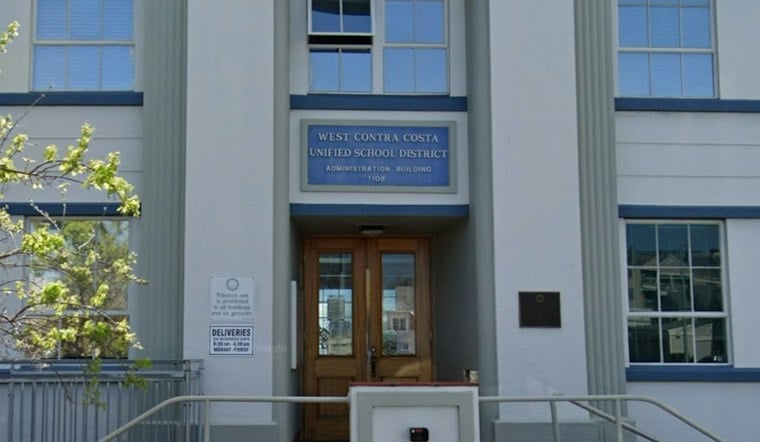
West Contra Costa Unified voters will decide in November whether to renew Measure V, a parcel tax that raises roughly $10 million a year for local schools. The vote comes as the district works to cut more than $127 million from its budget. The tax supports counseling, libraries, athletic programs and charter schools across the district; without renewal, it will expire on June 30, 2027.
First approved by voters in 2004 and renewed three times since, Measure V charges residential and commercial property owners 7.2 cents per square foot of building space, according to The Mercury News. The owner of a median-size, 1,770-square-foot Contra Costa County home would continue paying about $127 per year under the tax. If renewed this November, the rate would stay unchanged for another nine years.
Of the roughly $10 million the tax generates annually, about $2 million goes toward charter schools, while the remaining $8 million supports athletic programming, libraries and counseling, per the same report. Supporters framing the measure as essential to daily school operations include the West Contra Costa League of Women Voters, local elected officials and the Contra Costa Democratic Club.
A District Cutting Deep While Asking For More
The renewal campaign coincides with West Contra Costa Unified's effort to close a major budget gap. Trustees approved a fiscal solvency plan in February that calls for $127.1 million in reductions by fiscal year 2027-28, including the elimination of more than 300 positions, the merger of two schools and borrowing from other funds, the outlet reports. The district had already been operating under an earlier solvency plan requiring $32.7 million in reductions between the 2024-25 and 2026-27 school years.
The district's reserves and borrowing
West Contra Costa Unified's adopted fiscal-solvency plan projects that district reserves will be exhausted by 2026-27 unless structural changes are made, according to West Contra Costa Unified.
The district also says it has been borrowing $13 million annually from its retiree health benefits fund to help balance the budget in the short term. Those measures underscore that the parcel-tax vote is occurring alongside broader efforts to address the district's fiscal condition.
District officials have pointed to declining enrollment and a state funding model that hasn't kept pace with the cost of doing business as the roots of the financial strain. This isn't the district's first brush with fiscal crisis — the district, then known as Richmond School District, became the first in California to declare bankruptcy in 1991, and it took 21 years to repay a $28.5 million state loan that followed.
Union Backing And Labor Tensions
United Teachers of Richmond, which represents about 1,400 educators, counselors, nurses, speech pathologists and psychologists, supports the measure's renewal. Union president Francisco Ortiz said that failure to renew Measure V would harm schools, and told the paper that union and district leadership have improved their working relationship in recent months.
That relationship was tested by a multi-day strike in December 2025, after which the union and district agreed to a 10% salary increase split over two years and 100% employer-paid healthcare by June 2027. District officials have said that without Measure V revenue, additional budget cuts and contract-language changes for some positions would be required. West Contra Costa Unified trustee Leslie Reckler backed the renewal in July.
Critics Question District's Track Record
Not everyone is on board. The Contra Costa Taxpayers Association opposes Measure V, with association president Marc Joffe arguing the district wastes more money the more it receives. Joffe also noted that California's latest state budget already directs $128 billion toward education statewide. The association has attributed the district's layoffs and other cuts to officials yielding to organized labor pressure, while critics more broadly argue the district cannot be trusted to oversee the money responsibly. A district polling consultant reportedly warned officials in July to be cautious about asking voters to renew the tax.
A Rocky Landscape For Local Tax Measures
Measure V's fate will unfold against a backdrop of mixed results for California school taxes this year. On the June 2 ballot, the statewide parcel-tax passage rate was just 53%, twelve percentage points below the average since 2002, according to EdSource. School construction bonds fared little better, passing at 62%, well under the historic 78% average.
That same June election saw Palo Alto Unified's four-year parcel tax fall short despite winning 62.4% support, still below the required two-thirds threshold. Novato Unified's eight-year, $249-per-parcel tax missed the 66.7% bar by just 0.7 percentage points, and Hayward Unified's $98 parcel tax was defeated with only 62.3% support. Piedmont Unified bucked the trend, passing a $3,174-per-year parcel tax with 82.4% approval.
Closer to home, Moraga and Lafayette voters approved new school revenue measures during that same June election, per the Mercury News report. But voters that same month rejected a bond and parcel tax measure covering the Contra Costa Community College District, Oakley Union Elementary School District, Walnut Creek School District, a county-wide medical system and an El Cerrito library project.
West Contra Costa Unified has been here before. A prior parcel-tax election, Measure M, drew 60% support in 2010 but fell short of the two-thirds majority required to pass, according to Richmond Confidential. The district's 2016 effort, which sought to extend the same 7.2-cents-per-square-foot rate for eight years to raise $9.8 million, appeared on that year's ballot as parcel tax measures went before voters across the East Bay, as reported by the East Bay Times. WCCUSD records show that voters first approved the district's 7.2-cents-per-square-foot parcel tax in 2004 and reapproved it in 2012 and 2016, according to West Contra Costa Unified.




