

























































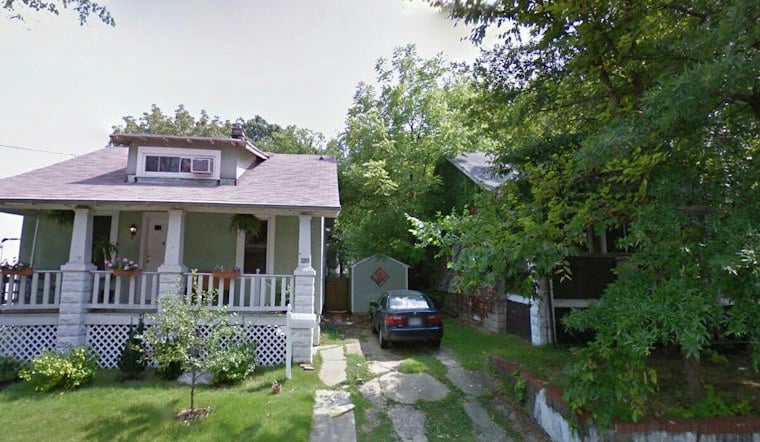
More than three decades after 10-year-old George “Junior” Burdynski disappeared in Brentwood, Maryland, Prince George’s County police say a man has admitted killing him. The man, now 46, will not face charges in Junior’s death, according to the reported account; he was 13 when the killing occurred. The admission has not resolved every central question: Junior’s remains have not been recovered, and authorities have not publicly established all details of what happened.
Junior left home on May 24, 1993, to meet a friend and never returned. His family found a wheel rim from his red bicycle near a neighborhood tennis court the next morning, but the rest of the bicycle was never found, according to The Charley Project. The case remained open while investigators revisited witnesses and issued age-progressed images.
The newly reported account comes primarily from WJLA. Sources told the station that the man identified Joseph Lynch, who lived several blocks from the Burdynski family, as an adult connected to the killing and said Lynch disposed of Junior’s body in a dumpster. Those details remain allegations and have not been independently established in the public records cited here.
The legal distinction is important
The lack of a charge against the admitting man is not explained by the age of the case alone. Maryland’s homicide statute says a prosecution for murder, manslaughter or unlawful homicide may be brought regardless of how much time has passed, according to Maryland Criminal Law § 2-102.
Instead, the reported barrier concerns the man’s age in 1993. WJLA says he cannot be charged, while CBS Baltimore states that a 13-year-old cannot be charged as an adult but could be charged as a juvenile. The sources cited here do not establish the historical 1993 jurisdictional rule or any applicable exceptions.
That leaves two separate legal questions. Lynch is reportedly facing murder and rape charges tied to the investigation, while the man who allegedly admitted participating in Junior’s killing is not being prosecuted for that death. A charge is an accusation, not a finding of guilt, and the publicly described evidence does not by itself establish who caused Junior’s death.
Earlier convictions documented abuse, not Junior’s killing
The neighborhood’s earlier abuse cases form important background but do not, on the records cited here, solve the disappearance. Lynch had a 1994 child-sex-abuse conviction. The Washington Post separately reported that a Prince George’s County jury convicted Stephen Leak in February 1994 of sexually abusing a 10-year-old boy: the case was separate from the unresolved question of who killed Junior.
Those distinctions matter because a documented pattern of child sexual abuse can explain why investigators reexamined a neighborhood and its witnesses, but it does not substitute for physical evidence, a corroborated confession or a court finding linking a person to Junior’s death.
Why long-term missing-child cases remain active
Investigators can continue developing leads even when a child’s remains and key evidence have not been found. The National Center for Missing & Exploited Children says it age-progresses images of children missing for at least two years and provides case reviews and forensic assistance: those tools are designed for long-term investigations, not just initial searches.
The National Missing and Unidentified Persons System, or NamUs, provides another route for unresolved cases by helping investigators compare missing-person records with unidentified remains and access forensic and investigative support, according to the Justice Department system. That resource is relevant to the Burdynski investigation because Junior’s remains have not been publicly reported as recovered, but NamUs cannot by itself prove that an unidentified set of remains belongs to him.
A separate legacy of the investigation
That history shows how one local investigation influenced law-enforcement infrastructure. The FBI’s Innocent Images program debuted in 1994, according to the bureau.
That history shows how one local investigation influenced law-enforcement infrastructure, but it does not establish that the modern admission resulted from the FBI program or from any particular technology. The current account, as publicly described, centers on renewed interviews and information from people connected to the original case.
Technology can reopen old cases, but it cannot fill every gap
Other Maryland cases illustrate why investigators may revisit old evidence decades later. Prince George’s County investigators also used advanced genetic genealogy in the 1998 killing of Sheryl Crandell, according to DNA Solves.
Those cases are examples of methods used elsewhere, not evidence that genetic genealogy solved Junior’s disappearance or produced the reported admission. In a case without publicly identified remains, investigators still must corroborate statements, determine what evidence survives and establish whether the account can support charges against anyone who remains legally prosecutable.
For now, the admission changes the investigative picture but does not close the case. Police still have to establish what happened to Junior, clarify Lynch’s alleged role through court proceedings and determine whether any physical or testimonial evidence can independently support the account.





