

























































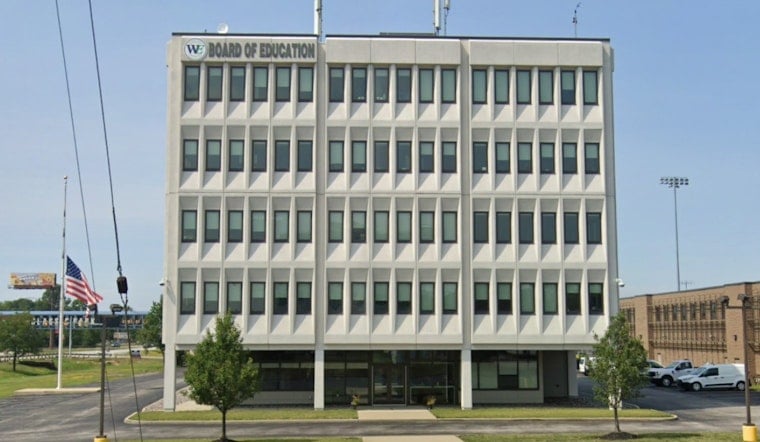
Willoughby-Eastlake City Schools and Crossroads Health are planning a new school-based health clinic next to the Willoughby Senior Center in Union Village, right beside Willoughby South High School, with a target opening of spring 2027. The clinic will offer primary health care, preventive services, chronic disease management, and behavioral health support, initially focused on district students before expanding to serve the broader community.
A $500,000 grant from the Ohio Department of Health will cover capital improvements and initial staffing for the project, according to Cleveland.com. The clinic itself is the product of four years of planning between the district and Crossroads Health, a Mentor-based non-profit that already provides outpatient mental health, substance use recovery, psychiatric evaluation, and primary care across Lake County regardless of a patient's ability to pay, per Crossroads Health.
Lauren Wright, Crossroads Health's Senior Director of Clinical Services, said the new clinic is an expansion of the organization's existing partnership with Willoughby-Eastlake schools, which has been in place for years. Heather Dodd, the district's Pupil Services Director, said health concerns can negatively affect attendance, academic performance, family stability, and school participation — and that the clinic is meant to address the barriers keeping students and families from getting care they need. District officials said placing services near schools could cut down on transportation barriers, scheduling headaches, and other obstacles to reaching health care providers in the first place.
A Campus Built for Shared Services
The clinic's chosen site is no accident. Union Village is a multi-facility civic campus established in 2019 that already co-locates Willoughby South High School, Willoughby Middle School, the West End YMCA, and the David E. Anderson Willoughby Senior Center, according to Greenland Engineering. The senior center itself was built through a $6.5 million joint project in which the city covered 25% of construction costs for a shared field house with the school district — a template of municipal-school cost-sharing the new clinic effectively continues.
Putting the clinic next to the senior center also opens the door to multi-generational care over time, as Crossroads Health transitions from serving students to serving the wider public. Patrick Ward said the partnership demonstrates what organizations can accomplish by working together to support students and families, a sentiment that captures the collaborative approach behind the project.
Funding Built to Outlast the Grant
Because the $500,000 state award is a one-time infusion, Crossroads Health and Willoughby-Eastlake schools are assembling an advisory team to oversee the project and develop a long-term funding plan. That plan will seek additional grant funding as well as Medicaid reimbursement revenue, with the explicit goal of sustaining the clinic without ongoing financial support from either the district or Crossroads Health.
State grant guidelines for School-Based Health Centers cap competitive awards at $500,000, typically splitting funds between a maximum of $250,000 for capital construction or renovation and $250,000 for operational start-up costs, according to Instrumentl. Applicants must submit formal memorandums of understanding between healthcare agencies and local school boards to qualify, and the Union Village clinic fits within Ohio's broader $9 million School-Based Healthcare initiative, co-administered by the Ohio Department of Education and the Ohio Department of Health to place medical and mental health care directly on school grounds and reduce chronic absenteeism.
A District Watching Every Dollar
The clinic's arrival comes as Willoughby-Eastlake City Schools navigates serious budget pressure. District financial reports from December 2025 show the district draws 76% to 77% of its funding from local tax revenue, with just 24% coming from state foundation aid and 6% from federal sources — a heavy local reliance that leaves the district exposed to shifts in state tax policy and makes outside grants like the Ohio Department of Health award especially valuable.
That fiscal strain is also why voters will see a 0.75% earned income tax levy on the November 2026 ballot, the district's first request for new operating revenue in six years, aimed at closing a looming multi-million-dollar structural deficit without raising property taxes on retirees living on fixed incomes. Hoodline previously reported the district is staring down a $22 million shortfall, and the district is also rolling out unified start and dismissal times district-wide for the 2026–2027 school year to streamline bus routes and cut transportation costs, a change Hoodline covered in May.
Part of a Wider Regional Push
The Union Village project also reflects a broader regional context for youth mental health. A child well-being assessment from the Ohio Children's Trust Fund found that 31.6% of family risk assessments in Lake County identified emotional or mental health functioning as a risk contributor for child welfare involvement, exceeding the broader regional average of 21.7%.
Crossroads Health has been expanding its school-based footprint elsewhere in Lake County too. For the 2026–2027 school year, the organization partnered with the Educational Service Center of the Western Reserve to relocate its Mental Health Day Treatment Program to the Hale Road Campus in Painesville Township, providing coordinated day-treatment services for youth from surrounding school districts. Other Ohio districts have pursued similar clinic models, including Huntington Local Schools, which Hoodline reported opened its own on-campus clinic in August.





