

























































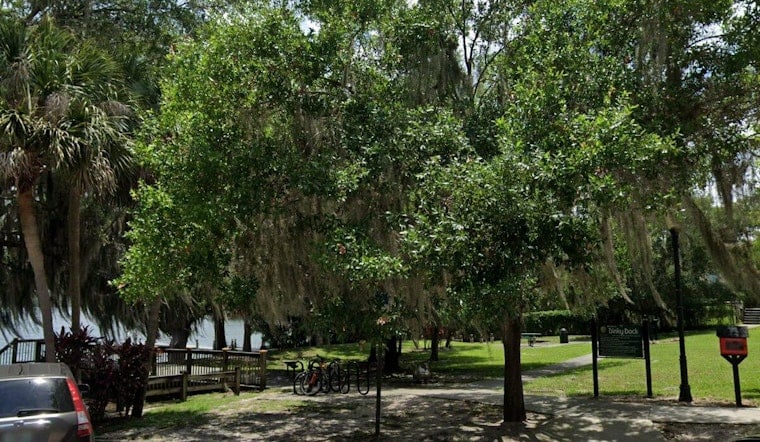
Winter Park commissioners are set to consider a proposal on Wednesday that would make non-residents pay to park at two of the city's most popular parks: Dinky Dock Park on Lake Virginia and Lake Baldwin Park, home to the city's only off-leash dog beach. If approved, the six-month pilot program would let residents keep parking for free while everyone else pays up, marking a notable shift for a city long known for treating public parking as, well, public.
According to FOX 35 Orlando, the paid-parking pilot would cover those two parks specifically, both of which draw heavy traffic from outside city limits. As reported by ClickOrlando, the proposal targets non-city residents at both locations, since Winter Park residents currently share the same free parking as day-tripping visitors from elsewhere in Central Florida.
Under the plan, Winter Park residents would continue parking free of charge by registering their vehicles through an online system that verifies residency, according to reporting cited by Orlando News Today. If commissioners give the green light, the pilot could launch as early as spring 2027, giving the city time to build out the registration and enforcement systems before the first non-resident is asked to pay.
A Modest Revenue Bet Amid a Bigger Budget Squeeze
City officials estimate the pilot could bring in $100,000 or more in new annual revenue during the trial period, per the Winter Park Voice. That number, while modest against the scale of city operations, is part of a broader hunt for cash tied to Winter Park's $247 million proposed all-funds budget for fiscal year 2027 — a budget that keeps the property tax millage rate flat for the 19th consecutive year even as police, fire, and infrastructure costs climb.
The same reporting notes that city leaders are eyeing new revenue partly because of the possibility of tax cuts if Florida's Amendment 3 passes in November.
Paid parking isn't the only idea on the table. Per the Voice's reporting, city leaders have also floated red-light camera enforcement, credit card convenience fees, and cuts to tree canopy maintenance, code enforcement, and library funding growth as city departments work to identify savings ahead of the formal budget vote.
Free Parking Has Long Been a Winter Park Trademark
Free parking has historically defined the Winter Park experience, nowhere more visibly than along Park Avenue, the city's landmark commercial strip. That sensitivity was on display earlier this year when a $2.5 million streetscape refresh temporarily restricted street parking near the district, a disruption merchants and visitors felt acutely in a city where free curbside access is practically an institution.
Dinky Dock Park itself is a compact 1.56-acre facility offering a public boat launch and fishing pier on Lake Virginia, part of the Winter Park Chain of Lakes where motorized boats are capped under 24 feet in length, according to the City of Winter Park. Lake Baldwin Park is considerably larger at 23.16 acres along Lake Lakemont and Lake Baldwin, and it holds the distinction of being the city's only designated off-leash dog park, according to Friends of Winter Park Dog Park — a draw that pulls dog owners from well beyond Winter Park's borders for its sandy beach area.
That kind of regional pull is exactly what's fueling the parking conversation. Heavy non-resident traffic at both parks creates maintenance demands the city currently absorbs through general tax revenues, according to the Voice's reporting, and officials appear to be betting that visitors who don't pay Winter Park property taxes should chip in more directly for the upkeep of amenities they use.
A City No Stranger to Parking Crunches
Winter Park's parking headaches aren't new. The city's Sidewalk Art Festival packed downtown with roughly 250,000 visitors in March, an annual reminder of how quickly parking capacity can buckle under Central Florida's suburban weekend crowds. Whether that same pressure shows up at Dinky Dock and Lake Baldwin on a given Saturday is precisely the kind of demand city officials are hoping to offset with the new fee structure.
Plenty remains unresolved ahead of Wednesday's discussion. The specific hourly or daily rate non-residents would pay hasn't been detailed, nor have the enforcement logistics behind the online vehicle registration system meant to distinguish residents from out-of-towners. Public reaction from the non-resident visitors who'd be asked to start paying is also an open question, as is whether commissioners would consider expanding paid parking into downtown commercial corridors if the six-month pilot hits its $100,000 revenue target.


