

























































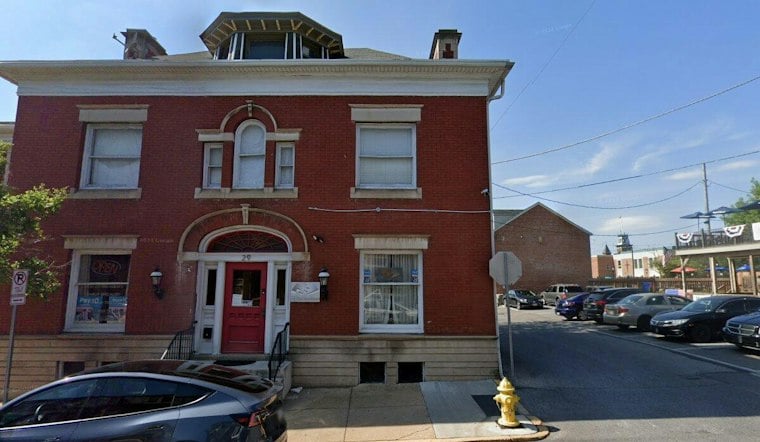
A York, Pennsylvania financial consultant has been sentenced to 18 months in prison after admitting he ran a scheme that funneled more than $341,000 in fraudulent Paycheck Protection Program loans to nearly two dozen people, then destroyed a handwritten client list when investigators started closing in. Dommonick Chatman, 50, pleaded guilty to a single count of bank fraud connected to loans approved throughout 2021 for more than 20 people tied to his firm, The Chatman Group.
According to Local 21 News, Chatman provided tax returns for applicants he personally knew, many of whom were existing clients of his firm on West Market Street in York. Several of those PPP applications were fraudulent because the applicants either lacked businesses as of February 15, 2020, or lacked sufficient income to justify the amounts requested, per the same report. In exchange, Chatman collected around 5 percent of each individual loan or $1,000 per application his firm filed, and the report notes he shared some of those proceeds with another employee.
An Indictment That Once Carried Decades of Exposure
Chatman's case began in March 2025, when federal prosecutors in the Middle District of Pennsylvania indicted him on 20 counts of bank fraud and one count of destroying records during a federal investigation, an indictment announced by then-Acting U.S. Attorney John C. Gurganus, as reported by FOX43 News. Under federal sentencing guidelines at the time, a bank fraud conviction carried a maximum statutory penalty of up to 30 years in prison, while the records-destruction count carried up to 20 years, the outlet reported, since bank fraud charges fall under Title 18 of the U.S. Code. Chatman ultimately pleaded down to one count in December 2025 before U.S. District Judge Malachy E. Mannion, with the plea agreement publicly announced by U.S. Attorney Brian D. Miller, according to Daily Voice.
Under that plea deal, Chatman agreed to pay $341,438.82 in court-ordered restitution to the federal government, an amount matching the precise total illegally disbursed by lenders on behalf of nearly 20 individuals, the Daily Voice report states. Per Local 21 News, Chatman will also serve three years of supervised release once his prison term ends. The Justice Department reported that Chatman disposed of a handwritten list of clients who had received the fraudulent loans as investigators closed in, an act of obstruction that led to the now-dismissed records-destruction charge in the original indictment.
Applicants Had to Show Real Business Activity
PPP loan applicants were required to provide information about their business operations, employee counts, and overall expenses in order to qualify for pandemic relief funds, per Local 21 News. The case was investigated jointly by the FBI Philadelphia Capital Area Resident Agency and the U.S. Department of the Treasury Office of Inspector General, the outlet reported.
Federal lawmakers extended the window for prosecuting PPP-related fraud specifically because so many cases like Chatman's kept surfacing years after the loans were disbursed. In August 2022, Congress passed bipartisan legislation extending the statute of limitations for criminal and civil PPP fraud from five years to ten, giving federal authorities until at least 2030 to pursue pandemic-era relief crimes, according to Hoodline. That extension helps explain why prosecutors were still building an indictment against Chatman for loans approved back in 2021.
Part Of A Much Larger National Pattern
Chatman's scheme is a small piece of a far larger national problem. A U.S. Small Business Administration Office of Inspector General report estimated that more than $200 billion — over 17 percent of all disbursed COVID-19 PPP and EIDL funds — was stolen due to relaxed internal approval controls during the initial relief rollout, out of roughly $1.2 trillion in total emergency relief distributed. Nationwide, Department of Justice task forces have brought criminal charges against more than 3,500 defendants and seized or forfeited over $1.4 billion tied to pandemic relief fraud through 2024.
Pennsylvania has seen its share of high-dollar cases involving financial professionals who exploited their access to client records. In June 2025, federal prosecutors in Pennsylvania's Western District secured a sentence of two years in prison and $14.5 million in restitution against Detroit CPA Matthew Lloyd Parker for orchestrating the region's largest known PPP loan fraud scheme using falsified business documents. And in September 2025, a federal judge in Philadelphia accepted a guilty plea from business owner Tracy Hardy, who attempted to defraud the PPP and EIDL programs out of more than $2 million using falsified payroll and tax records, a case Hoodline covered in its report on the Philadelphia guilty plea.





