

























































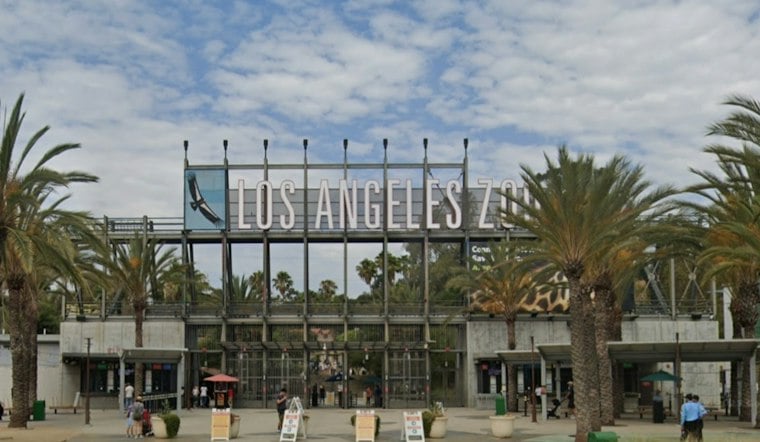
Forty blind and visually impaired students from pre-K through 12th grade spent the day navigating stairs, obstacles and sounds at the Los Angeles Zoo over the weekend, part of the Braille Institute's 17th annual Cane Quest. Nearly 90 volunteers and more than 40 staff members turned out to guide the students through real-world routes designed to sharpen their cane skills and orientation training.
The event took place at the zoo, where students practiced real-world routes, according to KTLA. Students practiced fundamental travel techniques and cane skills, including sound localization, tracking and obstacle detection, Braille Institute officials said, as they worked their way past stairs, obstacles and the ambient noise of the zoo environment. The zoo has operated at its current Griffith Park location since it opened on November 28, 1966, replacing the original 1912 Griffith Park Zoo, according to the Los Angeles Zoo and Botanical Gardens, giving the event decades of expansive outdoor terrain to work with.
Building Independence One Route at a Time
Orientation and mobility training like this focuses on the skills students need to understand and navigate their environment safely, and officials say it lays a foundation for independence, confidence and safety that extends well beyond the zoo gates. The LA Galaxy Foundation pitched in with an accessible soccer activity, while Guide Dogs of America brought nine guide dog puppies and their raisers to the event. That organization, founded in 1948 by the International Association of Machinists and Aerospace Workers in Sylmar, breeds, raises and trains guide dogs that are provided free of charge to visually impaired individuals, according to the IAM Union.
Behind the hands-on training is a layer of professional credentialing most zoo visitors never think about. Orientation and mobility specialists earn national certification through the Academy for Certification of Vision Rehabilitation and Education Professionals as Certified Orientation and Mobility Specialists, per ACVREP, which outlines certification and training requirements. Locally, Cal State LA's Orientation and Mobility Specialist Training Program has partnered with the Braille Institute for years to support Cane Quest in Southern California, a collaboration that earned the university the Braille Institute's 2026 Community Hero Award in education, according to Cal State LA.
A Legal Backbone for Blind Pedestrians
The skills on display at the zoo also connect to specific protections written into California law. Under California Vehicle Code Section 21963, drivers approaching a totally or partially blind pedestrian carrying a white cane or using a guide dog must yield the right-of-way, with failure to do so punishable as a misdemeanor carrying up to six months in county jail and fines up to $1,000, according to Justia Law. A companion statute, Vehicle Code Section 21964, restricts the public carrying or use of a predominantly white cane to individuals who are totally or partially blind, preserving the cane as a clear legal signal to motorists.
Cane Quest's timing is no accident. The event coincided with Blindness Awareness Month, observed every October, and falls within the same month as National White Cane Safety Day, which was established nationally on October 15, 1964, after President Lyndon B. Johnson signed a congressional joint resolution promoting awareness of white cane traffic laws and the independence of visually impaired people, per the American Presidency Project.
The Braille Institute provides Cane Quest event materials at no charge.
For the 40 students who spent their day navigating the zoo over the weekend, stairs, obstacles and sounds were real-world tests in building the kind of confidence that orientation and mobility training is meant to provide. With 89 volunteers and dozens of staff on hand, the message of Cane Quest was less about any single obstacle course and more about the independence that comes from mastering it.



