

























































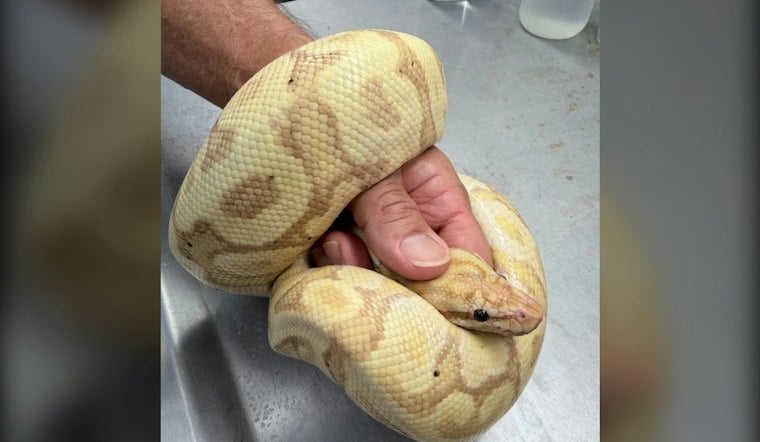
A 45-inch ball python is now in state custody after a snake-sighting call from the Camp Waianae area on Oahu's Leeward Coast last Saturday. Police responded to the snake-sighting report and called in the Hawaiian Humane Society, which looped in the Hawaii Department of Agriculture and Biosecurity, according to officials. The snake was contained before two agency inspectors even arrived, and biosecurity officers took possession of the nonvenomous reptile near 85-1508 Haleahi Road.
Jessica Ann Miura, a land vertebrate specialist with the department, discussed the case, as reported by Hawaii News Now. The snake was transferred to the department's Plant Quarantine Branch facility on Sand Island, where officials are now testing it to determine its sex. Knowing whether it's male or female matters, Miura said, because it helps investigators figure out whether they need to be searching for a mate or other offspring that may have escaped alongside it.
Department of Agriculture and Biosecurity spokesperson Jai Cunningham told the Aloha State Daily that officials believe the python was somebody's pet because it was, in Cunningham's words, “OK with being handled.” Its comfort with being handled was cited as a clue that this particular python was a pet.
Why Hawaii Treats Snakes as a Biosecurity Emergency
Snakes of any kind are illegal in Hawaii, and the state isn't shy about why. The islands have no native land snakes and no natural predators to keep an escaped constrictor in check, meaning a loose python can compete directly with native wildlife for food and habitat. Ball pythons specifically prey on birds and bird eggs, according to officials, which raises the stakes for species already struggling to hang on.
Miura said the threat extends across several types of native birds — delicate rainforest species, seabirds that nest on the ground, and rainforest birds that nest in trees are all vulnerable. Large snakes can also pose risks to the health and safety of people, pets, and other domestic animals, officials noted. Ball pythons can grow up to six feet long and remain a staple of the mainland pet trade.
Steep Penalties, But an Amnesty Option Exists
Anyone caught possessing an illegal animal in Hawaii faces fines of up to $200,000 and up to three years in prison, according to officials cited by Hawaii News Now. Separately, under Hawaii Revised Statutes Chapter 150A, intentionally smuggling an illegal snake may be a Class C felony carrying penalties of up to five years in prison, according to the Hawaii State Legislature.
For owners willing to come forward before an investigation begins, the state's Amnesty Program offers a no-penalty path to surrender illegal pets. Animals turned in voluntarily are not euthanized and may eventually be relocated to an appropriate mainland facility, according to the Office of Governor Josh Green. That program played out on October 20, 2026, when an anonymous resident surrendered a 28-inch ball python discovered in Kahaluʻu to the Honolulu Zoo under the same amnesty policy.
The Waianae capture is only the latest in a string of similar incidents across Oahu. In June 2025, state inspectors captured a 3.5-foot ball python in a Kaimukī backyard after a homeowner initially mistook the moving reptile for a child's toy — a case Hoodline covered at the time. Years earlier, in February 2021, Honolulu Police trapped a 3-foot ball python under a trash can in Aiea until agricultural inspectors arrived and took it to quarantine, the Associated Press reported.
What Happens to the Waianae Python Now
For now, the Waianae python will remain in state custody while officials finish testing and consider next steps. Miura said the state can house and care for the snake while arranging a possible shipment to mainland contacts.
Anyone who sees or knows of an illegal animal in Hawaii is encouraged to contact the state's toll-free pest hotline at 643-7378. The Department of Agriculture and Biosecurity, which operates under Board Chairperson Sharon Hurd, continues to lean on tips from residents to catch escaped or abandoned exotic pets before they can spread further into the wild.





