

























































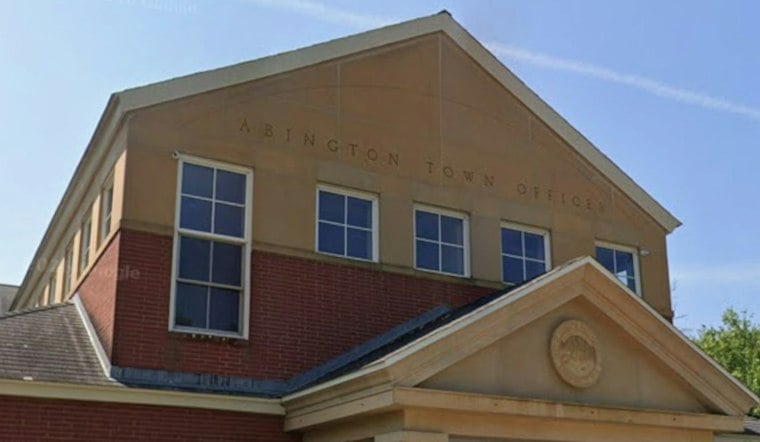
Abington's water board has stopped approving new water service for development across town, a freeze that took hold after state regulators declared a water supply emergency for the Abington-Rockland Joint Water Works system this summer. Reservoir levels had fallen far enough to trigger the move, and the restrictions are not going away soon — the declaration stays in effect until at least January 30, 2027, and could be extended further.
The emergency declaration traces back to a vote by local water commissioners on July 29 to formally request state intervention, and the Massachusetts Department of Environmental Protection issued the declaration the very next day, July 30, according to the Town of Rockland. As reported by South Shore News, the Abington Select Board heard an update on the water emergency on September 28, with the Abington-Rockland Joint Water Works halting approvals for water tied to new development across the town.
The hold is not absolute. Accessory dwelling units are still allowed to move forward, and renovations that add a bedroom can proceed, but the water board is approving no other new water service while the emergency remains active, per the outlet's reporting. Abington is now operating under Level Four water restrictions, the strictest tier, which bans irrigation outright while still permitting residents to water vegetable gardens. Violators face a $100 fine for a first offense and $300 for a second or subsequent violation.
A Decade-Old Allocation Gets Pulled
Among the casualties of the freeze: water that had been allocated to a property at 10 Railroad Street for more than ten years. The water board pulled that allocation, though it kept water reserved for fire protection at the site in place, South Shore News reported.
Abington's predicament fits into a much larger regional picture. As of October 1, Abington is one of more than 120 Massachusetts municipalities operating under mandatory water use restrictions amid drought conditions tracked statewide, according to Mass.gov. A 2026 regional water study found that South Shore towns including Abington, Rockland, Hanover, Hingham, and Scituate face a combined peak summer supply deficit of 2.1 million gallons per day, a gap the analysis tied partly to state housing mandates and the vulnerability of towns relying on single wells.
Borrowing Water From Brockton, One Pipeline at a Time
Since August 23, Abington has drawn on an emergency interconnection with Whitman, which is itself supplied by Brockton — meaning Brockton bills Abington directly for the emergency water it provides. That emergency supply ultimately comes from Silver Lake, Brockton's primary reservoir, which cannot be tapped hard for long without being strained further.
The strain on Silver Lake is not a new problem. The reservoir relies on water diverted from Pembroke's Furnace Pond under a 1964 state law, and drought conditions since September 2024 have drained feeding ponds and fueled water-quality conflicts with neighboring towns, according to the Salata Institute at Harvard University. Brockton has diverted water from Pembroke and Halifax ponds since the 1930s, a practice linked to toxic algae blooms and low oxygen levels in the surrounding ponds.
To ease pressure on Silver Lake without cutting off Abington's emergency supply, officials are weighing an immediate bypass that would let Brockton's local-reservoir treatment plant shut down temporarily while the reservoir refills. Under that plan, Abington would pay part of the cost for Brockton to activate its Aquaria desalination supply, which Brockton would then use to replenish Silver Lake. The bypass pipeline is estimated to cost about half a million dollars, South Shore News reported. Brockton's access to Aquaria, a desalination plant in Dighton, stems from a 20-year agreement signed in 2002 that requires the city to pay millions annually in fixed and variable fees, according to the Metro South Chamber of Commerce.
Long-Term Fixes Carry a Bigger Price Tag
Beyond the stopgap measures, Abington's water department is studying two long-term paths out of the crisis. One involves Massachusetts Water Resources Authority connection through a regional group that includes Rockland and Hanover; the other is a dedicated Brockton pipeline under an intermunicipal agreement that would lock in a fixed price. That long-term Brockton line is estimated at $8 million, the same report noted.
The MWRA option comes with a ticking clock. The authority completed a South Shore expansion study in 2022-2023 evaluating connections for 11 towns, and its Board of Directors waived entry fees for up to 20 million gallons per day through December 31, 2027, for municipalities facing supply shortages, according to the Massachusetts Water Resources Authority. A consortium of South Shore towns formed in late 2023 using ARPA funds to study MWRA admission, putting Abington's timeline on a collision course with that fee waiver's expiration.
Part of what's slowing a local fix is the water system's own legal ceiling. Under its Water Management Act permit issued in February 2020, the Abington-Rockland Joint Water Works is limited to an authorized annual average withdrawal of 3.11 million gallons per day across its three supply sources, with a cap of 3.36 MGD only if certain conditions are met — a restriction that keeps the utility from simply pumping more local groundwater to solve the shortage.
A Developer Offers to Pay, but Officials Are Wary
A developer has offered to pay for studies and the long-term Brockton pipeline itself, with the proposal currently documented in a memorandum of understanding now in its third draft, per South Shore News. Amanda Hunter, who identified herself as chair of the joint water commission, made clear the offer comes with scrutiny attached.
“Nobody is getting a free ride here. Nobody is coming to save us with our water emergency,” Hunter said, according to the outlet's report. The joint water commission is weighing the developer agreement with the explicit goal of not passing its costs onto ratepayers. “People already struggle to pay their water bills,” Hunter added.
That ratepayer concern surfaced directly during discussion, when Daniel Eddy asked whether a new water source would ultimately be charged back to ratepayers regardless of how it's financed. Officials indicated that some in-house work — including redeveloping an existing well and leak detection — can be paid from current rates, but a new treatment plant would be a different matter for ratepayer costs, the report noted.
Those existing financial obligations are not small. The Abington-Rockland Joint Water Works already carries a $26 million loan through the state's Drinking Water State Revolving Fund to build a treatment plant addressing PFAS6 contamination that tested between 26 and 33 parts per trillion, above the state's 20 ppt limit, according to South Shore News' earlier reporting. That debt sits alongside the new pipeline proposals as officials try to map out how the South Shore's water future gets paid for — and by whom.




