

























































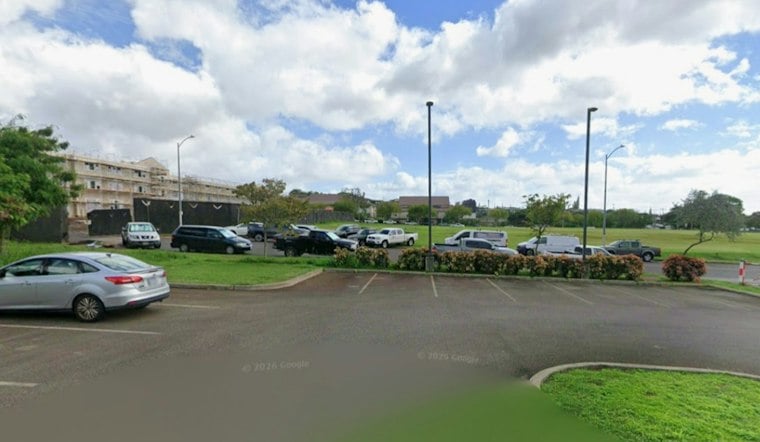
Thirty-four trees went into the ground at Halewikiō Place in ʻĀiea last Friday and Saturday, marking the first physical step toward turning the former ʻĀiea Sugar Mill site into a full community park. The planting kicked off Ke Ola O ʻAiea ʻOhana Park — Hawaiian for the Life of ʻAiea Family Park — on a stretch of land that has been reshaped piece by piece since the old mill came down nearly three decades ago.
The effort brought together a wide mix of public, private, nonprofit and government partners, according to Hawaii News Now. Participants included City Councilmember Radiant Cordero, the ʻĀiea Community Association, ʻĀiea Intermediate School, the Aliʻi Pauahi Hawaiian Civic Club, Aloha Iā Halewilikō senior housing, The Outdoor Circle, Trees for Honolulu's Future, and University of Hawaiʻi Tropical Lands. Myles Ritchie, programs director with The Outdoor Circle, said the planting is just the beginning of a tree-filled greenspace, with more plantings and an eventual community center still to come, the station reported.
The city's Division of Urban Forestry supplied the trees through a $34,000 grant from the Laura Jane Musser Fund. The fund's Environmental Initiative program supports environmental restoration and community stewardship projects in eligible regions, according to Instrumentl.
Native Species Chosen to Restore Hawaiian Heritage
The species planted carry real cultural weight. Among them is lonomea, an endemic Hawaiian soapberry tree found naturally only on Oʻahu and Kauaʻi, whose hard black seeds were historically used by Native Hawaiians for medicinal remedies and lei making, per the Hawaii Department of Land and Natural Resources Division of Forestry and Wildlife. The species today faces threats from habitat conversion and invasive plants, the department notes.
Also planted was milo, a coastal shade tree long prized in Hawaiian culture for its dark wood, which was carved into poi bowls, known as ʻumeke milo, and other serving utensils. The department's forestry division notes the tree's seed capsules were also used to make natural dyes. Crape myrtle, narra and manele rounded out the thirty-four trees placed at the site.
From Industrial Ruin to Community Vision
The ʻĀiea Sugar Mill was built in 1898, and ʻĀiea grew around it; plantation operations were discontinued in 1947 or 1948, before the mill was demolished in 1998, after cleanup costs forced the abandonment of restoration plans, according to Images of Old Hawaiʻi. In 2002, the City and County of Honolulu was negotiating to buy 6.88 acres of the property, with cleanup of remaining contaminants a condition of purchase, per Honolulu Star-Bulletin archives.
The ʻĀiea Public Library is also on the property. University of Hawaiʻi students and faculty from its landscape and design program shaped the current site design, per Hawaii News Now.
Then in February, the city and EAH Housing opened Aloha Iā Halewilikō, a $62 million, 140-unit affordable housing community for kūpuna age 62 and older, built on 3.45 acres adjacent to the library — a project Hoodline covered at the time. The city's current vision for the remaining acreage includes a community center, outdoor play amenities and open turf space.
Community Leaders Reflect on a Decades-Long Wait
Claire Tamamoto, president of the ʻĀiea Community Association, said community kūpuna who have since passed away would be pleased to see the open space finally becoming reality, the station reported. She expressed gratitude to everyone who has helped sustain the decades-old vision and said the association remains committed to building a sense of community for kūpuna and keiki of today and tomorrow.
The tree planting adds trees to the former mill site as it begins to take shape as public green space.





