

























































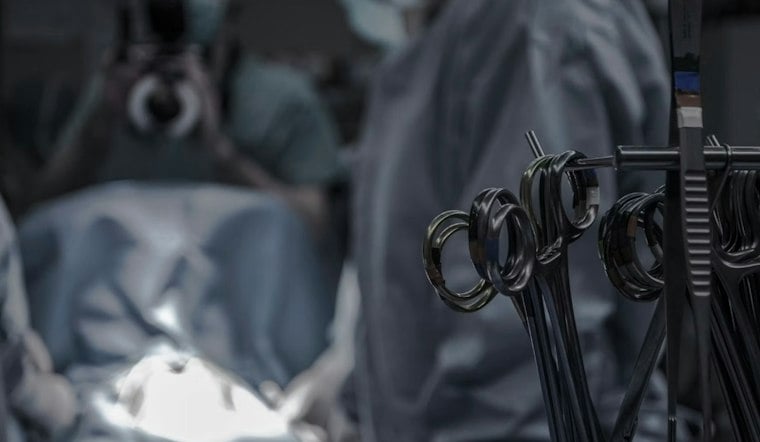
A breast surgeon in Altamonte Springs is preparing to perform a procedure no one in Central Florida has done before: a robotic nipple-sparing mastectomy that relies on a smaller incision, a console-controlled surgical system and a camera that operates within a single centimeter of the dissection site. The surgery is currently offered only to select patients, and it reflects a technique still performed by just a small handful of surgeons nationwide.
Dr. Devina McCray, a breast surgeon in Altamonte Springs, is preparing to become the first surgeon in Central Florida to perform the operation, according to FOX 35 Orlando. The station reports the robotic nipple-sparing mastectomy is only available to specific patients for now, offering a less invasive option than conventional surgery for those who qualify. McCray is a breast surgical oncologist board certified in general surgery, and according to her AdventHealth profile, she completed a breast surgical oncology fellowship at the Cleveland Clinic in Ohio in 2016.
Traditional nipple-sparing mastectomy relies on longer incisions underneath the breast, and those longer cuts can cause nerve damage that leaves most women without sensation afterward, the station's report notes. The robotic approach instead uses a much smaller incision, paired with an articulating high-definition camera and console-controlled instruments designed to work with greater precision.
How the Camera and Console Work Together
The articulating camera operates within a centimeter of the dissection site, giving surgeons a magnified view that allows them to remove breast tissue precisely while preserving critical blood flow, per the same account. That preserved blood flow is intended to create a smoother transition into reconstruction, and the overall approach is meant to preserve nerve sensation and blood flow better than traditional methods, with the ultimate goal of improving patients' quality of life after treatment.
McCray completed hundreds of hours of training to learn the robotic technique, the report states. She said she wants to encourage patients through treatment and survivorship, telling the outlet that treatment itself is changing.
A Technique Still Limited to Few Surgeons
Only a small group of surgeons across the country currently perform this robotic technique, and it remains unclear how long it will take for more doctors to be trained or for the technology to become more widely available, the article notes. Florida has already seen earlier milestones in the region: BayCare surgeons were the first in West Central Florida to perform a robotic-assisted nipple-sparing mastectomy, according to FOX 13 News, using a single-port robot inserted through an incision as small as 2.5 centimeters. That outlet reported Dr. Robert Gabordi is one of only three surgeons in the entire state performing the specific procedure.
Beyond Florida, the technique has been advancing in fits and starts at academic medical centers. UT Southwestern performed the first single-port robotic nipple-sparing mastectomy in the United States, and a clinical trial there found that about 80% of patients retained breast sensation after the procedure, according to UT Southwestern Medical Center. Sutter Health performed a single-port robotic nipple-sparing mastectomy at its Alta Bates Summit Medical Center in Oakland in March, describing it as among the first known procedures of its kind in the country outside a clinical trial, per Sutter Health.
Evidence Still Being Gathered on Long-Term Outcomes
The robotic platform has received FDA clearance for nipple-sparing mastectomy, but long-term outcomes remain under evaluation, according to the American College of Surgeons. The organization notes that potential benefits like reduced visible scarring and preserved nipple sensation remain important areas for clinical investigation rather than established superiority over conventional surgery, and that broader adoption will require prospective evidence defining patient selection, complication rates, costs and oncologic outcomes.
A systematic review found Grade III or higher complication rates ranging from 1.8% to 20%, with reoperation rates from 1.4% to 7.5% and nipple-areolar complex necrosis rates consistently low at 1.2% to 2.5%, according to a study indexed on PubMed. Duke researchers are also studying the robotic approach against standard open surgery as part of a randomized controlled study spanning 15 medical centers, with Duke Cancer Institute serving as the only North Carolina site, according to Duke Health.
For now, the procedure McCray is preparing to bring to Central Florida remains limited to a narrow group of patients and surgeons, even as hospital systems elsewhere, including AtlantiCare in the tri-state region, have announced their own regional firsts with the da Vinci Single Port system. Whether and when the technique expands further in Central Florida, and how many more local doctors will be trained to perform it, is not yet known.



