

























































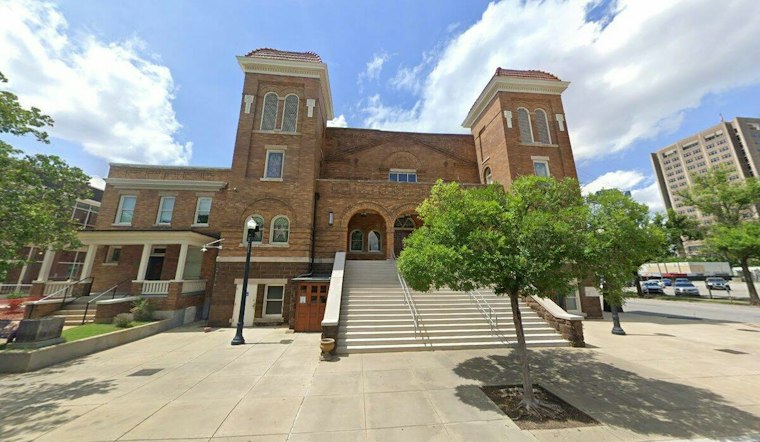
Andrew Young, the civil rights leader who once sat on the negotiating committee that helped end the Birmingham Campaign, is coming back to the city that shaped his activism. He will be the featured speaker Thursday, Oct. 8, at 10 a.m. when Christian Churches Together marks its 20th anniversary at the historic 16th Street Baptist Church, where a 1963 bombing killed four young girls in the basement ladies' room.
Richard Arrington Jr., Birmingham's first Black mayor, will introduce Young during the program, according to AL.com. Young is described in the report as a civil rights leader, ordained minister, diplomat, former member of Congress, former U.S. ambassador to the United Nations and former mayor of Atlanta. Birmingham Mayor Randall Woodfin said the city is honored to welcome “Ambassador Andrew Young back to the city,” per the same report.
A Negotiator From the Birmingham Campaign Itself
Young's ties to the church and the city run deep. He served as a strategist and negotiator in the nonviolent campaign against segregation in 1963, and that same year he was, according to the Martin Luther King, Jr. Research and Education Institute at Stanford, “a key figure on the biracial negotiating committee that forged the hard-won agreement that ended the Birmingham Campaign.” The AL.com report also notes Young participated in efforts challenging segregation in Christian worship. At Thursday's event, Young said faith, nonviolence and negotiation could help change a city and ultimately help change a nation, the station's report notes.
The Church Where Four Girls Died
16th Street Baptist Church was founded in 1873 as the First Colored Baptist Church of Birmingham, and the current building, completed in 1911, carries modified Romanesque and Byzantine design features, according to the church's own history page, 16thstreetbaptist.org. The site explains that because of segregation, the church functioned as a meeting place, social center and lecture hall for Birmingham's Black citizens, and it adds that W.E.B. DuBois, Mary McLeod Bethune, Paul Robeson and Ralph Bunche were among the noted Black Americans who spoke there in its early years.
By the early 1960s the church had become headquarters for the civil rights mass meetings and rallies that defined the movement in Birmingham, per the church's history. Then, on September 15, 1963, it was bombed, killing four young girls: Addie Mae Collins, Denise McNair, Carole Robertson and Cynthia Wesley. All four died in the basement ladies' room where they were putting on their choir robes before Sunday service, according to WVTM13, which also reported that the church holds an annual commemoration service honoring the four girls.
A Forum Built on a 2011 Reckoning
Christian Churches Together previously gathered at the same sanctuary in 2011 to examine poverty and racism through the lens of the civil rights movement, reading Martin Luther King Jr.'s “Letter from Birmingham Jail” during that visit, AL.com's report states. That reading reportedly prompted CCT leaders to realize that no clergy body had ever issued a formal response to King's letter, leading the organization to issue a statement in 2013 acknowledging church failures and recommitting Christian leaders to work together for justice.
Thursday's 20th-anniversary gathering is expected to bring together leaders from Catholic, Orthodox, historic Black church, mainline Protestant and evangelical/Pentecostal traditions. Monica Schaap Pierce said the anniversary calls Christian Churches Together to recommit to reconciliation, healing and service, according to the report.
A Gathering at the Historic Church
Young is set to speak at the historic 16th Street Baptist Church.




