

























































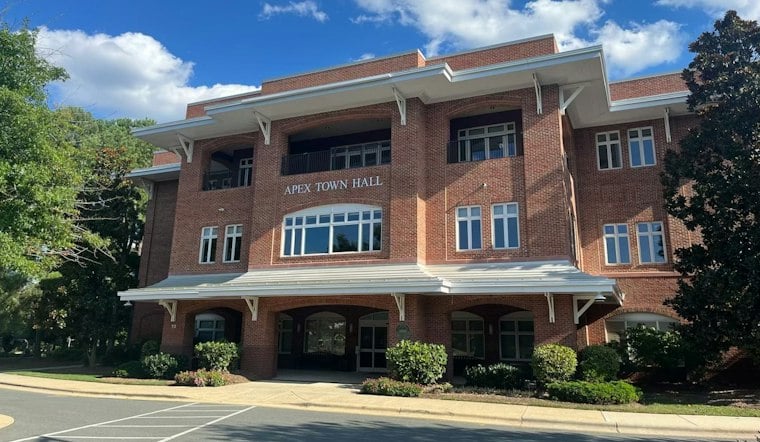
Apex residents will keep setting loose grass clippings at the curb for now, after the town council voted 4-1 on September 22 to delay a proposal that would have ended the service by January 1, 2027. The pause came after public works staff revealed that the company currently hauling away Apex's clippings has not agreed to keep accepting them long-term.
Apex Public Works Director John Mullis told the council that heavy, wet grass clippings cause severe wear on the specialized vacuum trucks the town relies on for pickup, machines built mainly to handle leaves, according to Citizen Portal. As the Raleigh News & Observer reports, Apex currently hauls its grass clippings to Greenway Waste Solutions, which transfers the material on to the Bryant Grading landfill in Harnett County — but Greenway has not committed to the long-term arrangement Apex wants, leaving the town searching for a nearby processor willing to accept its volume of clippings going forward.
The stakes are significant. Per the same report, Apex collected about 1,750 tons of grass clippings last fiscal year, just over a quarter of the town's total 6,254 tons of yard waste, across roughly 26,000 collection points. The town's full yard-waste program cost about $2.53 million in fiscal 2025-26, and the related monthly fee on resident bills rose by $3.05 this fiscal year to $10.88.
Why Apex's Hauler Problem Is Different
The complication traces back to Apex's newer, five-year agreement with Liberty Waste Solutions, which covers leaves, limbs and other accepted yard waste but does not cover grass clippings. Dan Shields of Liberty said the company cannot accept grass clippings as a waste stream at all, since it does not compost at its Apex site and cannot haul the clippings on to another disposal outlet, the article notes.
That leaves Apex as something of an outlier regionally. Of five Wake County municipalities reviewed, Apex is the only one that routinely allows loose grass clippings to sit at the curb for vacuum-truck pickup — every other town studied requires grass to go into bags or carts rather than loose piles.
How Neighboring Towns Handle Grass Clippings
Cary, with about 56,000 households, collects yard waste weekly and requires grass clippings in paper bags or reusable containers, totaling roughly 10,000 tons collected last fiscal year. Cary sends its yard waste to McGill Environmental Systems under a contract running through June 2028, though McGill has been unable to commit to taking on additional tonnage for Apex, per the same account.
Holly Springs, with 16,257 households, collects every other week using brown yard-waste carts and collected 5,195 tons last year, relying on different contractors and disposal sites depending on season and volume. Fuquay-Varina, with about 18,000 eligible households, collects yard waste by request in rigid containers and logged 2,480 tons last fiscal year using three vendors without a long-term disposal contract. Morrisville, the smallest of the group with about 6,700 homes, collects twice monthly in paper bags or personal containers and collected just 247 tons last year — meaning Apex collected roughly seven times as much grass alone as Morrisville collected in all yard waste combined, the News & Observer found.
Morrisville's hauler, GFL Environmental, sends that town's yard waste to Raleigh's own processing facility, which does accept grass clippings. But Apex would need its own agreement with the City of Raleigh and a transfer operation to tap into that option, according to the report. Raleigh's Yard Waste Center on New Hope Road turns municipal collections into OMRI-listed compost and mulch, but per the City of Raleigh, it restricts public drop-offs to residential Wake County loads and excludes commercial contractors.
A Regional Capacity Crunch
Apex's hauler trouble reflects a wider bottleneck. The Central Pines Regional Council, which serves Wake and six surrounding counties, is studying yard-waste and organics infrastructure after regional public works directors warned of a shortage in local composting capacity, according to the Central Pines Regional Council. State law has banned yard waste from landfills statewide since 1993 under North Carolina General Statute, limiting its disposal in landfills, per the NC Department of Environmental Quality.
Wake County's South Wake Landfill in Apex receives about 500,000 tons of municipal solid waste annually and is projected to reach capacity sometime between 2040 and 2045, but strict state rules already prohibit it from accepting yard waste in its general disposal stream, according to Wake County government. Neighboring Cary is facing its own facility squeeze: Hoodline previously reported on a railroad land grab forcing Cary's Citizen's Convenience Center to reconfigure by December 31, 2026, retaining only food and yard-waste drop-offs while other services relocate.
What Comes Next for Apex Residents
In the meantime, Apex is shifting all residential yard-waste pickups from weekly to biweekly starting October 19, splitting the town into Zone A and Zone B along Interstate 540 to reduce missed collections and give crews time for truck repairs, according to the Town of Apex. Longer term, public works plans presented to the council in April outlined delivering standardized yard-waste rolling carts to residents by mid-2028 to eliminate loose curb piles and protect storm drains.
Mayor Jacques Gilbert also tasked the town's Mayor's Internship Program, made up of local high school students, with surveying residents and researching cost-effective collection alternatives to bring back to the council. The council has now asked staff to return with comparisons of neighboring towns' grass-collection systems and cost information before its next vote, scheduled for November 10.
If curbside pickup does end, Apex's roughly 80,000 residents would need to mulch, compost or find another outlet for their clippings. NC State Extension horticulturists note that grass clippings are 75% to 85% water and decompose quickly, returning nitrogen, phosphorus and potassium to the lawn. Grady Miller said homeowners would very rarely need to remove clippings from their lawns under this approach, known as grasscycling, though it may mean mowing somewhat more frequently.





