

























































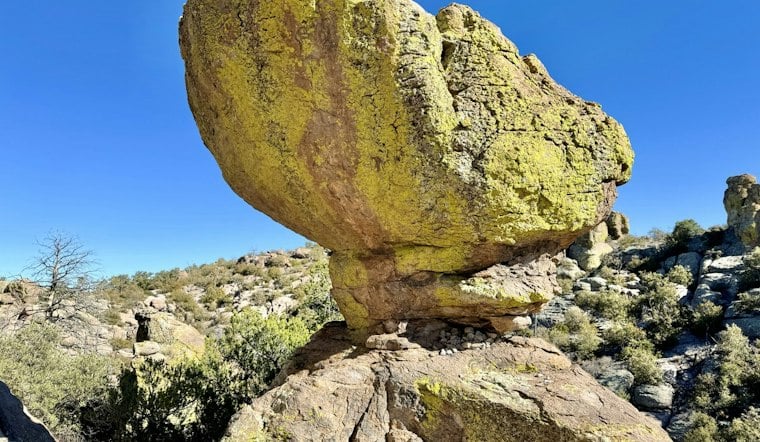
Congress has passed legislation to redesignate Chiricahua National Monument in southeastern Arizona as the state's fourth national park, sending the measure to await President Donald Trump's signature. The roughly 12,000-acre site in rural Cochise County is known for its rhyolite pinnacles and balanced rocks, and Apaches knew the land as the Land of Standing-Up Rocks.
A Long Road Through Congress
According to azcentral.com, the bill passed the House in March and the Senate approved it on September 30 before heading to the White House. Rep. Juan Ciscomani, R-Ariz., and Rep. Greg Stanton, D-Ariz., introduced the Chiricahua National Park Act in the House, while Sens. Mark Kelly and Ruben Gallego carried companion legislation in the Senate. The Las Vegas Review-Journal reports the measure cleared Congress with bipartisan backing.
Chiricahua was first established as a national monument in 1924 by President Calvin Coolidge, according to AZPM. Its signature rhyolite rock formations were created more than 27 million years ago by a volcanic eruption, the station notes. More than 60,000 visitors are drawn to the site annually, and AZPM reports those visitors spent $3.7 million in local gateway communities back in 2017.
What Comes Next for Arizona's National Parks
If the bill is signed, Chiricahua would join Grand Canyon, Petrified Forest and Saguaro as Arizona's national parks, per azcentral.com's reporting. Saguaro National Park, established in 1994, had been the last new national park designated in the state, AZPM notes. Nationally, the Review-Journal's reporting describes the site as covering 19 square miles, or 49 square kilometers, within the historical territory of the Chiricahua Apache tribes.
Supporters see the designation as an economic boost for nearby communities. “More visitors can mean more customers for our hotels, restaurants, and small businesses,” one supporter told azcentral.com, pointing to towns like Willcox. Rep. Ciscomani has said Chiricahua holds its own against the Grand Canyon and remains undiscovered, according to the Review-Journal's account.
Funding Concerns Shadow the Celebration
Not everyone is purely celebratory. The Arizona Trail Association's executive director told azcentral.com that the site would need robust funding to meet national park standards, warning it's going to need robust funding to live up to the new designation. The same executive director also said National Park Service staffing has been cut by 25 percent, raising concern that Chiricahua might not receive enough funding to preserve its resources.
Those worries track with broader figures reported by KJZZ, which found the White House has proposed slashing the National Park Service's operating budget by roughly $736 million for the 2027 fiscal year. The National Parks Conservation Association told the station the agency has lost nearly a fourth of its entire workforce — more than 4,000 staff — since the start of Trump's second term. The Review-Journal reports that National Park Service officials declined to say whether new staff would be hired or whether immediate changes were planned, and that Chiricahua maintenance projects had been ranked a low priority by officials even as White House-requested projects included repairs to the Lincoln Memorial reflecting pool.
Layers of Human History in the Rocks
The landscape carries deep history beyond its geology. Early settlers called the site the Wonderland of Rocks, and the Chiricahua name comes from the surrounding mountains, per the Review-Journal's reporting. The area shows evidence of thousands of years of human use, and Apache nomadic tribes called it home for centuries before Apache leaders surrendered to U.S. troops in 1886 and were forcibly removed to the San Carlos Apache reservation. Buffalo Soldiers were stationed at the site after the Civil War, participating in a government campaign against Apache leaders Geronimo and Cochise, the paper reports.
The park bill preserves tribal access for traditional ceremonies and allows temporary public closures to protect cultural uses, according to the Review-Journal. San Carlos Apache tribal leaders did not take a formal position on the designation. Justine Jimmie asked Congress in 2024 for uninterrupted access to the site, saying tribal members use cultural areas in parks to seek sanctuary, pray and perform ceremonies.
Costs and the Legal Record
On the financial ledger, the Congressional Budget Office estimates implementing the legislation would cost less than $500,000 over the 2026-2031 period, according to cbo.gov, with any related spending subject to the availability of appropriated funds. The underlying bill, H.R. 6380, would redesignate Chiricahua National Monument as Chiricahua National Park and address administration and protection of traditional cultural and religious sites, including tribal access and possible temporary public closures, per the bill text filed with congress.gov.
Franklin Roosevelt expanded the monument in 1938, and the site is designated as about 85 percent wilderness today, according to the Review-Journal. It already has a visitor center, campground and hiking trails in place. National monuments are designed to protect specific locations and objects, while national parks carry a broader purpose that includes recreation and preservation of vast wilderness, and the National Park Service manages both designations. Should Trump sign the measure, Chiricahua would become the first new national park since New River Gorge National Park and Preserve in 2021, the Review-Journal reports.



