

























































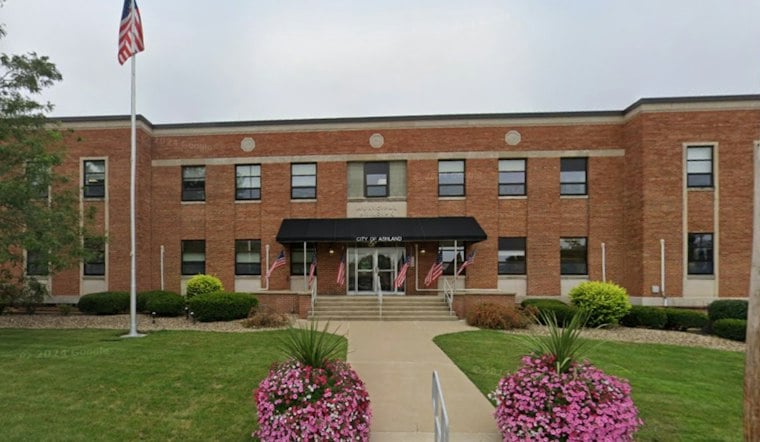
Ashland County homeowners are opening their mailboxes to find property value notices that have some of them stunned, with the county's latest reappraisal pushing the average home value up by about 22%. For residents like Nathan James, who bought his brick home near downtown Ashland more than two decades ago, the new numbers feel disconnected from reality, and he's not alone in questioning how the county arrived at them.
James told News 5 Cleveland he bought his house back in 2005, before the housing crash reshaped the market. Since then, the numbers have only climbed: his property value rose more than 30% since the last market value update three years ago, and more than 84% over the past six years, climbing from $112,510 in 2020 to $207,550 in 2026. James believes the increase outpaces what his home is actually worth, estimating the new value is about $40,000 too high, and he points to a home that still needs a new roof and balcony railing as reasons the figure doesn't add up. He also said nearby comparable homes are listed below his assessed value.
A Reappraisal Six Years in the Making
Ohio law requires counties to conduct a full sexennial reappraisal every six years, with a physical inspection of every property, distinct from the triennial updates that fall in between and rely primarily on local sales trends, according to Mansour Gavin LLC. Ashland County's last triennial update, in October 2023, had already pushed average property values up 36% across roughly 25,000 notices sent out by Auditor Cindy Funk, according to a report from Ashland Source. This year's 22% jump lands on top of that earlier surge, part of a compounding trend playing out across multiple valuation cycles.
Ashland County isn't going through this alone. For tax year 2026, it's one of 13 Ohio counties undergoing the full sexennial reappraisal, a group that also includes Butler, Clermont, Fulton, Greene, Montgomery, and Summit counties, per KJK. County auditors calculate market value largely based on the local housing market, comparing low and high neighborhood sales against a given home, the auditor's office has said.
Late Notices and Long Waits
James said he received his property value notice late, on September 19, well after informal hearings had already begun. Ashland County had scheduled informal meetings for September 14 through 18, plus September 21 and 23, giving homeowners a chance to raise questions directly with the auditor's office before any formal appeal process kicks in. When James and roughly 20 other people showed up at the auditor's office on September 21 for those informal sessions, he ended up waiting at least three hours to be seen.
Funk said the notices were postmarked within a reasonable timeframe and attributed the delays to mail delivery issues rather than any problem on the county's end. She also noted the informal hearings are a courtesy, not a requirement, though the auditor's office did extend the informal meeting window by three days to accommodate residents. Funk added that she believes she could probably sell her own house for more than the value listed on her notice.
How Ohio's Tax Formulas Actually Work
The sticker shock over rising valuations doesn't necessarily translate into an equivalent jump in tax bills, because Ohio calculates real estate taxes using an assessed taxable value equal to just 35% of a property's fair market value, not the full appraised figure, according to the Ohio Department of Taxation. On top of that, House Bill 920, passed in 1976, automatically adjusts effective tax rates downward on voted millage as property values rise, which is designed to prevent local governments from collecting unexpected windfalls simply because real estate values went up.
That protection has limits, though. The first 10 mills of property tax in Ohio, known as inside millage, are unvoted rates authorized by the Ohio Constitution and are not reduced by House Bill 920's adjustment factors, according to the Ohio Farm Bureau, meaning bills can still creep upward even when voted levies are scaled back. In December 2025, state lawmakers enacted a package of reform statutes, including House Bills 129, 186, 309, and 335, aimed at capping property tax growth tied to inside millage and the 20-mill school funding floor to the rate of inflation, per Squire Patton Boggs. That followed an October 2025 push from Governor Mike DeWine's Property Tax Reform Working Group, which delivered 20 recommendations to state leaders, including expanding the senior homestead exemption and limiting emergency school levies, according to the Ohio Township Association.
What Homeowners Can Do Next
Homeowners who believe their new values are wrong have a formal path forward. Property owners can contest a reappraisal by submitting a Complaint Against the Valuation of Real Property, known as DTE Form 1, to the county Board of Revision, with complaints accepted between January 1 and March 31, according to the Ohio Department of Taxation. Funk said that process requires homeowners to appeal at a different time than the informal meetings, and in a more formal manner, with supporting photos or documentation allowed as part of a challenge.
The Board of Revision includes a county commissioner, the county auditor, and the county treasurer, and it will review valuation complaints and follow up with property owners before issuing a final determination. If a homeowner remains unsatisfied with that decision, Ohio law allows a further appeal to either the state Board of Tax Appeals or the county Court of Common Pleas, according to McDonald Hopkins. James said he plans to hire an independent appraiser to challenge his new value, though he acknowledged he doesn't know whether the effort will ultimately save him money or change the assessed figure at all.




