

























































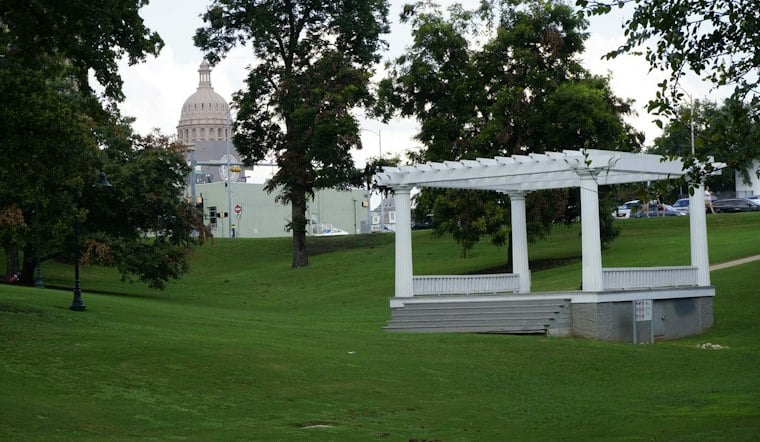
Austin City Council voted on October 8 to authorize a five-year agreement with Travis County that could eventually turn two downtown landmarks—the 1931 Heman Marion Sweatt Travis County Courthouse and the Austin History Center—into a connected History Corridor wrapped around Wooldridge Square Park. The deal commits the city and county to share historical research and collaborate on exhibits, events and heritage tourism, with an eye toward a future downtown historic district.
A Low-Cost Agreement With a High-Stakes Goal
According to Community Impact, the interlocal agreement carries no immediate fiscal impact — neither government owes the other payments under its terms. The agreement runs through October 31, 2031, with an option for a 12-month extension, and either party can walk away with 30 days' notice. The Austin History Center will administer the deal on the city's behalf, while the Travis County Historical Commission will do the same for the county.
Travis County commissioners unanimously approved the agreement as part of their consent agenda on September 9, and it takes effect once authorized representatives of both governments sign it, the outlet reports. The history corridor effort formally links the Sweatt courthouse and the Austin History Center, according to county commission records cited by the same report.
The Courthouse's Civil Rights Legacy
The Sweatt courthouse takes its name from Heman Marion Sweatt, who was denied admission to the University of Texas School of Law in 1946 under the state's segregation laws and sued in Travis County District Court. Thurgood Marshall argued Sweatt's case inside the courthouse; Sweatt lost at trial but won at the U.S. Supreme Court in 1950, per Community Impact's reporting. That unanimous decision required substantive equality in educational opportunity, setting the direct legal precedent for Brown v. Board of Education four years later, according to the National Archives. Travis County renamed the courthouse for Sweatt in 2005.
Built in 1931, the courthouse moved its civil and family courts to a new downtown facility in 2022. County staff reported in May 2025 that the building, while it missed out on a 2024 state planning grant, may still qualify for future state construction grants and currently houses a Justice of the Peace court, a state business court and county clerk records storage, according to Community Impact's earlier coverage.
Funding Gap Still Looms Over Restoration
Restoring the courthouse is estimated to cost $124 million, and Travis County has earmarked just $10 million toward that goal so far, the outlet reports. County Judge Andy Brown has suggested the courthouse could eventually become museum space, and has floated naming the nearby planned light rail station the Museum District.
The funding picture traces back to 2023, when Travis County voted to allocate $100,000 for a historic preservation architect after discovering that a 2016 draft master plan had been submitted to the historical commission but never revised for approval — leaving the building without a valid approved plan on file and temporarily ineligible for Texas Historical Commission grants, according to the Austin Monitor. An approved historic preservation master plan is needed for funding eligibility; grants are capped at $10 million or 2 percent of the program's biennial funding, whichever is greater.
A Library Building Freed Up Across the Square
Across Wooldridge Square sits the reopened Austin History Center at 800 Guadalupe. The former central library building, built in 1933 at Ninth and Guadalupe, served as Austin's main library until 1979. In December 2025, a $14.5 million renovation expanded the History Center's archival operations into the adjacent 110,000-square-foot Faulk Building, per the Austin Chronicle.
The timing dovetails with Austin Public Library's 2026 centennial, which has included a systemwide History Harvest collecting community artifacts for the History Center's archives — an effort Hoodline covered in February. Community Impact reported it contacted Austin Public Library for comment on October 8 but had not received a response before press time.
A Park With Its Own Deep History
The two buildings frame Wooldridge Square Park, platted in 1839 under Edwin Waller's original city plan and the only one of Austin's four original public squares to have operated continuously as a park, according to the City of Austin. The square hosted civil rights leader Booker T. Washington before 6,000 attendees in September 1911 and served as the central assembly ground for the Texas women's suffrage movement ahead of the state's 1919 ratification of the 19th Amendment, per the Downtown Austin Alliance.
Its 1909 Classical Revival gazebo was built under a rehabilitation initiative sponsored by Mayor A.P. Wooldridge, according to The Cultural Landscape Foundation.
Transit Plans Could Reinforce the Corridor
The proposed history district also intersects with Austin's transit future. The Austin Transit Partnership's Phase 1 light rail plan, updated in January 2025, officially includes a downtown station along Guadalupe Street at Wooldridge Square, aligning transit infrastructure with the county's history district ambitions.




