

























































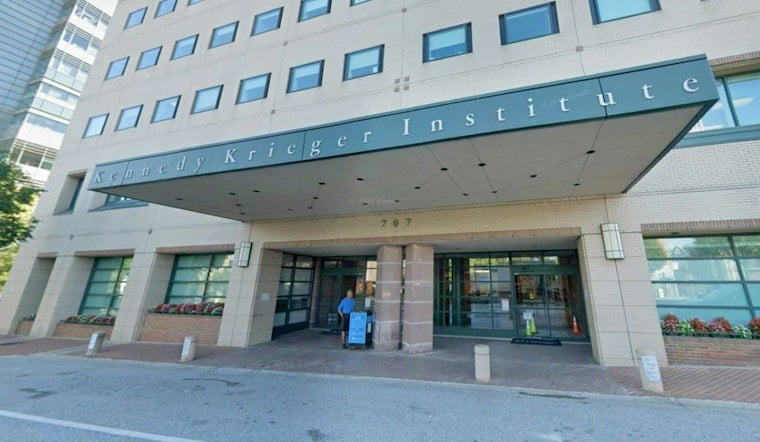
Clinicians, advocates and lawmakers are converging on Baltimore Wednesday for a daylong summit aimed at stopping a crisis that is sending more Maryland kids to emergency rooms in behavioral distress. The 4th Annual Maryland Youth Suicide Prevention Summit runs from 8:30 a.m. to 4 p.m. at the Harry and Jeanette Weinberg Building on the Kennedy Krieger Institute campus, bringing together professionals to focus on crisis prevention, screening tools and safety assessments for children and teens.
The gathering, which is free to attend but requires registration, is hosted by Kennedy Krieger Institute and sponsored by the Maryland Chapter of the American Academy of Pediatrics, according to WBAL News Radio. The event began in 2023 as a one-time conference before organizers made it annual, following progress by participants; Dr. Terry Nguyen has emphasized sharing resources and improving communication, according to Kennedy Krieger Institute.
Dr. Matthew Edelstein, a clinical psychologist at Kennedy Krieger Institute, said preventing, managing and treating young people who are highly dysregulated and consider suicide remains a critical priority, per the station's report. Children in crisis often struggle to keep themselves safe, and caregivers frequently lack the tools to help them through it, the station notes. Edelstein pointed to social media and the internet as a common thread running through cases involving a search for connection, online bullying and kids feeling targeted by peers.
A Crisis Outpacing School and Hospital Resources
Suicide is the second-leading cause of death in the United States for children, adolescents and young adults ages 10 to 24, per the CDC, as cited in the same account. Emergency department visits tied to behavioral health crises — including dysregulated behavior, suicidal activity, aggression or self-harm — are on the rise, the report states. Edelstein said specialized training is needed to understand a child's level of risk and what kind of support they need during a crisis.
That strain is colliding with a severe staffing shortage inside Maryland's public schools. The state's K-12 system had just one school psychologist for every 1,066 students as of 2025, more than double the nationally recommended benchmark of one to 500, according to data compiled by NAMI Maryland. That shortfall increases reliance on community health organizations and hospital emergency rooms for acute youth crises, the organization notes.
The scale of the underlying problem is stark. NAMI Maryland estimates roughly 63,000 Maryland adolescents ages 12 to 17 — about 1 in 9 — experience serious thoughts of suicide each year, with 608 total suicide deaths recorded statewide in 2022.
State Leaders Target Young Men and Hospital Bottlenecks
Governor Wes Moore has cited findings that suicide rates among young men under 30 nationwide have climbed by more than one-third since 2010. Maryland state leaders have prioritized targeted support initiatives for young men and boys, according to the Office of the Governor of Maryland.
Separately, Senate Bill 696 and House Bill 962, passed in 2025, created dedicated agency coordinators tasked with reducing pediatric hospital overstays for youth who remain hospitalized more than 48 hours after being medically cleared from a behavioral health crisis, according to the Maryland Psychiatric Society. Such overstays often stem from a shortage of licensed residential and community placement options, the group notes.
Crisis Line and Trusted-Adult Training Fill Gaps
For families facing an immediate safety concern, Edelstein recommended seeking help at an emergency department or by calling 988, the Suicide and Crisis Lifeline, per WBAL's report. Maryland's 988 call centers received 58,552 contacts in 2023, according to NAMI Maryland.
Maryland also enacted legislation in 2024 requiring public high schools and colleges to provide mental health literacy training for athletic coaches, part of a growing national movement recognizing coaches as trusted adults who can spot early warning signs, as Hoodline previously reported.
Wednesday's summit recommendations are expected to include formal assessment protocols for suicidality and risk, programs to help families navigate the system, and legislative priorities for future sessions, per WBAL. Organizers say the goal is to bring clinicians, advocates and lawmakers into the same room to coordinate a response to a crisis that continues to outpace the resources meant to contain it.





