

























































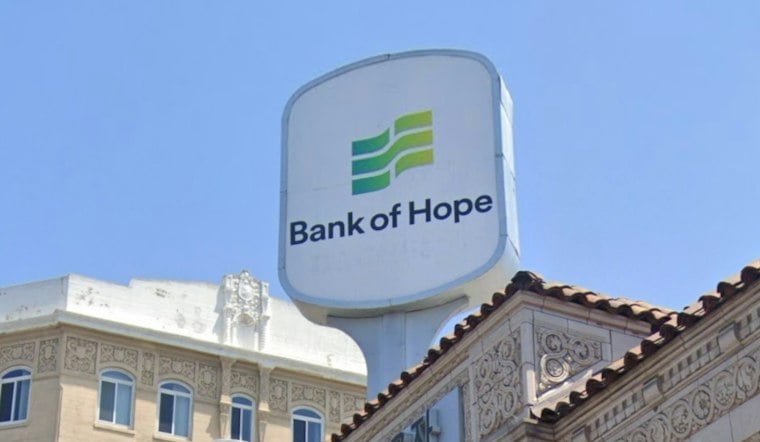
Bank of Hope officially closed its acquisition of SMBC MANUBANK's commercial banking unit on October 1, picking up $2.3 billion in loans, $2.6 billion in deposits, and seven commercial branches scattered across Southern California. The downtown Los Angeles-based lender, long known as a major bank for the region's Korean American business community, now finds itself with a much broader reach into Asian corporate banking across the West Coast.
The deal, first announced in late March, closed after Hope Bancorp secured sign-off from both the Federal Deposit Insurance Corporation and California's Department of Financial Protection and Innovation, according to a Hope Bancorp regulatory filing issued September 2. As reported by the Los Angeles Business Journal, Kevin Kim, chief executive of Bank of Hope, said the transaction expands the bank's commercial capabilities and strengthens client engagement, calling it a move that aligns with the company's strategic priorities.
Bank of Hope now carries $18.5 billion in assets, making it the fourth-largest bank headquartered in Los Angeles, per the same outlet's reporting. The institution traces its roots to a 2016 merger between BBCN Bank and Wilshire Bank, and before this latest expansion it operated 45 branches across six states, plus another 28 branches in Hawaii under the Territorial Savings banner.
A New Collaboration With a Japanese Banking Giant
The asset purchase comes bundled with something bigger: effective with the October 1 closing, Bank of Hope and Sumitomo Mitsui Banking Corporation activated a strategic collaboration agreement naming Bank of Hope the primary U.S. commercial and consumer banking partner for SMBC's Japan-based middle-market and retail clients, according to ABF Journal. That arrangement gives Bank of Hope a direct pipeline to Japanese corporations expanding operations in the United States.
Bank of Hope intends to combine SMBC MANUBANK's Japanese Banking Division with its existing Korean Subsidiary Group, creating what the Los Angeles Times described as a consolidated cross-border platform serving Asian multinational corporations operating in the U.S. The acquired unit brings specialized divisions covering Japanese corporate banking, middle-market diversified industries, quick-service restaurant franchise finance, commercial real estate, SBA lending, and trust and estate deposit services, the Times reported.
Replacing Pricey CDs With Business Deposits
Bank of Hope hopes the newly acquired business will diversify its deposit mix and lower the percentage of certificates of deposit weighing on its books. Julianna Balicka, chief financial officer of Bank of Hope, said CDs remain a preferred product for the bank's core customer base but carry higher interest costs and rigid terms that can hurt profitability.
That dynamic is central to why the deal matters for Bank of Hope's balance sheet, according to the Business Journal's reporting: swapping expensive, rigid CDs favored by its retail base for lower-cost, diversified middle-market business deposits. Hope Bancorp projected the transaction would be more than 20 percent accretive to earnings per share in 2027 and would push return on tangible common equity to roughly 12 percent that year, up from about 3 percent in late 2025, per Investing.com.
Getting there isn't free. The bank anticipated incurring $30 million in after-tax merger-related expenses, and it retained Keefe, Bruyette & Woods and Skadden Arps as financial and legal advisors for the deal, while SMBC turned to RBC Capital Markets and Davis Polk & Wardwell, according to The Bank Slate.
Why SMBC Is Walking Away From Retail
SMBC's decision to shed this commercial unit fits a broader pattern at the Japanese megabank, which has been pivoting toward wholesale and institutional banking in the U.S. The bank wound down its digital retail arm, Jenius Bank, earlier in 2026 and transferred $2.3 billion in consumer deposits to Axos Financial in May, as detailed by American Banker.
Hope Bancorp reported total assets of $18.99 billion as of June 30, reflecting core growth even before the SMBC MANUBANK transfer landed on its books, per Stock Titan. The bank closed out 2025 with net income of $61.6 million, or $113.3 million excluding notable items, citing lower deposit costs and reduced reliance on brokered deposits following its earlier Territorial merger, according to a Hope Bancorp earnings release.
Building On a Pacific Rim Expansion
This is not Bank of Hope's first big regional acquisition in recent years. The bank bought Hawaii-based Territorial Bancorp Inc. on April 2, 2025, adding $1.7 billion in core deposits and 28 island branches operating under the Territorial Savings Bank trade name, according to Nasdaq Trader. Hoodline previously flagged that Hawaii deal as part of broader shifts in the island's banking market.
Looking ahead, Bank of Hope says it plans to expand its middle-market and multinational banking capabilities, develop specialty deposit verticals, and broaden its presence in its core Southern California market. Whether the bank can smoothly absorb the seven newly inherited branches and retain SMBC's middle-market relationship managers remains an open question for future coverage, one that will likely shape how quickly the promised earnings boost actually materializes.





