

























































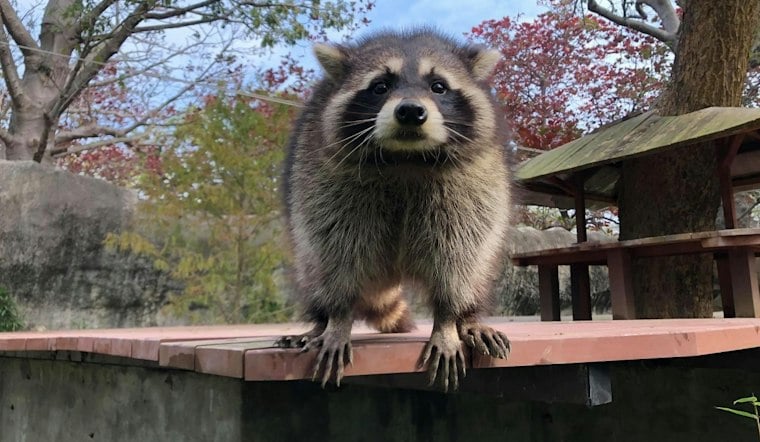
Hal Hamilton was just heading to his mailbox on the morning of Oct. 2 when, he says, a raccoon came at him from behind on the front steps of his Barrington, Rhode Island home. The 91-year-old says the animal struck him behind both knees, knocked him off balance, and bit him before he beat it back with his cane.
Hamilton told turnto10.com that the attack happened just after 9 a.m., as he walked down the steps of his own home. He fought back with his cane, striking the animal and poking it until it moved away, according to the station's report. At first, Hamilton did not realize the raccoon's bites had broken his skin — it was only later that he discovered the wounds behind his legs, per the same account.
Turned Away From Urgent Care
With bite wounds in hand, Hamilton sought medical attention, but Brown Urgent Care told him it could not treat him and that he would need to go to a hospital in Newport instead, the station reported. As Boston 25 News also reported, Hamilton needed a rabies vaccine following the encounter. He ultimately got the shot at a local CVS, paying $440 out of pocket because his insurance copay did not cover the vaccine, the station's report notes. Hamilton has since received a follow-up booster, according to turnto10.com.
The Department of Health and local officials were also notified about the encounter, per the station's reporting.
A Rough Year for Rabies in Rhode Island
Hamilton's ordeal comes amid what state health officials describe as heavy rabies activity across Rhode Island this year. In a release about two raccoons that tested positive for rabies in Warwick, the Rhode Island Department of Health said that 43 people had been exposed to rabid animals and received treatment in the state so far in 2026, with most of the rabid animals caught that year found in the northern part of the state. A later department release tied to a coyote encounter in Warwick put the 2026 figures higher, reporting 47 people exposed and treated and 39 rabid animals identified statewide — a number the department said already exceeds the average of 24 rabid animals reported annually between 2021 and 2025. The two releases do not specify matching reporting dates, so it is unclear which figure reflects the more current count.
Those two Warwick raccoons were not an isolated incident. The Providence Journal reported that people and dogs were exposed and treated after the animals tested positive there in September.
Raccoons Are a Leading National Culprit
Nationally, wildlife drives the overwhelming majority of rabies exposures. The Centers for Disease Control and Prevention says wild animals account for more than 90% of reported rabies cases in the United States, with bats, raccoons, skunks, and foxes most often exposing Americans to the virus. Rhode Island's health department, which tracks animal bites, animal rabies cases, and rabies vaccine releases statewide, describes rabies as a fatal but preventable virus typically spread through contact with an infected animal, according to its published rabies data.
A separate state analysis, examining Rhode Island's centralized rabies control program from 2013 through 2022, found that reported animal bite rates rose by 43 bites per 100,000 people over that span, the health department noted in a release highlighting the program's exposure-assessment work. For Hamilton, the broader statistics are beside the point — he is simply left with a punctured leg, a $440 bill, and a story about fending off a raccoon with his cane on his own front steps.





