

























































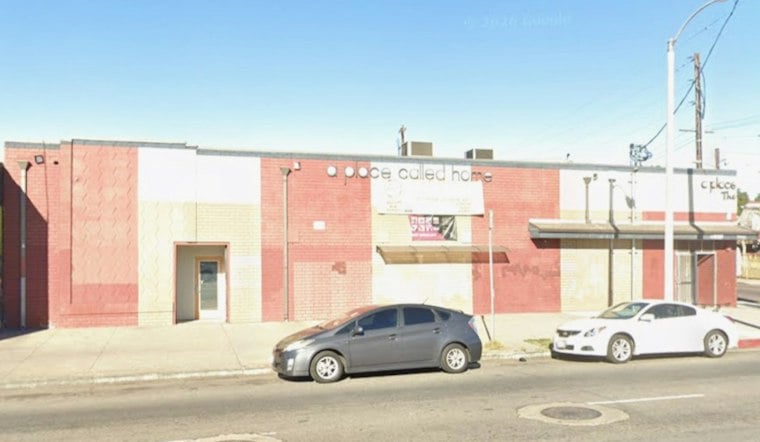
Los Angeles Mayor Karen Bass and City Councilmember Nithya Raman both told a South Los Angeles audience that the city's homelessness system is fundamentally broken, but the two mayoral rivals clashed over how to fix housing costs, policing and the city's role in the region's homelessness bureaucracy. The two candidates appeared separately at A Place Called Home, a venue roughly 20 blocks from where Bass grew up, in a forum that laid bare how far apart they remain on density, deregulation and the future of the Los Angeles Homeless Services Authority.
Two Candidates, One Diagnosis
Bass, who helped start the nonprofit Community Coalition in South LA in 1991, called the current homelessness system completely dysfunctional and pitched a new structure controlled directly by the city, according to LAist. Raman, for her part, said she supports leaving the Los Angeles Homeless Services Authority altogether and investing in a new homelessness bureau, and she committed to requesting an audit of the city's homelessness response on her first day in office if elected. Both agreed representation and city structure matter beyond symbolism — Bass argued that representation requires collaboration beyond having diverse faces in a room, while Raman said she wants communities represented across the mayor's office, commissions and departments.
The agency at the center of their complaints, LAHSA, oversees the city's delivery of homeless services and spent nearly $830 million in public funds during the last fiscal year, per LAist's reporting. That spending has drawn sustained scrutiny: an audit covering mid-2020 through mid-2024 found that officials could not accurately track homelessness spending after reviewing $2.4 billion in city funding, according to LAist. Auditors found LAHSA failed to verify whether invoiced services were actually provided and lacked sufficient financial accountability to trace substantial city-program funds, even as the city was projected to send about $306 million in taxpayer dollars to the agency that fiscal year.
Raman's Push for Oversight, Bass's Pushback on Bureaucracy
After that audit came out, Raman said it reinforced the need for real oversight and performance management, and she introduced a motion to create a centralized city team to collect homelessness-spending data. Bass countered at the time that the city's work should focus on serving unhoused people, not creating new bureaucracies — a tension that has continued to define the race. Raman also said street homelessness fell in her own council district even as citywide numbers rose, framing it as evidence her approach works, while Bass pointed to her signature Inside Safe and Pathway Home programs, which LAHSA says have combined to place 6,317 people in interim housing and permanently house 1,449 people since their inception.
The dispute over LAHSA's future has played out at the county level too. Los Angeles County has moved to stand up its own Department of Homeless Services and Housing, budgeting $843 million for the agency in the 2026-2027 fiscal year, according to NBC Los Angeles. That county department is expected to provide housing, manage rental assistance and conduct outreach to homeless residents. Bass and Raman both urged county supervisors to reject that plan, arguing that progress had been made over the past two years through the coordinated city-county agency and that officials must keep building on it together — a rare point of alignment between the rivals even as they diverge on what should replace the current system.
A Count That May Be Undercounting the Crisis
The backdrop to this fight is a homelessness count that LAHSA itself says is trending in the right direction. The agency reported homelessness fell 4% across LA County to 72,308 people and declined 3.4% in the city to 43,699 people in 2025, with unsheltered homelessness down 9.5% countywide even as sheltered homelessness rose 8.5%, according to LAHSA. Permanent housing placements reached an all-time high of nearly 27,994 in 2024, and officials said homelessness has now declined two years in a row because, in the agency's words, the city and county chose to act with urgency and reject the broken status quo.
But researchers at RAND found that the official count may be significantly understating the problem in some neighborhoods. In Hollywood, Venice and Skid Row, the gap between the official point-in-time count and RAND's separate LA LEADS estimate widened to 32% in 2025, meaning as many as 7,900 people and dwellings could be missing from the city's most recent official tally. Skid Row's point-in-time total was just 61% of the LA LEADS estimate, compared with 81% in Hollywood, per RAND. That count carries real financial stakes: it helped direct $220 million in federal homelessness funds in 2024 and roughly $100 million in regional Measure A dollars in 2025.
Density, Rentals and the Fight Over Who Gets Priced Out
Where the two candidates diverged most sharply was housing production. Raman criticized Bass's opposition to denser housing near transit centers, arguing that housing should be built across every Los Angeles neighborhood rather than concentrated in a few. Bass has opposed state Senate Bill 79, which would require the city to allow six- to nine-story apartment buildings near rail and key bus stops, saying development restrictions are needed to prevent gentrification and that housing growth must not displace Black and brown residents, according to the forum reporting relayed by LAist.
Bass pointed to her Executive Directive 1, which requires the city to fast-track approval of fully affordable housing projects with below-market rents, noting that nearly 36,000 affordable units had been approved under the program with another 11,000 pending, per the Los Angeles Times. Raman, who previously co-founded the SELAH Neighborhood Homeless Coalition before entering city politics, has her own policy win to point to: she secured approval of a 4% annual cap on rent increases in rent-stabilized buildings, according to the same voter guide.
The candidates also split over short-term rentals ahead of the 2028 Olympics. Raman criticized Bass's proposal to temporarily lift short-term-rental restrictions for the Games, warning that deregulation could displace tenants as landlords convert long-term rentals into vacation listings. Airbnb and business groups have backed the short-term-rental proposal, and campaign finance reports show Airbnb contributed more than $4 million to support Bass and three other city candidates.
Policing, ICE and Unarmed Responders
On public safety, Bass and Raman both vowed to expand pilot programs that send unarmed social workers to certain non-emergency 911 calls, with Bass arguing that homelessness, substance abuse and mental health are public health issues that law enforcement should not be handling. She also said she does not expect the LAPD's budget to be cut before the 2028 Olympics. Raman, by contrast, said she believes the LAPD is about the right size, while criticizing the department's cooperation with ICE during federal immigration raids.
That friction traces back to clashes between LAPD officers and protesters near immigration enforcement facilities, where the department used tear gas and rubber bullets against some demonstrators. LAPD Chief Jim McDonnell said the department would not enforce California's law banning federal immigration and law enforcement agents from wearing masks on duty after a federal appeals court blocked enforcement of that mask-ban law in February 2026. Bass said she would order McDonnell to enforce the state law if the judicial block were lifted, even as she defended the department's use of officers for crowd control during ICE operations. Bass also said unhoused people do not receive enough care after leaving the streets, underscoring a theme both candidates returned to throughout the forum: that getting people off the street is only the first step, not the whole solution.




