

























































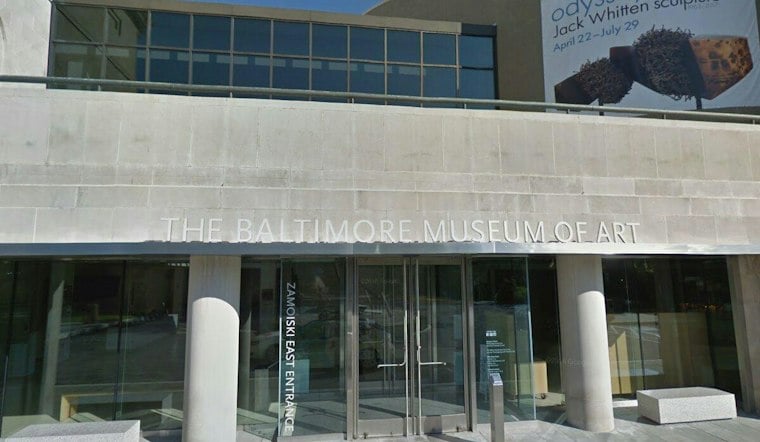
The Baltimore Museum of Art opens its doors Sunday to a sweeping new exhibition that traces nearly two centuries of the city through the lens of its own photographers, including what is described as the earliest known photograph of abolitionist Frederick Douglass. “Flashback: Two Centuries of Baltimore Photography” runs from October 4, 2026, through February 21, 2027, and bills itself as the first comprehensive survey of Baltimore's role in the evolution of the medium.
According to the Baltimore Museum of Art, the show spans more than 185 years and features more than 200 works by 90 named artists and historic studios. BmoreArt, however, puts the figure at 210 images by the same 90 named artists and studios, according to BmoreArt. Either way, the collection is vast, pulling together studio portraits, street scenes, rowhouse facades and documentary images that together chart how the camera became a tool of witness and documentation in Baltimore, per CBS Baltimore.
From Daguerreotypes to the Digital Age
Photography was invented and announced to the world in 1839, and Baltimore wasted little time catching up. Henry Fitz Jr. opened one of the first daguerreotype studios in the United States in Baltimore in 1840, just months after encountering Louis Daguerre's invention in Europe, the museum's report notes. CBS Baltimore separately reports that the city's first photo studio opened in June 1840.
That early embrace set the tone for what the exhibition argues became a Baltimore tradition: photography used not just to record the city but to build community and assert civic presence. The museum's description frames the medium as a tool Baltimoreans used early on for self-representation, community-building and civic engagement.
Douglass, the Uprising and Decades of Black Life
Among the show's most striking inclusions is a portrait of Frederick Douglass taken in 1841, which the museum describes as the earliest known image of the abolitionist. The exhibition also draws on decades of photojournalism by Irving Henry Phillips Sr., whose work documenting Black life in Baltimore ran for years in the Afro-American newspaper, according to the museum's exhibition page.
More recent history gets its due as well. The show includes images from the 2015 Baltimore Uprising and the 2020 Black Lives Matter protests, with photographers Devin Allen, Sheila Pree Bright, Joseph Mario Giordano and Shawn Hubbard among those represented, the museum says. Devin Allen photographed protests during the 2015 Baltimore Uprising, work that CBS Baltimore notes sits alongside more intimate, personal images elsewhere in the exhibition — including photographer Cary Beth Cryor's 1978 photographs of her own pregnancy and the delivery of her baby girl, taken after she fought medical staff to bring a camera into the delivery room, per the same CBS Baltimore report.
A Fuller Picture of the City
Danny Rodricks, writing on his own site, frames the exhibition's larger argument this way: photography not only records history but also shapes it, according to danrodricks.com. The museum's own materials echo that idea, noting that the exhibition highlights photographers whose work has often been obscured by gender and racial prejudice.
Co-curator Leslie Cozzi has said she hopes the exhibit gives a fuller picture of Baltimore's humanity and innovation, according to CBS Baltimore's report. Flashback is co-curated by Cozzi and Antoinette Roberts, with Jenna Paper-Evers, the museum states, and WJZ-TV is serving as the exhibition's media partner.
Open Call Photographers Get Their Own Spotlight
Beyond the main galleries, the museum has also built in a rotating showcase for contemporary talent. The Baltimore Museum of Art announced 12 photographers selected through its Flashback Open Call, whose work will be digitally presented, BmoreArt reported. Those projected works can be seen during regular museum hours in the BMA's special exhibition galleries and at BMA Lexington Market, the outlet's report adds.
Tickets for the exhibition start at $15, according to Baltimore Style's fall arts guide. With its run stretching into February, Flashback gives Baltimoreans months to take in a visual record that stretches from the city's earliest studios to the protest lines of the last decade.





