

























































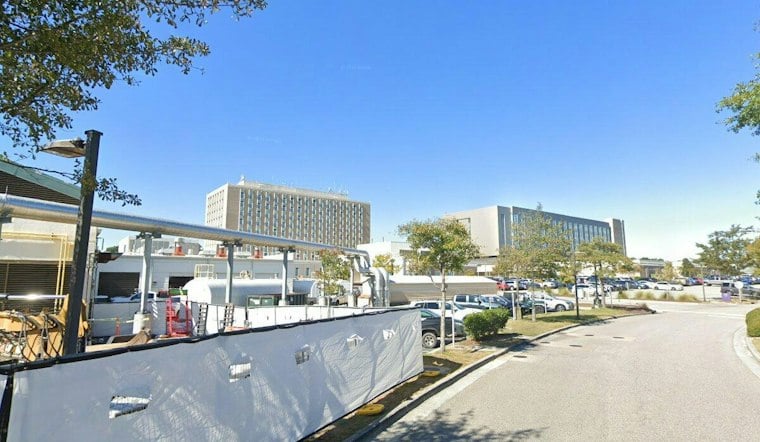
George Mandley was recovering from open-heart surgery when his heart suddenly took off, racing from about 80 beats per minute to 180. The Bolivia, North Carolina resident could feel something was wrong before anyone said a word. “Oh … something can’t be right here,” he recalled thinking.
Mandley had undergone open-heart surgery earlier this year at New Hanover Regional Medical Center after experiencing chest pains and shortness of breath that led doctors to tell him he needed the operation, according to wwaytv3.com. Days later, while still recovering, his heart rhythm spiraled into atrial fibrillation, the irregular heartbeat that can bring on lightheadedness or a fluttering sensation in the chest. “So, a week later, here I was,” Mandley said.
It was registered nurse Hyla Smith, working in the cardiovascular intensive care unit, who noticed the trouble first. Smith spotted irregular blips on Mandley’s telemetry monitor and immediately called in another nurse and a physician’s assistant, according to the Charlotte Observer. The care team confirmed Mandley had atrial fibrillation with rapid ventricular response and gave him medication to regulate his heart rhythm.
A Complication Doctors See Often After Heart Surgery
The response was fast. Staff recognized the change and began treating Mandley within minutes, the station's report states, and Smith said the turnaround was just as quick. “He had a complete turnaround within minutes, and he was able to catch his breath,” she said. Smith added that the episode was temporary while his heart was healing, and that in Mandley’s case it was likely caused by the open-heart surgery itself, with postsurgical swelling capable of interrupting electrical signals in the heart.
Postoperative atrial fibrillation is far from rare. It can strike anywhere from 20% to 60% of patients after heart surgery, per a 2019 study cited by health.usnews.com, with cardiologists estimating that a third to half of open-heart surgery patients develop it. Most cases emerge within the first seven days after surgery, though U.S. News notes the risk can linger for up to 90 days. Outside of surgery, atrial fibrillation can also be caused by coronary artery disease, hypertension and heart failure, and left untreated it can become dangerous.
Thanking the Team Months Later
Mandley returned to the hospital, by now part of Novant Health, on Sept. 14 specifically to thank the nurses who treated him. He said he was grateful for both the surgery and the recovery care that followed. Smith, for her part, downplayed the drama of the moment at the bedside. “You don’t want to scare your patient,” she said, advising that anyone who notices a rapid heart rate or unusual symptoms should contact their doctor.
Mandley’s story echoes that of another local cardiac patient, Leland real estate agent Daryl Bundy, who underwent a six-hour open-heart surgery at Novant Health after a stress test sent him to the emergency room, according to a separate wwaytv3.com report. Doctors repaired Bundy’s damaged aortic valve during that operation, and he later began cardiac rehabilitation, including stationary biking, treadmill walking and weightlifting several times a week.
Diagnosing and Treating an Irregular Rhythm
An electrocardiogram remains the main test doctors use to diagnose atrial fibrillation, according to mayoclinic.org, and treatment typically involves medicines aimed at either controlling the speed of the heartbeat or resetting its rhythm entirely. National guidance from the American Heart Association and allied cardiology groups describes atrial fibrillation as the most common sustained arrhythmia, with its incidence and prevalence rising across the United States and globally, and points to lifestyle and risk-factor changes, including addressing obesity, physical activity, smoking, alcohol use and hypertension, as a central pillar of managing it.





