

























































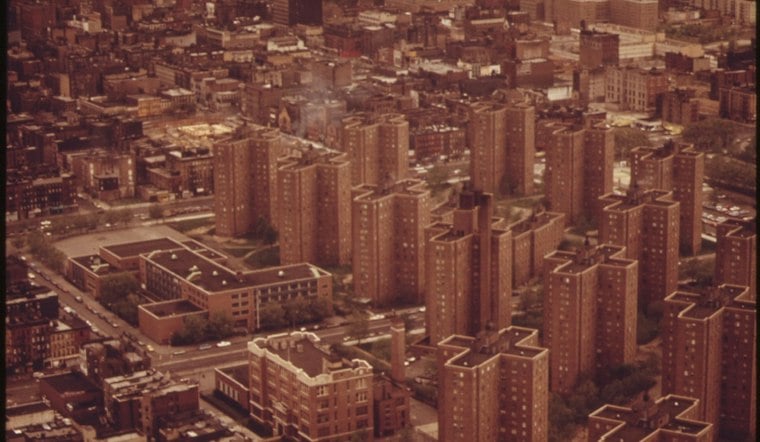
Construction workers in the South Bronx say they built affordable housing they could never afford to live in themselves, earning as little as $18 an hour while staffing agencies withheld paychecks and erased their accrued sick time whenever they complained. The accounts came out of a Bronx town hall where current and former workers described experiences with wages, working conditions and alleged retaliation on city-backed housing projects.
LIUNA Local 79 hosted the gathering, where one worker said he was employed by Marin Workforce and Apex Labor Solutions, non-union staffing firms that supply labor to city-backed affordable housing projects across the New York metropolitan area, according to the Bronx Times. That worker said he was paid $18 an hour, by his own account, and received job assignments with only a few hours' notice. He said his employers withheld paychecks after he complained about sick leave or working conditions, and that his accrued sick time simply disappeared. He said he received no mental health treatment after enduring verbal abuse on the job, and that his employers did not care about workers' safety or health.
A Union Card Changed Everything, Another Worker Says
A second worker described three and a half years working for Apex Marin under a contract that promised a pay increase every six months. He said his paycheck was withheld after he asked about a promised raise, and that a supervisor eventually told him not to return. Eight months before the town hall, he joined the union, and he now receives benefits and pay increases he said allow him to provide for his children.
Behind the Marin Workforce and Apex Labor Solutions brands sits the family-owned Marin Organization, which also operates Marin Laborers of NJ, per Local 79. The union notes the organization agreed to a 2021 settlement with the National Labor Relations Board over worker rights disclosures and a 2025 settlement paying more than $26,000 in back wages for violations of New Jersey's Prevailing Wage Act. Labor advocates say these so-called body shops primarily recruit immigrants and formerly incarcerated individuals from low-income and vulnerable communities.
Not an Isolated Incident
The South Bronx town hall followed an August 2026 protest at Kingsland Commons in East Williamsburg, Brooklyn, where union organizers and workers accused the Marin Organization and Apex Labor Solutions of functioning as body shops deploying untrained non-union workers into dangerous job site conditions, as reported by WNY Labor Today. The Brooklyn demonstration and Bronx gathering both focused on allegations about labor brokers.
Sandra Lobo, executive director of Our Bronx, told the crowd that housing development should support families with dignified, sustaining wages and respect for workers. She said public dollars used for housing should create family stability rather than poverty wages and unsafe conditions. Dave Bolger, business manager of the Mason Tenders' District Council, said the group is urging the city to end ties with labor brokers to prevent further abuses and called for a pledge against using labor brokers on government-subsidized housing, which dozens of workers and community members signed at the event.
Legal Framework Taking Shape
The Construction Justice Act, passed by the New York City Council in December 2025 as Local Law 21 of 2026, will establish a minimum wage, benefits and community-hiring standards for developers of city-assisted affordable housing projects. The act takes effect January 1, 2027.
The Bronx gathering came against the backdrop of 625 Brook Avenue, Building C of the La Central development in the South Bronx. La Central's final phase comprises Buildings C and E and 420 homes together, and received more than $137 million in city contributions, according to New York YIMBY. Workers and advocates said construction employees on projects like it can struggle to afford the very affordable housing they help build because of low wages.
Existing Oversight and the Road Ahead
New York City already has a regulatory framework governing construction labor brokers. Since November 2021's Intro 2318, known as the Body Shop Bill, staffing agencies have been required to obtain licensing through the Department of Consumer and Worker Protection and disclose information about corporate structure, wages, benefits and insurance, per The Real Deal.
Mayor Zohran Mamdani's administration is pursuing a plan to build 200,000 affordable homes. Dave Bolger said he is optimistic the Mamdani administration will uphold the Construction Justice Act, but he said the fight is not over now that the law has passed.
For now, workers and Bronx community advocates are calling for city action against labor brokers on affordable housing projects, pressing officials to ensure the jobs created by public subsidies are safe, well-paying and union-backed before the Construction Justice Act's wage floor takes hold in January 2027.



