

























































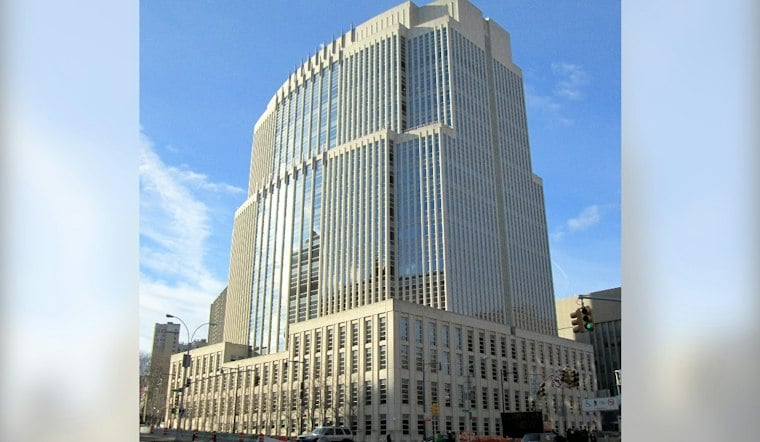
A 25-year-old Chinese national living in Brooklyn was sentenced to 78 months in federal prison Thursday after admitting he packaged methamphetamine and cocaine inside his own home and mailed the drugs to buyers across the country who placed their orders online. U.S. District Court Judge Damon R. Leichty handed down the sentence in South Bend, Indiana, closing out a case that stretched from the East Coast to the West Coast.
Jianhua Zhao pleaded guilty to conspiring to distribute methamphetamine and cocaine and to distributing five grams or more of methamphetamine. Zhao stored and packaged the drugs at his Brooklyn residence before shipping them to buyers nationwide.
Zhao was not operating alone. His co-defendant, 33-year-old Los Angeles resident Bao Xu, marketed the drugs through dark web storefronts from his own apartment while Zhao handled fulfillment on the other side of the country, per the DEA. Xu was sentenced back in June to 121 months in federal prison followed by four years of supervised release, also by Judge Leichty, for his role in the same conspiracy.
A Year of Deals Across All 50 States
Federal investigators say the operation ran for roughly a year and reached buyers in every state, averaging more than 260 drug deals and $55,000 in monthly sales before agents moved in, the DEA report states. Authorities ultimately seized more than $2 million in virtual currency tied to the scheme. The drugs were mailed to buyers nationwide.
Dismantling the network took a coalition of federal and local agencies. The Drug Enforcement Administration, Federal Bureau of Investigation, and U.S. Postal Inspection Service led the investigation with help from local law enforcement in Indiana, New York, and California — including the NYPD and the Los Angeles County Sheriff's Department, the Justice Department noted. Local police in Mishawaka and St. Joseph County, Indiana, also assisted.
Prosecuted Under a Federal Task Force Targeting Foreign Trafficking Networks
Prosecutors brought the case under the Homeland Security Task Force initiative, created pursuant to Executive Order 14159, which pools interagency federal resources to target transnational drug syndicates and foreign criminal networks, according to the DEA.
Eighty-five percent of Zhao's 78-month sentence is 66.3 months, or about five and a half years.
His legal troubles will not end when his sentence does. Non-citizens convicted of federal controlled substance trafficking felonies face mandatory immigration detention and removal proceedings under the Immigration and Nationality Act once their prison terms are complete, according to U.S. Citizenship and Immigration Services, which classifies drug trafficking offenses as aggravated felonies under federal immigration law.
Part of a Wider Crackdown on Dark Web Drug Sales
Zhao and Xu's case fits into a broader pattern of federal enforcement against dark web drug operations that has unfolded across the country this year. In September, a Phoenix woman named Brejea Wrigley pleaded guilty to mailing methamphetamine and fentanyl nationwide after running her own dark web storefront, a case Hoodline covered in September. Months earlier, a Virginia man pleaded guilty in Chicago federal court to drug conspiracy charges tied to his operation of Empire Market, once a major global darknet marketplace before its federal disruption.
Federal authorities have also gone after the financial infrastructure that props up these networks. In June, prosecutors in Philadelphia shut down a cryptocurrency mixing service that had processed $389 million in illicit transactions, much of it linked to dark web drug vendors and cybercrime groups, a case detailed in Hoodline's coverage of the $389 million crypto bust. The Zhao and Xu case involved dark-web sales and drugs mailed to buyers nationwide.




