

























































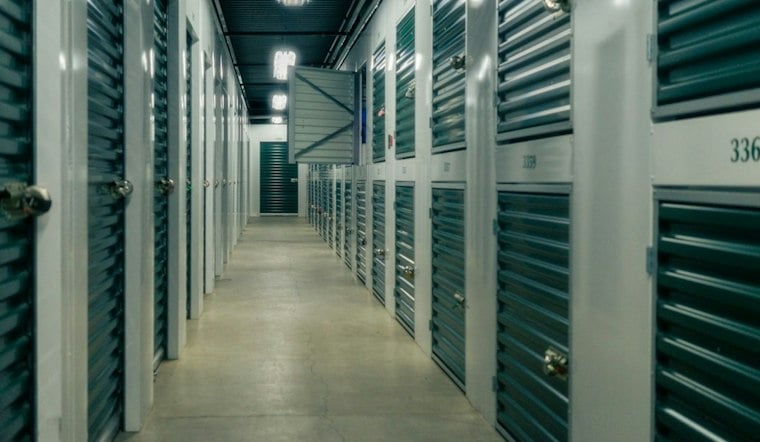
A Brooklyn woman lost nearly everything she owned after a government processing error led to the auction of her storage unit — one that held an urn containing her son Shavon's ashes. Nina Davila, an artist and former professor who was experiencing housing instability, had been keeping her belongings in a storage unit paid for through public assistance when the mistake unfolded, a loss that is now driving a push for new state legislation known as Shavon's Law.
According to FOX 5 New York, a New York City administrative error led to Davila's storage assistance being wrongly denied, and her unit was auctioned off before she had a chance to challenge the decision. The New York City Bar Association describes the sequence in stark terms: “When a government error resulted in the delay and then the denial of her payment, the facility auctioned everything before she could challenge it.” By the time Davila tracked down whoever had purchased her belongings, the City Bar says, Shavon's ashes had already been discarded.
Davila's situation reflects a broader reality for New Yorkers who rely on public assistance to keep a roof — or at least a storage unit — over what they own. Many people experiencing homelessness store their essential belongings in self-storage facilities, paying rent through monthly public assistance grants, according to the City Bar. In New York City, applicants are generally required each month to submit an application or storage bill to their benefits center, even though the Human Resources Administration maintains a policy of automated payments for residents of Department of Homeless Services shelters, the organization notes.
A Bill Named for a Lost Child
Davila's loss is now driving momentum behind Shavon's Law, a measure that aims to protect vulnerable New Yorkers from losing irreplaceable belongings to storage unit auctions. The bill was introduced in the state Senate as S.9870 on April 9, 2026, per the City Bar's own legislative report. It is sponsored by Senator Luis Sepúlveda, chair of the Senate Judiciary Committee, and was proposed by the City Bar's Social Welfare Committee.
The legislation would amend New York's Lien Law Section 182 to bar self-storage facilities from auctioning off the belongings of homeless New Yorkers while a storage-assistance payment, application or appeal remains pending. Under the proposal, social services departments would be required to certify within 10 days whether such a payment, application or fair-hearing request is in fact pending. If an agency fails to respond with that certification — or if a pending payment, decision or hearing is confirmed — the auction would be prohibited outright, the City Bar's report states. The bill would also require storage facilities to notify the relevant social services agency the moment an auction notice is issued.
How the Current System Works
Under existing law, a self-storage facility owner holds a lien on stored personal property to cover unpaid occupancy fees and related expenses, and that lien can ultimately lead to a lawful auction after nonpayment and notice, according to New York State's lien statute. Separately, city guidance shows HRA has the authority to approve a one-time storage-fee grant for an otherwise eligible applicant, covering up to the full amount currently owed in order to head off an auction, per New York City's Human Resources Administration. It was a breakdown in that very process, the City Bar says, that cost Davila her son's ashes.
Davila's case is not happening in isolation. The Legal Aid Society has reported that nearly 175 New York City rental storage units were slated for auction as financially strapped residents struggled to keep up with their bills, according to Legal Aid Society. The organization has also said that a mandated pause on such auctions would require either executive action from the governor or a change to the state's lien law by the Legislature — exactly the kind of statutory fix Shavon's Law is attempting. Legal Aid attorney Anne Callagy has described the auctions as especially harsh for people who are homeless, in the midst of relocating, or staying temporarily in a nursing home.
For now, Shavon's Law remains a bill under consideration in Albany, with its fate in the Legislature undetermined. What is documented is the loss that inspired it: a Brooklyn mother who, through no fault of her own, found that a bureaucratic delay had cost her the one thing she could never get back.



