

























































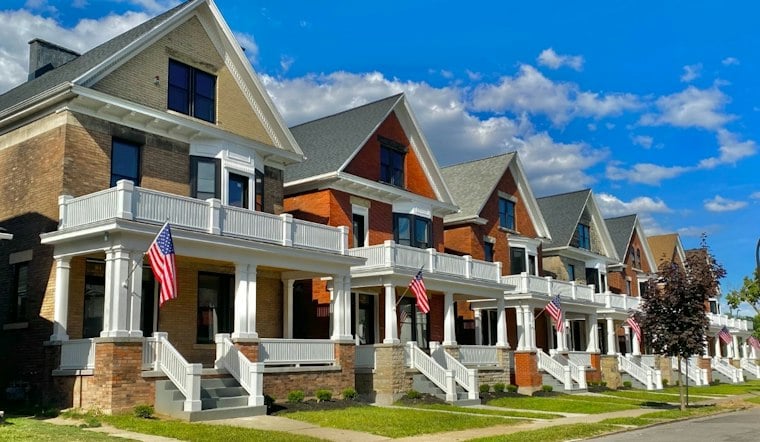
Buffalo house flippers turned a typical gross profit of $111,000 last quarter, posting a 76.6% return that ranked second among major U.S. metros — even as investors in Dallas, Austin and Houston barely broke even and San Antonio flippers actually lost money. The numbers come from fresh second-quarter 2026 data that shows a widening gap between Rust Belt renovation returns and a Texas housing market now tilted firmly toward buyers.
Buffalo Rides a Renovation Boom
The Buffalo metro area's 76.6% profit margin on a typical house flip trailed only Pittsburgh's 81.5% among metros with populations above 1 million, according to ATTOM. New Orleans wasn't far behind at 75%, while Virginia Beach and Philadelphia posted returns of 63.4% and 62.8%, respectively, per the same ATTOM report. The gross profit figure, which reflects the gap between a property's purchase price and its eventual resale price, doesn't account for renovation costs or other expenses that flippers absorb along the way, as newyorkupstate.com reported.
Buffalo's $111,000 typical gross profit puts it well ahead of fellow Upstate New York metro Syracuse, where flippers earned $59,950 on a 36.9% margin in the same quarter, according to the same newyorkupstate.com report. Both figures exclude the cost of repairs, a caveat ATTOM's own release reinforces nationally.
A National Slowdown, With Exceptions
Buffalo's strong showing arrives even as flipping profitability has cooled across the country. The typical national profit margin fell to 21.5% in the second quarter of 2026, down from 27.6% a year earlier, and typical gross profit slid to $60,526 from $71,000 over the same period, according to ATTOM. Nationwide, 77,991 single-family homes and condos were flipped during the quarter, representing 6.2% of all home sales — down from 7.3% a year earlier.
ATTOM CEO Rob Barber said the trend reflects a market still rewarding investors, just less generously than before. “Flippers are still making money in most markets, but the typical return continues to narrow,” Barber said, according to ATTOM's report. The typical flip also moved faster, taking 161 days from purchase to resale in the second quarter, five days quicker than the 166-day average a year earlier. ATTOM found that profit margins declined quarter over quarter in 126 of the 186 metro areas it analyzed, underscoring that Buffalo's performance bucked a broader downward pull.
Texas Flippers Caught in a Buyer's Market
The picture looks starkly different in Texas, where Dallas, Austin and Houston posted some of the lowest flipping margins among major metros at 1.8%, 2.8% and 3.7%, respectively, per ATTOM. San Antonio fared worst of all, with the typical flipped home posting a 0.3% loss on investment — the only major metro ATTOM tracked where flippers lost money outright.
Those weak returns track with a Texas housing market that has swung decisively toward buyers. Sellers outnumbered buyers by 115% in Austin and 116% in San Antonio in August 2026, while Houston saw sellers outnumber buyers by 131%, according to Redfin. Nationally, sellers outnumbered buyers by 57.9% in August, up from 52.1% in July, and Redfin found that nearly three-quarters of the 49 metro areas it analyzed — 36 in all — were buyer's markets. The estimated number of home sellers nationwide reached 1,534,918 in August, the highest level since the start of 2020, per the same Redfin analysis.
Why Buffalo Keeps Outperforming
Buffalo's flipping strength lines up with broader signs of demand in the region's housing market. As the New York Post reported, the Buffalo metro's median home sale price sat around $233,000 in September 2026 — roughly 42% below the national average — while nearly 60% of homes sold there went for above asking price. The Post's reporting also pointed to career professionals and remote workers increasingly relocating to the Buffalo area in recent years, drawn in part by a regional economy spanning healthcare, education, technology, research and financial services.
Rochester, meanwhile, sits at the opposite end of the flipping spectrum within Upstate New York. The metro posted the lowest flipping rate among major metros tracked by ATTOM, at just 2.7% of all sales, with flipped properties typically bought and resold within a year.





