

























































Buffalo Public Schools is moving ahead with a plan to permanently close three schools and repurpose five other buildings by the 2027–28 academic year, a restructuring that would affect roughly 2,300 students and eliminate 108 full-time equivalent positions across the district, including about 73 teaching roles.
The proposal, detailed in reporting by WGRZ, has split parents and staff between those who see it as overdue fiscal discipline and those who fear the loss of neighborhood school hubs. Three buildings would close permanently under the plan: PS 59 Dr. Charles R. Drew Science, PS 131 Academy School @ 86, and PS 366 Research Laboratory High School, according to BTPM. Five other schools would be repurposed for alternative district uses rather than shuttered outright, the station reports, allowing the district to retain control of those buildings while shifting their educational or administrative functions.
Why the District Says It Has No Choice
District officials project the closures and consolidations will generate approximately $24 million in annual operating savings, per the same BTPM report. That figure is central to the district's pitch, since Buffalo Public Schools projected a $78.8 million deficit for the 2025–26 fiscal year and has signaled that the 2026–27 budget will be the last year it can lean heavily on reserve funds to balance its books, according to WGRZ's reporting. As pandemic-era federal aid expires, the station notes, reserve funds that have shielded the district from deeper cuts in recent years are running out.
Interim Superintendent Dr. Ebony Prophet-Bullock, who took over district leadership in July, said initial planning for the closure framework actually began back in March under former Superintendent Dr. Pascal Mubenga, the station reports. As Ben Tsujimoto reported for The Buffalo News, Prophet-Bullock presented the data behind the proposed closures and consolidations, with the district saying it weighed academic standing, enrollment decline, student attendance, program sustainability, staffing and resource alignment, building use, and the availability of nearby placement options for displaced students.
One Building's Numbers Tell the Story
The case for consolidation shows up clearly at PS 208 Riverside Academy, where district data presented showed the building operating at just 38% utilization, with a 43% graduation rate and an 18% enrollment decline. Those figures, reported by WGRZ, underpin a plan to merge Research Laboratory High School with Leonardo da Vinci High School inside the Riverside building rather than keep both programs running separately.
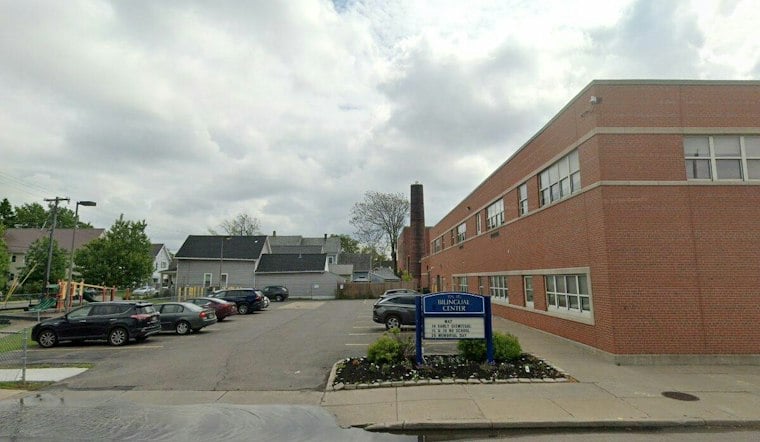
The restructuring also touches bilingual and special education programming. Under the plan, students at PS 33 Bilingual Center would be reallocated to Spanish-English bilingual programs at PS 3 D'Youville Porter, PS 30 Frank A. Sedita, and PS 76 Herman Badillo, according to WBLK. PS 90 would be converted into a dedicated pre-kindergarten special education center. Community advocates have raised concerns about preserving culturally grounded education as those programs get redistributed, the outlet reports.
A Second Attempt After January's Retreat
This is not the district's first swing at closures. In January, district leaders dropped recommendations to close PS 3 D'Youville Porter and PS 90 Early Childhood Center after heavy pushback from community members and staff, WGRZ reported at the time. Rather than shutter those campuses, the district instead eliminated 45 central office positions that budget cycle — a choice that underscores how politically fraught school closures have been in Buffalo even as the financial pressure has only intensified since.
Buffalo Public Schools is the second-largest public school system in New York State, serving more than 30,000 students across roughly 60 school facilities, according to the district itself. Declining urban enrollment is a broader trend affecting major metropolitan school systems statewide, which adds context to why Buffalo's leadership views structural downsizing as unavoidable rather than optional.
What Comes Next
Public input is still underway. The district held three town halls in October, including an October 8 virtual session that drew more than 170 community questions, WGRZ reported, ahead of a scheduled Buffalo Board of Education vote in December. Parents and community advocates have called for greater transparency about the criteria used to select which schools made the closure list, according to the station's reporting.
Whether the plan survives that vote intact, or follows January's pattern of retreat under community pressure, remains to be seen. For now, the proposal represents a restructuring the district has put forward as it tries to close its deficit before reserve funds run dry.




