

























































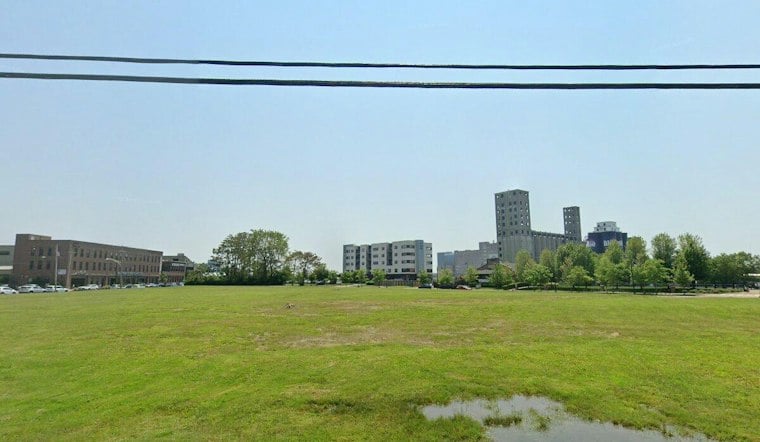
Buffalo has filed a lawsuit against Seneca Nation leaders seeking to halt construction of a proposed $10 million gas station, convenience store and cannabis dispensary at 5 Miami Street in the city's Old First Ward. The suit, filed in Erie County Supreme Court, asks a judge to stop work on the project until the developer obtains the environmental, site-plan and permitting approvals the city says are required. City officials say construction has already disturbed potentially contaminated soil near the Buffalo River.
According to Spectrum News, the Seneca Nation plans to build a Seneca One Stop fuel station and convenience store, a Nativa Cannabis dispensary, and space for a potential food-service tenant on the 3.4-acre lot near the Seneca Buffalo Creek Casino. The project would mark the second One Stop gas station in Buffalo, following a Perry Street location near KeyBank Center, as WIVB reports. The city's lawsuit seeks a court declaration that the property remains subject to Buffalo's municipal authority over land use, tax, police and environmental laws.
City and Nation Clash Over What's Being Built
Buffalo's lawsuit characterizes the project as a 28-bay truck stop and fuel depot, according to BTPM. The Seneca Nation disputes that framing, describing the project instead as a gas station with a 9,200-square-foot building that would house a convenience store, cannabis dispensary and a to-be-determined fast-food restaurant, per the same BTPM report. Seneca Nation President J. Conrad Seneca has accused Mayor Sean Ryan of mischaracterizing the development as a truck stop.
Mayor Ryan argues that the Seneca Nation must comply with local permitting, zoning and environmental requirements regardless of the land's status. “You have to show you've done the proper environmental [studies], site plan review, traffic studies,” Ryan said, according to WIVB. The city's lawsuit cites New York environmental review requirements, state building regulations and local zoning laws as the basis for its demand that construction pause.
Soil, Sewage and the Buffalo River
Buffalo officials allege that construction activity has disturbed potentially contaminated soil near the Buffalo River, an area that has undergone extensive environmental remediation and redevelopment. Construction preparations, including fencing and soil movement, have already begun at the nearly four-acre property, and Ryan has said disturbed soil is blowing around and entering the river. The development would also connect to public utilities whose sewer and stormwater outfalls discharge into the Buffalo River and the Great Lakes, according to Buffalo Niagara Waterkeeper, as cited by WIVB.
The lawsuit seeks to prevent additional construction while the court considers the city's claims. As NewYorkUpstate.com reports, the dispute has escalated from a city demand to stop construction and a stop-work order into formal litigation seeking a court injunction. The central legal question is whether the property's restricted-fee or sovereign-land status shields it from Buffalo's zoning, permitting and environmental rules.
Restricted-Fee Status at the Heart of the Dispute
The Seneca Nation acquired the Miami Street property in 2022 and pursued federal approval to place it into restricted-fee status under the Seneca Nation Settlement Act. The U.S. Department of the Interior determined in February 2023 that the Nation's application met the required criteria and directed that the property be placed into restricted-fee status, with New York State, Erie County and Buffalo all notified as part of that federal process.
Ryan maintains that restricted-fee status is not the same as sovereignty, and the city's lawsuit argues that designation does not eliminate Buffalo's ability to regulate the development. Buffalo has also filed a separate lawsuit challenging the Interior Department's 2023 decision itself, a case WIVB reports is distinct from the suit targeting construction at 5 Miami Street.
Seneca Nation Pushes Back
Seneca Nation President J. Conrad Seneca has rejected the city's authority to issue a stop-work order, which, according to the Nation, Buffalo posted at the property on October 6. “[A] Stop Work Order … bears no weight on our sovereign land,” he said, per WIVB. He has also accused Ryan of undermining Seneca Nation sovereignty, stating that the land is Seneca Nation land “now and forever.”
Seneca said he invited Ryan to meet with the Nation to discuss the situation, telling WBEN, “I invited the Mayor to meet with the Nation to discuss this situation.” He has criticized Buffalo's decision to pursue legal action rather than continue talks, even as earlier meetings, according to WKBW, had seemed to open a process for dialogue between the two governments. The Seneca Nation says it intends to continue construction, maintaining it has completed the federal process necessary to establish its authority over the property and plans to keep developing the land for the benefit of its people and to create local jobs.
What Happens Next
The Seneca Nation is separately negotiating a new gaming compact with New York State, though that process is unrelated to the Buffalo development lawsuit. Filing the lawsuit does not automatically stop work at the property, and as of the filing, a court had not ruled on the city's request. The outcome could help clarify the extent of municipal regulatory authority over federally protected Native nation land in New York.





