

























































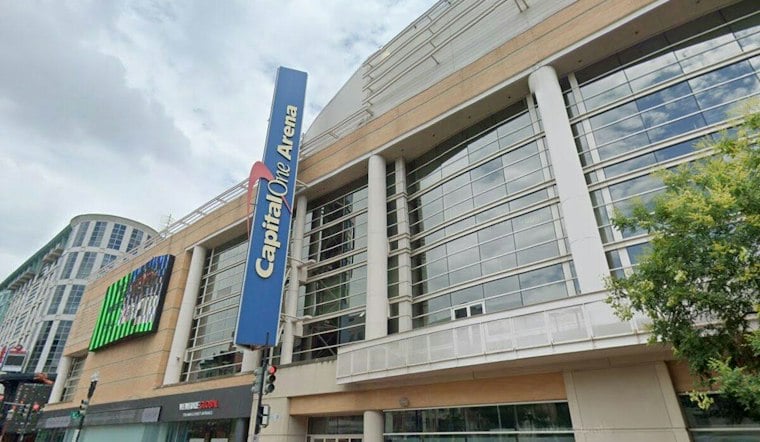
Fans who grabbed a hot dog or beer at Capital One Arena over the past couple of years may be sitting on free money. A $4.5 million settlement resolving claims that concessionaire Aramark tacked on a hidden 3% fee at checkout is now accepting claims, with notices landing in customers' inboxes before the Washington Capitals' home opener.
The payout stems from a lawsuit filed by the nonprofit Travelers United, which accused Aramark of advertising one price on arena concession menus and then adding a mandatory 3% charge once customers reached checkout, according to Axios. The lawsuit called the add-on a deceptive junk fee that violated D.C.'s Consumer Protection Procedures Act. Complaint photos reportedly showed concession menus with no mention of the surcharge alongside checkout screens displaying the separate 3% charge, and an information icon at checkout described the fee as covering ongoing maintenance and administrative costs — explicitly stating it was not a tip or gratuity for employees, per the same account.
The case, formally known as *Alexander Garner v. Aramark Management Services LP*, received preliminary approval on September 14 from D.C. Superior Court Associate Judge Shana Frost Matini, according to the Class Action Reporter. Garner, the class representative, replaced original plaintiff Travelers United during court-ordered mediation, the outlet reports. Aramark denies any wrongdoing and says it settled to avoid the cost and uncertainty of continued litigation, per the settlement agreement.
Who Qualifies and How Much They Could Get
The settlement covers anyone who bought food or drinks from Aramark-operated concessions at Capital One Arena and paid the 3% fee between October 1, 2024, and December 31, 2025. Rather than refunding individual purchases, the fund will pay equal cash shares to everyone who submits a valid claim — no receipts required, according to the Class Action Reporter. Customers simply need to certify online that they made an eligible purchase and paid the fee, though claims may be checked against Aramark's records.
Exactly how much each person receives depends on how many people file valid claims before the window closes, since the money is split evenly rather than tied to a percentage refund. Payments can arrive via Venmo, PayPal, direct deposit or check once the settlement is finalized. The deadline to file an online claim, object or opt out is December 4, 2026.
Lawyers' Fees and the Road to Final Approval
Class counsel can request up to roughly $1.5 million — about a third of the settlement fund — plus expenses, along with a $5,000 award for the class representative, with that request due by November 5. The remaining funds, after attorneys' fees and administrative costs are covered, go entirely to claimants. A fairness hearing is scheduled for January 15, 2027, and a judge must grant final approval before any payments go out.
Monumental Sports & Entertainment, which owns the Capitals and Wizards, was not a party to the lawsuit and is deferring to Aramark on the settlement and its terms, according to a spokesperson cited by Axios. Aramark continues to operate concessions at Capital One Arena.
Part of a Broader Pattern Against Hidden Fees
This isn't Travelers United's first swing at a D.C. hospitality fee. The group previously sued Clyde's Restaurant Group over a 3.75% surcharge and KNEAD Hospitality + Design over a 3.5% fee in late 2023, according to the Washingtonian, and both companies eliminated the charges in early 2024, prompting Travelers United to drop those suits. Beyond local dining, the group has waged a national campaign against so-called drip pricing since 2021, filing D.C. lawsuits under local consumer protection law against major hotel chains including Hilton, Hyatt, Sonesta and MGM Resorts over mandatory resort fees, as reported by Hotel Dive.
The legal theory behind these suits rests on D.C.'s unusually strict consumer protection statute. Under D.C. Code § 28-3905, plaintiffs don't need to prove a business intended to deceive customers to establish a violation, and they can seek statutory damages of $1,500 per violation or treble damages, whichever is greater, according to the Office of the Attorney General for the District of Columbia. Attorney General Brian Schwalb's 2023 price transparency guidance also bars businesses from hiding fees in fine print or revealing them only at checkout, and requires that service fees benefit staff directly unless a business explicitly discloses otherwise.
Many D.C. restaurants and venues began adding surcharges after voters passed Initiative 82 in 2022, which is phasing out the tipped minimum wage credit and will require full minimum wage for tipped workers by 2027, according to WUSA9. Businesses have often pointed to rising labor and operational costs as the reason for the new add-on fees.
The settlement also lands as Capital One Arena undergoes an $800 million public-private modernization project backed by D.C. and Monumental Sports & Entertainment, which includes a planned 65% expansion of concession space, according to Facilities Dive. The arena has generated more than $800 million in cumulative tax revenue for the District, with event visitors spending an estimated average of $267 per person in and around the downtown venue, per Monumental Sports & Entertainment.





