

























































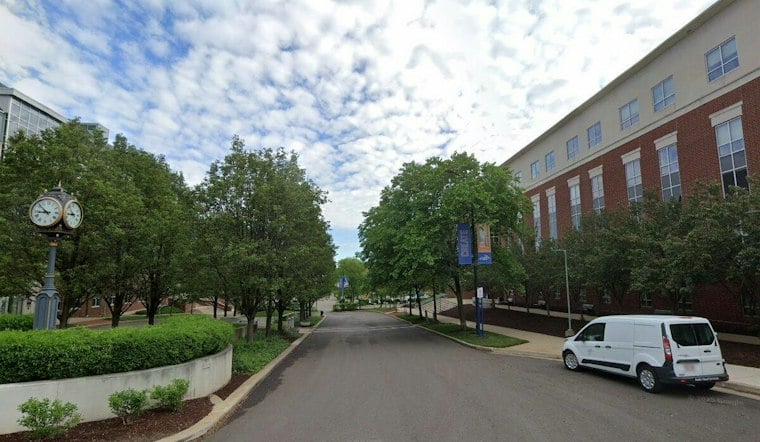
Cleveland State University's Board of Trustees voted Friday to approve a sweeping new financial aid program that will cover full tuition and mandatory fees for qualified incoming Ohio freshmen starting in Fall 2027. The initiative, dubbed the Cleveland State Commitment, is designed to put a four-year degree within reach for middle-income families who often earn too much for robust federal aid but still struggle to cover the bill.
According to Cleveland State University, the Board of Trustees officially approved the program on October 9, 2026, as a last-dollar initiative offering $0 tuition and mandatory fees for qualified incoming Ohio freshmen. WOSU Public Media and NEOhio.news had already covered the announcement on October 9 before FOX 8 News covered it on October 10 as Cleveland State works to confront the rising cost of a college education for Ohio families.
To qualify, applicants must be Ohio residents graduating high school in Spring 2027 with a cumulative GPA of 3.0 or higher, and their household's adjusted gross income must fall at or below $125,000, verified annually through the FAFSA, per the university's announcement. Students can keep the tuition coverage for up to eight consecutive semesters as long as they stay enrolled full-time — at least 12 credit hours per term — and maintain a 2.0 GPA. The program does not cover housing, meals, books, transportation, or course-specific fees, meaning families will still need to budget for the significant costs that come with living on or near campus.
A Broad Swath of Ohio Households Could Qualify
Cleveland State estimates that roughly one-third of its future incoming undergraduate class will qualify for free tuition under the Commitment, noting that about 73% of Ohio households fall at or below the $125,000 income threshold, according to WOSU Public Media. That income cap is notably higher than comparable programs at other Northeast Ohio schools — the University of Akron's own tuition guarantee caps eligibility at $85,000 in household income, the station's report notes, positioning Cleveland State as a more generous option for the region's middle-income families.
The program also arrives amid declining enrollment at some Ohio universities. CSU's higher income ceiling appears aimed squarely at families who have historically received minimal federal or state grant assistance despite genuine financial strain.
How the University Plans to Pay for It
CSU President Laura Bloomberg said the tuition program will be funded internally through existing institutional operational budgets and philanthropic endowment funds, rather than relying on new state appropriations, per the same account from WOSU Public Media. That funding model puts pressure on the university to manage its own finances carefully even as it extends a costly new guarantee to a large share of its incoming classes.
The Commitment also operates on a last-dollar aid structure, meaning institutional funds only kick in after federal Pell Grants and state awards like the Ohio College Opportunity Grant have already been applied to a student's bill. Families hoping to lock in the aid need to hit a February 15 priority FAFSA deadline, according to Cleveland State University.
Building on — and Beyond — Local Scholarship Efforts
The statewide program expands on the model of local efforts like Say Yes Cleveland, which was established in 2019 to provide tuition gap funding specifically for graduates of the Cleveland Metropolitan School District and its partnering charter high schools attending accredited postsecondary institutions. Unlike that district-specific scholarship, the Cleveland State Commitment is open to qualifying graduates from across the state.
University leadership has pointed to research from Georgetown University's Center on Education and the Workforce showing that median lifetime earnings for bachelor's degree holders run $1.2 million higher than for high school graduates — a benchmark statistic cited to justify the investment, according to NEOhio.news.
Part of a Broader Enrollment Turnaround Push
The free-tuition push comes as Cleveland State works to rebuild undergraduate numbers following falling international student enrollment and a $5.5 million tuition revenue deficit that prompted the university to hire a new enrollment chief earlier this year. Dr. Andrew Crawford, who joined as Vice President for Enrollment Management in February 2026 to address the shortfall, now leads the enrollment strategy behind the Commitment program.
With the Board of Trustees' approval secured, Cleveland State now turns to spreading the word to Ohio high schoolers ahead of the February 15 FAFSA deadline, betting that a straightforward tuition promise will help steady an enrollment picture that has been under pressure for much of the past year.





