

























































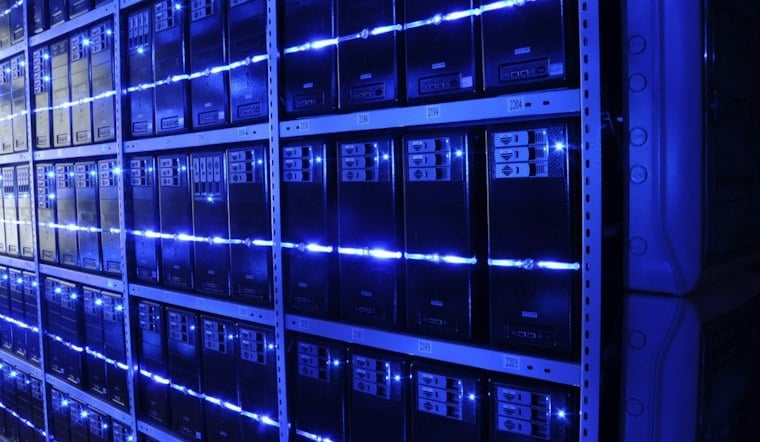
A sprawling AI data-center campus proposed for farmland near Clinton, Iowa, could bring one of the largest single developments the small Mississippi River city has ever seen — 10 buildings covering roughly 500,000 square feet each, spread across about 1,100 acres, an area close in size to Central Park. The project, backed by Blackstone-owned QTS, has split the community between residents eager for a massive new tax base and neighbors worried about noise, water use and what the development could do to their quality of life.
A Tax Windfall With Dueling Price Tags
Local leaders don't even agree on how big that windfall would be. According to The Atlantic, Clinton's mayor has said the project could generate $20 million in annual property taxes for a city whose entire budget runs about $24 million — but the president of local economic-development group Grow Clinton put the figure closer to $30 million a year. Separately, the Los Angeles Times reported that the project — in QTS filings referred to under the code name Saturday River for an anonymous client, per the Las Vegas Review-Journal — is anticipated to generate nearly $200 million in property taxes over its first decade alone.
QTS has said it requested no tax incentives for the project and would cover 100 percent of the utility improvements needed to support it, the Atlantic reported. An Alliant Energy spokesman told the magazine that costs tied to the data center's unusually heavy electricity demand would not be passed along to existing customers. It's a pitch meant to preempt one of the most common local fears: that hosting a hyperscale facility means footing the bill for upgraded power infrastructure.
Residents Organize Against the Project
Not everyone is convinced. Clinton residents have raised concerns that the data center could bring noise pollution, environmental degradation and rising utility costs, according to the Los Angeles Times. Some formed a group called Clintonians Against Data Centers in direct response to the plans, the Atlantic reported — joining a wave of grassroots organizing that has sprung up around similar projects nationwide. As reported by KWQC, Clinton residents voiced those concerns directly to local officials earlier this year as the AI boom reshaped conversations in town.
QTS has tried to get ahead of those worries on water specifically. The company says its Clinton data centers use a closed-loop cooling system that does not consume water for cooling once operational, per the Los Angeles Times. On top of that, QTS announced on Sept. 10 a $1 billion global water stewardship pledge, with a goal of becoming water positive by 2035, according to a PR Newswire release. The company also announced a $5 million workforce-development investment tied to its data-center development, as reported by Iowa Public Radio.
Part of a Much Bigger National Fight
Clinton is far from alone in grappling with this tension. Seven in 10 Americans oppose building AI data centers in their own area, including 48 percent who strongly oppose them, according to a Gallup poll of 1,000 adults conducted in March. Only about a quarter of Americans favor the projects locally, with just 7 percent strongly in favor, the same survey found — and that opposition to data centers actually outpaces resistance to nuclear power plants, which draws 53 percent opposition. A separate poll by The Economist and YouGov found roughly two-thirds of Americans oppose new data center construction in their communities, per NPR, which also reported that an estimated 640,000 people are now active in the anti-data-center movement, with 220 new opposition groups forming in just three months this summer.
That organizing has teeth. Local pushback halted or delayed roughly 75 U.S. data center projects worth $130 billion in the first quarter of the year, the Los Angeles Times reported, and grassroots opposition blocked or delayed more than $68 billion worth of projects in the second quarter, according to a report cited by RCR Wireless. A proposed 859-acre campus in Colleton County, South Carolina, was prevented after a resident lawsuit and community opposition, the Times reported, and a 10,000-acre project in Socorro County, New Mexico, was canceled outright after local objections.
Developers Try a New Playbook
Industry leaders now openly acknowledge the backlash is forcing a change in approach. Tag Greason, co-chief executive officer of QTS, has said the polling reflects genuine public concerns about data centers, according to the Las Vegas Review-Journal, which cited his more than 20 years in the industry. Chris Crosby, founder and CEO of rival developer Compass Datacenters, said developers need to raise the bar quickly to regain what he called their social license, the Review-Journal reported — remarks made around Yotta, an AI and data-center industry event held at Caesars Forum in Las Vegas on Sept. 28 that was expected to draw 6,000 attendees.
According to the Review-Journal, QTS and Compass have outlined four responsible-development commitments, including pledges to pay all project-related power generation and transmission costs, work with utilities toward a 10 percent reduction in utility bills for a project's lifetime, and commit to community benefits while avoiding NDAs and private meetings. That marks a shift from a data center industry the Review-Journal described as once shrouded in mystery and nondisclosure agreements, when companies reportedly met with mayors only after completing initial development steps as recently as 2021. Developers now say they must begin engaging on land, power, supply chain, labor and community concerns as much as three years before construction begins. In one example cited by the Review-Journal, Compass committed more than $110,000 to shade an outdoor court in El Mirage, Arizona, near a planned 108-megawatt data center there.
Whether that kind of outreach wins over skeptics in Clinton remains to be seen. For comparison, a QTS facility in Cedar Rapids, Iowa, is expected to generate almost $500 million in net property tax revenue over two decades, the Los Angeles Times reported — a figure that underscores just how much is riding on these projects for small Iowa cities, even as residents weigh those dollars against the noise, water and electricity questions still hanging over their neighborhoods.




