

























































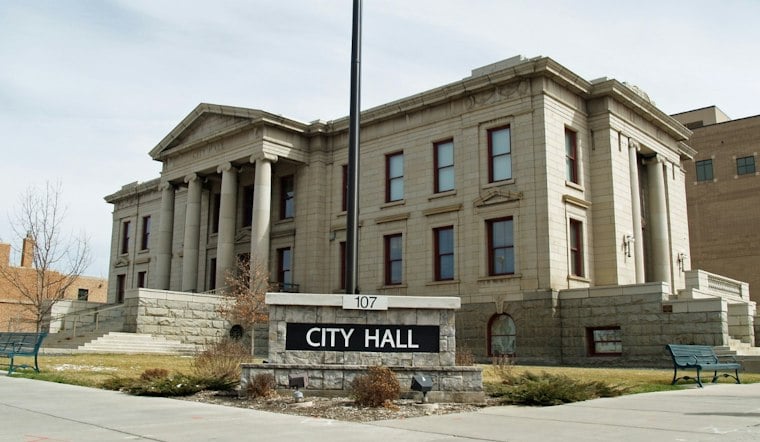
Colorado Springs City Council voted 5-4 Tuesday to convert the city's final furlough day of the year into a paid day off, meaning roughly 1,000 civilian employees will now be paid for Nov. 25 instead of losing a day's wages right before Thanksgiving. The council approved the broader budget ordinance containing the change by an 8-1 margin.
The shift affects civilian employees who would have been furloughed on Nov. 25, the Wednesday before Thanksgiving, according to the Denver Gazette. City employees have already taken four unpaid furlough days since February as part of the 2026 budget reductions, and Nov. 25 was set to be the fifth and final one. Before anything changes for workers' paychecks, the council still has to approve the budget adjustment and the paid-day provision a second time.
Sales Tax Windfall Drove The Proposal
The idea to cancel the furlough originated with Chief Financial Officer Charae McDaniel, who proposed eliminating the planned Nov. 25 closure during a council work session, per the Gazette's earlier reporting. McDaniel's proposal came as the city reported collecting sales tax revenue running millions of dollars above expectations during 2026. In August alone, the city brought in $24.7 million in sales and use tax, 11% more than the same month the prior year, the same report noted.
Canceling the furlough and paying employees normally would draw around $330,000 from that excess sales tax revenue, according to the Gazette's report. The city reported sales tax revenue above expectations, while the Gazette's earlier account tied the $9.2 million figure to the 2027 budget. Either way, the money was described as enough to let the city consider eliminating the last furlough day without new cuts elsewhere.
A Thank-You, Or An Unwise Precedent?
Councilmember David Leinweber first floated giving city employees a paid day off as thanks for accepting unpaid furloughs earlier in the year, and he voted to support the amendment alongside council members Nancy Henjum, Lynette Crow-Iverson, Kimberly Gold and Brian Risley. Fellow councilmember David Leinweber said the paid day off honors and elevates city employees. Henjum argued that city employees are citizens struggling with the economy too, and that their prior sacrifices should be acknowledged.
Not everyone was convinced the extra expense was necessary. Dave Donelson said simply ending the furlough would have sufficiently benefited city staff without the added cost, and he worried that paying staff not to work could look imprudent while residents themselves struggle financially. Donelson said the city's revenue ultimately comes from citizens, and that council has an obligation to be prudent with their money.
Brian Risley cast the sole vote against the full ordinance after voting in favor of the paid-day-off amendment itself. Risley said he was uncomfortable amending the budget because he believed dollars were likely already available within individual departments to cover the cost. McDaniel had told the council that larger departments, or those with unfilled positions, might be able to cover a single day's pay on their own, and Risley said he would have preferred departments find that money internally rather than amend the citywide budget.
Mayor's Office Weighs In
Wayne Williams, chief of staff to Mayor Yemi Mobolade, told council members there were strong arguments for the paid-day-off change and that the mayor would support it. The mayor's office had requested the budget supplement so that council would have a role in the decision to eliminate the furlough, though it had not initially asked for the furlough to be replaced with a paid day specifically. Williams also argued that adding the sales tax revenue to department budgets instead could strengthen those departments if the economy suddenly turned downward.
The budget supplement itself is designed to draw on excess sales tax revenue to cover the affected employees' salaries for the day. Sworn police officers and firefighters were not part of the furloughs to begin with and are not affected by this change either way.
What Comes Next
Council is set to take up the second required approval of the budget adjustment and the paid day off on Oct. 27. The 2026 furloughs were originally part of a broader effort to close a projected $31 million shortfall, cuts that Colorado Public Radio reported included $31 million trimmed from departments and services. Earlier reporting has indicated the city's proposed 2027 budget will not include furlough days and would instead propose performance-based pay increases for both sworn officers and civilian staff.
Colorado Springs is not alone in leaning on furloughs to manage budget strain. Dallas required most nonuniform city employees to take three unpaid furlough days, including one in July and two in September, to address a $30 million shortfall, with that city's manager, Kim Tolbert, saying furloughs were not the preferred solution but were necessary to reduce expenses, according to NBC 5 Dallas-Fort Worth. In Colorado Springs, the city has said its own furloughs were intended to reduce personnel costs without cutting essential public safety services, a framing echoed in earlier coverage from KRDO.





