

























































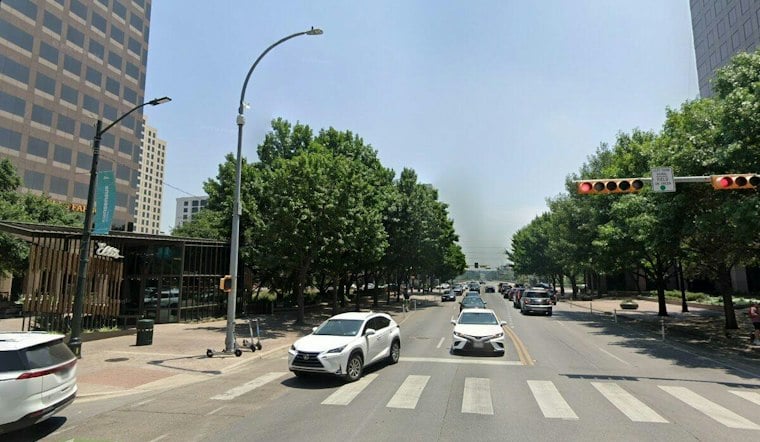
Construction crews have substantially completed work on the 200 block of Congress Avenue in downtown Austin, marking another step forward in a yearslong effort to rebuild the city's most iconic street from the Texas Capitol down to Lady Bird Lake. The project, nicknamed for rebuilding Austin's so-called Main Street of Texas, is advancing block by block, with crews now preparing to move onto the 300 block later this month.
A Decade-Plus Vision, Now Visibly Underway
The work is part of the Congress Avenue Urban Design Initiative, a long-planned overhaul aimed at improving pedestrian and cyclist mobility and creating more usable business space along the corridor, according to MySA. The initiative is renovating Congress Avenue all the way from the Capitol complex to Riverside Drive, and it's funded through a combination of the city's 2012 and 2020 bond programs, per the same report. The City of Austin is partnering with the Downtown Austin Alliance on the effort, which project leaders describe as building a human-centric, multi-functional complete street with a clear and attractive identity.
Construction on this first phase actually began in mid-July 2026, with crews working methodically down the corridor. Amalia Carmona, senior director of urban design with the Downtown Austin Alliance, said crews plan to begin work on the 300 block later in October, timed to start after the 2026 Austin City Limits Music Festival wraps up. Work on each block takes about three months, Carmona said, though inclement weather, protests, road races and other special events can all affect those targeted timelines.
What Counts as 'Substantially Complete'
City officials define substantial completion as finishing the expanded pedestrian space, upgraded bikeways, new planting areas and roadway construction for a given block — though some areas may still need minor landscaping and tree-lighting touches afterward. Phase 1 as a whole is expected to wrap by fall 2027, and officials say pedestrian access, along with access to businesses and buildings along Congress Avenue, will remain throughout construction, even as short-term lane closures and detours come and go block by block.
Carmona said the broader goal is to make Congress Avenue a vibrant economic, civic and cultural spine for downtown Austin. That framing echoes years of planning that predate the current construction phase: the City of Austin first partnered with the Downtown Austin Alliance to launch the redesign effort back in April 2017, using planning funds authorized under the 2012 mobility bond, according to a City of Austin document. Sasaki, the urban design firm behind the master plan, has noted that Congress Avenue's physical streetscape has remained largely static since the 1980s even as downtown Austin transformed into an international tech hub, a point the firm uses to explain why city leaders see the redesign as overdue.
Keeping Businesses Afloat Through the Dust
Businesses are expected to stay open during construction, though access routes may vary throughout the build. Project documents say disruptions to business access will be coordinated closely with business and property owners, and the City of Austin and Downtown Austin Alliance host pre-construction meetings before work begins on each block, bringing in impacted stakeholders like restaurant and shop owners to walk through the process and discuss ways to maintain day-to-day operations.
To help cushion the financial hit, the Downtown Austin Alliance launched a construction impact relief grant program for corridor businesses, offering reimbursement matches of up to $10,000. Compensation is based on whether a business has experienced on-site construction impacts for more than a year or less than a year, and businesses can seek reimbursement for things like rent stabilization, marketing and promotion, and signage and wayfinding. Carmona noted that one brewery used its grant funds to buy coffee equipment, allowing it to diversify its offerings during the disruption. Corridor businesses also receive emailed notices and physical flyers about available resources and can join a text communication channel for ongoing project updates.
What's Still to Come Up the Corridor
The current block-by-block work between Cesar Chavez Street and Seventh Street is just the opening act of a much larger plan. The full vision for the Congress Avenue Urban Design Initiative stretches 1.25 miles from Riverside Drive to 11th Street, with an estimated total buildout cost of $130 million in 2022 dollars, according to an ArcGIS StoryMap detailing the master plan. Sasaki's planning divides the full corridor into four character zones — the Civic Stage near the Capitol, the Heart of Austin commercial core, the Green Gateways near Lady Bird Lake, and the Bridge crossing the lake itself.
Future design plans for the stretch north of Seventh Street include a multi-block pedestrian and bicycle plaza between Seventh and 11th streets that would close that section to private vehicles while keeping cross streets open, according to Urbanize Austin. That conversion would remove roughly 90 on-street parking spaces along Congress Avenue, a trade-off city planners are weighing against the long-term goal of a pedestrian-first, multimodal corridor. Longer-range plans also call for physical safety barriers on the Ann W. Richards Congress Avenue Bridge to separate vehicles from cyclists and pedestrians, along with better viewing areas for the bridge's bat colony — though those later phases remain subject to future funding approvals, grants and public-private partnerships.
For now, the visible progress remains concentrated on the blocks closest to Lady Bird Lake, where new planting areas, upgraded bikeways and reconfigured roadway are already taking shape. Hoodline previously covered the plaza's public feedback phase, and the corridor's transformation has continued alongside other changes nearby, including new commercial towers and teardown approvals for aging buildings along the avenue.





