

























































Costa Mesa officials have agreed to give Ohio House, a sober-living facility that has been fighting for a city permit since 2017, another shot at approval. The City Council voted Tuesday to remand the case to Community Development Director Carrie Tai for a fresh look, with a new hearing set for Oct. 20.
The decision marks a reversal of sorts for a city that has twice denied Ohio House's appeals and won supportive rulings from both a federal appellate court in 2022 and a state appellate court in 2025. As reported by the Los Angeles Times/Daily Pilot, the case has sat pending before the council since September 2025, and the newly scheduled Oct. 20 session will be a de novo review — meaning the matter starts over, rather than simply revisiting the prior record.
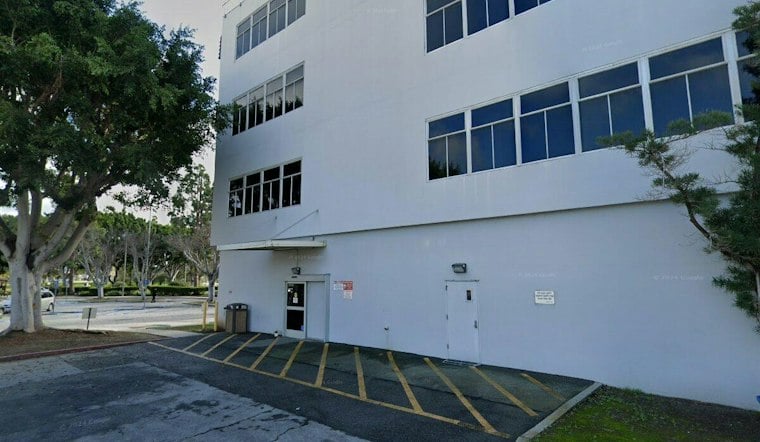
Ohio House occupies a half-acre lot at 115 E. Wilson St., where it runs a suite of single-family homes. The facility opened in 2012 as a residential program helping men recover from drug and alcohol addiction, according to the same Daily Pilot report.
A Permit Fight Rooted in a 2015 Buffer Rule
The root of the dispute dates to 2015, when Costa Mesa adopted sober-living regulations requiring a 650-foot buffer between such businesses. Ohio House remained unpermitted because, the paper reports, a state-licensed facility sat roughly 550 feet away — just short of the required distance. Operators sought an exemption from the separation requirement in 2017, but city planners denied that request, and the Costa Mesa Planning Commission later denied the facility's appeal as well, before the City Council itself rejected the appeal.
Ohio House renewed its push for accommodation in 2025, arguing that the citywide count of group homes had plummeted from 94 to just 16 — evidence, the operators contend, that the restrictive landscape has changed. The facility asked the city either to shrink the buffer from 650 feet to 550 feet or to treat its scattered dwellings as a single housekeeping unit, which would sidestep the separation rule altogether.
State Officials Weigh In Against the City
The renewed bid has landed amid growing scrutiny of Costa Mesa's housing policies from Sacramento. The state Department of Housing and Community Development advised the city back in 2023 to immediately stop enforcing and repeal its group-home ordinances and to revise its reasonable-accommodation policies, per the Daily Pilot's reporting. HCD also urged Costa Mesa to revise its reasonable-accommodation policies.
More recently, an HCD employee named Melinda Coy wrote in June that Costa Mesa's denials of Ohio House violate state law, maintaining that the city's actions run afoul of anti-discrimination, land-use and fair-housing requirements tied to people with disabilities. Resident and local activist Cynthia McDonald has asked that Coy's letter be included in future staff reports on the Ohio House matter, the outlet notes.
California's Attorney General has also entered the fray. A filing from the California Attorney General's Office argued that the record shows Costa Mesa violated the Fair Employment and Housing Act by refusing to let Ohio House operate within 550 feet of another group home instead of the city's 650-foot minimum. Rob Bonta separately sued Costa Mesa and four other cities over housing-element certification issues this summer — the Daily Pilot puts the filing date at July 16, while the Orange County Register reports that Bonta sued the cities in July.
Costa Mesa's Broader Housing Reckoning
The Ohio House rehearing arrives as Costa Mesa works through a larger state-mandated housing overhaul. Under the state's sixth housing-element cycle, which runs from 2021 to 2029, California jurisdictions must collectively plan for 2.5 million new homes, and Costa Mesa's share of that obligation is 11,760 units, 40% of which must target low- or very-low-income households, according to the Orange County Register. The city's updated housing element could ultimately be certified if officials finish rezoning remaining sites, including the Fairview Developmental Center, where a proposed mixed-use redevelopment could bring up to 4,000 new homes, the Register reports.
City Attorney Kimberly Hall Barlow has said Costa Mesa revised its reasonable-accommodation policies because of its housing element adoption, a 2024 federal court ruling, and a settlement reached with Insight Psychology & Addiction, the Daily Pilot notes. Barlow has also said the city cannot speak to whether other ordinances might change going forward.
The case has drawn supportive rulings from a federal appellate court in 2022 and a state appellate court in 2025. Whether the council's fresh review on Oct. 20 will produce a different outcome remains to be seen.



