

























































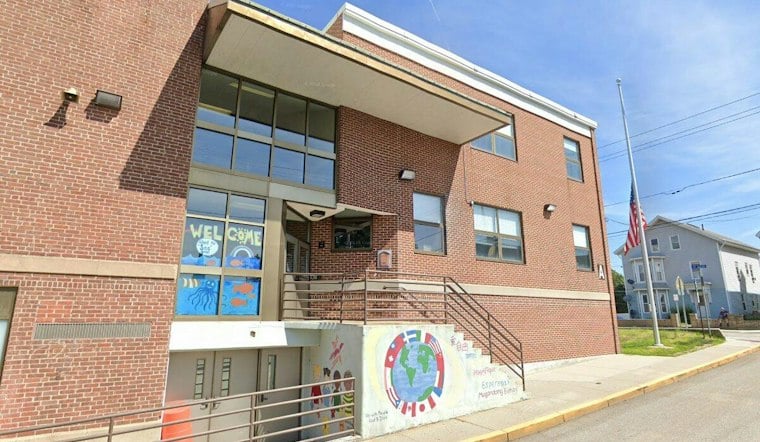
Cumberland's school committee voted 4-3 this week to keep working with TransPar Group on a districtwide redistricting plan, rejecting a push to suspend the process and turning back a separate motion to terminate the consulting firm's contract outright. The decision came after parents packed a meeting to complain that the proposed boundary changes felt rushed, leaving the committee to send TransPar back to the drawing board for a third option rather than scrapping the effort entirely.
The fight over whether to keep TransPar involved centers on a redistricting plan meant to address school crowding and put the new Bernard F. Norton Elementary building to use starting in 2027, according to The Valley Breeze. The firm was originally hired last year to study transportation efficiency and draft an elementary and middle school boundary plan, with the Cumberland School Committee voting 6-1 on September 11, 2025, to bring TransPar aboard, according to a Cumberland School Department communication. The district used the opportunity to secure TransPar's services through a contract RIDE had put out to bid, the same communication notes.
Committee member Andrew Bacon had asked that suspending the 2027-2028 redistricting process be placed on the agenda, and he told the board the public outcry over TransPar's proposals was astounding. Keri Smith backed slowing things down, arguing redistricting should be a community effort, while Jason Dean said he still had not received answers about the directions given to TransPar and opposed letting the firm continue its work. All three voted to suspend the process, but the motion failed 4-3, with Kerry Feather among those who ultimately voted to keep working with TransPar after saying she had changed her mind about ending the contract and wanted one more option from the firm.
Parents Say Boundary Shifts Keep Coming Too Fast
The frustration voiced at the meeting didn't come out of nowhere. The committee had already approved an elementary redistricting plan on March 14, 2024, for the 2024-2025 school year, according to a Cumberland School Department communication from that time. Parents at the recent meeting said the newest redistricting process felt rushed and that the student-movement options on the table were poorly thought through, per the Valley Breeze account.
Underlying the tension is a capacity mismatch baked into the district's own facilities. Garvin Elementary was projected by Superintendent Philip Thornton to reach 112 percent capacity next year, with Ashton Elementary projected to hit 101 percent, Thornton warned that doing nothing would leave crowding issues unresolved at those schools. Committee member Lisa Goldstein said the new Norton building would sit at just 63 percent full without an approved plan in place. Under the district's capacity framework, the rebuilt Norton building and Community Elementary each hold 575 students, while Ashton, Garvin, and JJ McLaughlin Cumberland Hill are capped at 432 students apiece, according to Cumberland School Department figures.
Enrollment Outpaced the District's Own Projections
Cumberland is gaining student enrollment amid capacity imbalances across its schools.
The crowding isn't limited to elementary grades, either: North Cumberland Middle School recorded 662 students compared with 481 at Joseph L. McCourt Middle School as of late 2026.
The district's figures show the current imbalance: B.F. Norton has 365 students against a capacity of 575, while Garvin has 472 against a capacity of 432.
Money Left on the Table, and a Contract Dispute
Money became a flashpoint of its own during the meeting. Smith questioned whether TransPar could actually owe the town money, saying the work delivered differed from what the firm had sold Cumberland on. The Cumberland School Department has paid TransPar $76,000 of its $79,000 contract, according to the Valley Breeze, leaving just $3,000 remaining on the deal — a detail that fueled arguments on both sides about whether it made sense to walk away now or see the consulting relationship through.
A motion to terminate the TransPar contract outright failed by the same 3-4 margin, with Feather, Goldstein, Amy Vogel, and a committee member identified only as Shea voting against termination. The committee did, notably, vote unanimously against requesting a quote from TransPar for any additional services beyond the current scope, even as Feather said the board would not be charged extra to request a third option from the firm.
What Happens Next
Thornton asked the board to give TransPar clear parameters, feedback, and restrictions for its next proposal, after the firm's first plan would have moved 200 students and a second option would have relocated 89 students. Feather suggested the next plan should avoid splitting streets and keep children assigned to nearby schools. Smith recommended the committee hold its next meeting in a larger venue, given the turnout the redistricting debate has drawn.
Vogel, who voted against terminating the TransPar contract, said there is still time to find a workable solution, noting that Cumberland's prior redistricting process eventually produced five different plans before landing on one, compared with just two options reached at this same point in the current process. Vogel has said boundary discussions will recur monthly leading up to a targeted final committee vote in February or March 2027, according to the Cumberland School Department. TransPar can continue examining less extreme options in the meantime, giving parents and board members several more months before any new map becomes official.
The transportation piece of TransPar's contract hasn't disappeared from the conversation either. Consultants presented bell-time scenarios on August 27, 2026, estimating that adjusted school start times and bus tiers could eliminate four peak vehicles and save the district roughly $400,000 annually, according to Citizen Portal. That potential savings adds another layer to the debate over whether to keep TransPar on board as the district works toward a final boundary decision early next year.





