

























































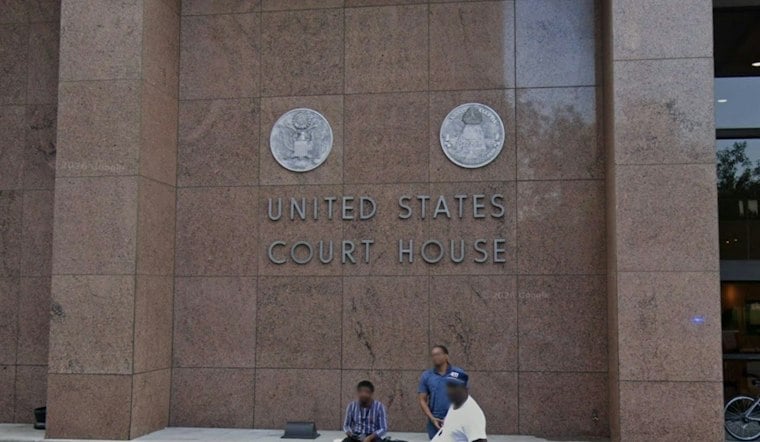
Four Texas residents have been indicted on federal charges accusing them of running a tax shelter scheme that concealed more than $1.5 billion in client income and cost the IRS more than $200 million in estimated losses. A federal grand jury in Dallas returned the indictment on September 22, 2026, naming Duncan John MacDonald, Sarah Duren, Richard Ronald Cayce and Thomas Weickgenant on charges including conspiracy to defraud the United States.
The case is one of several flagship prosecutions the U.S. Department of Justice rolled out as part of its first-ever National Tax Enforcement Surge, a coordinated nationwide crackdown targeting 76 defendants collectively responsible for more than $490 million in intended federal tax losses, according to the Department of Justice. Federal prosecutors allege the four defendants marketed a trust-based tax shelter to wealthy clients, some of whom paid setup fees exceeding $100,000, with promises that the arrangement could defer income taxes indefinitely without requiring clients to give up control of their money or assets, as reported by the Irving Journal.
MacDonald operated the shelter through a firm called Economic Strategist, pitching the sham trust arrangements to clients with the tagline that it allowed them to “own nothing but control everything,” according to Bloomberg Línea. Prosecutors allege the trust shelter falsely promised to shield roughly 90% of high-income clients' earnings from federal taxation while letting them keep control of the assets, per the Dallas Express. The indictment describes an arrangement in which income was assigned to sham trusts while clients retained control and benefit of the assets and earnings, and investigators say certain clients were encouraged to backdate trust documents and file amended federal returns seeking refunds of taxes paid in prior years.
A Felon With a History of Regulatory Trouble
MacDonald's history includes a five-year prison sentence following a 2013 healthcare fraud conviction, as Bloomberg Línea reports. When he allegedly solicited $2 million for a business described as developing “digital trusts,” he was under a court-ordered injunction prohibiting sales of unregistered securities. Indictment filings specify that the diverted $2 million was used to purchase a 2021 Rolls-Royce Ghost and make a down payment on an Ocean Alexander 28E luxury yacht, purchases that occurred while MacDonald remained barred from selling unregistered securities. MacDonald faces additional charges of wire fraud and financial transactions involving allegedly criminal proceeds.
During his October 14 court appearance in Dallas, MacDonald pleaded not guilty and was ordered held without bond after federal prosecutors persuaded the judge he posed a severe risk of flight and obstruction of justice, the outlet's report states. Prosecutors also allege that MacDonald and Duren, who are described as common-law spouses, hired a firm to erase online records of his past conviction and their tax business. Duren pleaded not guilty the same day, with her defense attorney arguing she was an “innocent spouse,” even as prosecutors allege she helped conceal MacDonald's ownership of the tax shelter business and provided false information to federal investigators.
Obstructing IRS Audits and Hiding Fees
Prosecutors say MacDonald and Duren allegedly attempted to evade federal income taxes on millions of dollars received from selling the tax shelter, filing false tax returns, using trusts to hide income, and paying personal living expenses through trusts and nominee accounts. Co-defendant Richard Ronald Cayce owned the distributorship responsible for licensing the trust tax shelter and allegedly received millions of dollars in fees he failed to report on federal income tax returns, according to the indictment.
Defendant Thomas Weickgenant prepared false tax returns for clients participating in the scheme and actively obstructed IRS audits by telling clients not to speak with investigators, according to the Department of Justice. He also allegedly instructed at least one client to disobey a federal district court order enforcing an IRS summons. Weickgenant faces charges of conspiracy, preparing false tax returns and corrupt interference with the IRS.
What Clients Who Bought In Could Face
The Milton Law Group says promoter investigations typically produce client lists that drive IRS audits. Tax attorneys advise anyone who participated in the shelter to seek independent counsel before responding to any IRS inquiry. It remains an open question how many of the shelter's high-net-worth clients will ultimately face secondary civil or criminal enforcement.
The 24-count indictment carries substantial statutory exposure. Individual counts include a maximum of 5 years for conspiracy to defraud the United States, 3 years per count for aiding preparation of a false tax return, 3 years for corrupt interference with the IRS, 5 years per count for the tax evasion charges against MacDonald and Duren, 3 years per count for Cayce's false-return charges, 20 years per count for MacDonald's wire fraud charges, and 10 years per count for his charges involving transactions in criminally derived property. The Department of Justice emphasizes that these are statutory maximums rather than predictions of final sentences, and actual penalties will be determined by the federal court.
Part of a Nationwide Crackdown
The indictment was announced by U.S. Attorney Ryan R. Raybould of the Northern District of Texas and Assistant Attorney General Colin M. McDonald of the Justice Department's National Fraud Enforcement Division. IRS Criminal Investigation is handling the probe, with the prosecution team including Assistant U.S. Attorney Eric B. Chen, Assistant Deputy Chief William Montague and Trial Attorney Max Willner-Giwerc of the National Fraud Enforcement Division's tax section.
The Dallas case lands amid a wave of similar prosecutions nationwide. Hoodline reported on an Atlanta case involving $74 million in fraudulent refunds. The DOJ also included in the same enforcement push a Kansas case involving credit-card-processing-business owner Ephantus Mwangi, who was sentenced to 51 months for failing to pay employment taxes, with an estimated loss of $1.5 million. After his October 14 appearance, MacDonald was ordered held without bond, and the case is before the Northern District of Texas.


