

























































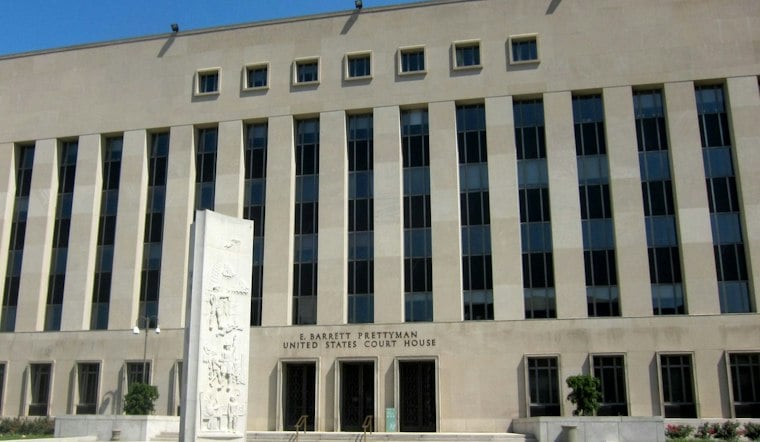
Two Washington, D.C. residents are facing federal charges after prosecutors say they built a yearslong scheme to lease luxury apartments across the city using stolen and fabricated identities, then lived in the units rent-free while property owners were stuck fighting lengthy eviction battles. Maliktra Derenorcourt, 27, and Philippe Oliver Gadie, 34, were named in a seven-count superseding indictment filed in federal court.
According to the WJLA report on the indictment, Derenorcourt, Gadie and others obtained leases at numerous apartment complexes in the District and surrounding areas starting around November 2023 by using stolen or fabricated Social Security numbers, fake employment letters, and so-called Credit Privacy Numbers. WalletHub's summary of federal guidance, including warnings from the Federal Trade Commission and FBI, says the legality of a CPN itself is less certain: using one instead of a real Social Security number on a credit application is illegal. The FTC says CPNs are almost always a scam, and the FBI has described their use in fraud. CPNs may consist of stolen identifiers belonging to children, seniors, or inmates, despite being marketed as legal credit-repair tools.
Once inside the units, prosecutors allege the defendants and others simply stopped paying rent, and in some cases sold access to the apartments for a fraction of what the leases were actually worth. Nearly all of the apartments involved ended up in eviction proceedings once landlords realized rent was not being paid, per U.S. Attorney Jeanine Pirro.
Exploiting a Slow-Moving Court System
The scheme's staying power, prosecutors say, depended heavily on the District's notoriously sluggish landlord-tenant court process, which can stretch on for months and in some cases more than a year before a tenant can legally be removed. Pirro described the case as a calculated fraud operation that weaponized stolen identities, exploited the eviction system, and caused significant financial harm across the District, per the WJLA report.
That timeline tracks with complaints property owners have raised for months. In a July 2026 letter to Congress, the D.C. Housing Recovery Coalition stated that eviction proceedings in D.C. Superior Court routinely take a year or longer because of court backlogs, a delay the group tied to more than $1 billion in citywide rental nonpayment losses, according to The Washington Times. Apartment complexes tied to the Derenorcourt and Gadie case suffered losses currently estimated in the hundreds of thousands of dollars, though investigators are still working to determine the full scope of the alleged scheme.
Fraudulent Applications Submitted in Batches
Prosecutors say the defendants submitted fraudulent rental applications in batches rather than one at a time, a tactic meant to move faster than property managers could screen them. Derenorcourt allegedly posed as female identity theft victims to help push the applications through, per prosecutors cited in the WJLA report.
Investigators also allege Derenorcourt and Gadie used Bitcoin and Cash App accounts opened under stolen or fabricated identities to move money tied to the scheme. In one instance, Gadie allegedly used a victim's name, Social Security number, and date of birth to open a Cash App account that went on to process hundreds of transactions in that victim's name. Investigators later recovered numerous luxury fashion items from Derenorcourt's apartment.
Immigration Status and Prior Arrest
Gadie is a citizen of Côte d'Ivoire who prosecutors say was living illegally in the United States after overstaying a nonimmigrant visa. Metropolitan Police Department arrest logs show Gadie was previously arrested in D.C. in April 2023, during a citywide firearm recovery operation in Northeast D.C., on charges including carrying a pistol without a license, unlawful possession of a firearm and ammunition, and receiving stolen property, according to the Metropolitan Police Department.
Federal court records show U.S. District Judge Ana C. Reyes set conditions of release for Derenorcourt on July 17, 2026, following initial grand jury filings, according to filings reviewed by PacerMonitor. The superseding indictment announced this week expands on those earlier charges. Homeland Security Investigations and IRS Criminal Investigation are both working the case as part of a D.C. fraud task force established under President Trump, according to the Department of Justice.
A New Fraud Division and a Backlogged Court System
The case lands just weeks after Pirro, whom President Trump named interim U.S. attorney on May 8, 2025, was confirmed to the post on August 2, 2025, established a standalone Fraud and Asset Recovery Division on September 23, 2026, consolidating prosecutors and investigators focused on complex civil and criminal fraud citywide, per the Department of Justice. Her background as a former Westchester County district attorney and television personality is detailed on Wikipedia.
The case highlights the role landlord-tenant court delays can play in disputes between housing providers and tenants.
The alleged operation involved identity theft, and investigators say they are still working to determine how many apartments and victims were ultimately touched by it.





