

























































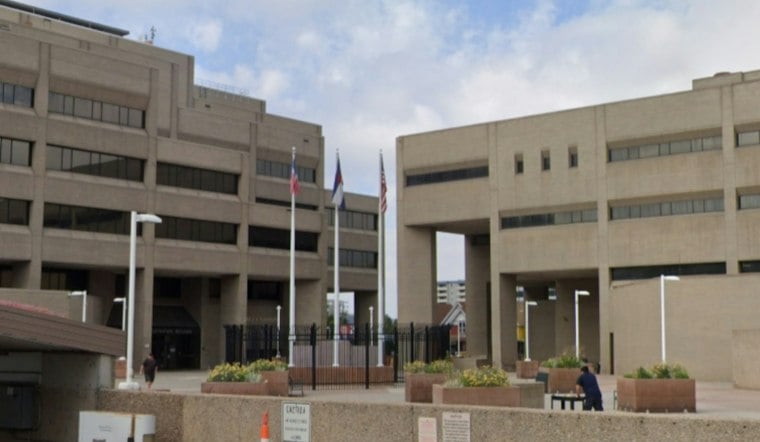
A man accused of stabbing his wife to death inside their Denver home in 2012 has been arrested after a years-long search, Denver police announced Thursday. Pedro Rios-Lopez was taken into custody in Mexico, according to the Denver Police Department, closing out a manhunt that stretched well over a decade.
The Denver Police Department credited its Cold Case Unit, the Denver Crime Lab and the Safe Street Task Force with making the arrest possible, saying in a post from Denver Police Dept.
that the agencies' “unwavering dedication made the arrest of Rios-Lopez possible and brings us one step closer to justice for the victim and her family.” A separate report from
kdvr.com
stated that Rios-Lopez was arrested in Mexico, suspected of stabbing his wife, Berta Rio-Lopez, inside their Denver home in 2012.
The killing dates back to April 28, 2012, when Rios-Lopez allegedly stabbed his wife, Berta Rios-Lopez, to death inside her house on South Bryant Street. Denver police at the time began investigating the woman's death as a homicide, according to a report from Westword, which described Pedro Rios Lopez as accused of murdering his estranged wife. The Denver coroner's office formally identified the victim as Berta Lopez, age 43, and listed her cause of death as multiple stab wounds, the same report noted.
A Years-Long Search Comes to an End
Exactly how Rios-Lopez was located after so many years, and what led investigators to Mexico, has not been detailed publicly. What is clear is that police are framing the arrest as the product of sustained, specialized work rather than a chance break, pointing to the combined involvement of the Cold Case Unit, the crime lab and the task force.
The Denver Police Cold Case Unit describes its mission as proactively combining advances in DNA technology with traditional investigative techniques to revisit unsolved homicides and sexual-assault cases, according to the City and County of Denver. The unit's stated motto, “We Will Never Forget,” underscores the department's long-term approach to cases like this one.
Denver's Broader Investment in Cold Cases
This arrest follows years of institutional investment in Denver's ability to reopen old homicide files. The department's cold case project launched in 2004 and has since provided DNA analysis for more than 1,100 cases, per a 2019 report from Denverite. In 2019, Denver Police and the Denver District Attorney's Office received a $500,000 federal grant specifically to help solve 72 violent-crime cold cases, including 64 homicides and eight sexual assaults dating from 1970 to 2016, the outlet reported.
Colorado as a whole has built out infrastructure for exactly this kind of long-delayed breakthrough. The state formed a cold-case task force in 2007, becoming the second in the country to do so after Arizona, according to Police Chief Magazine. That same legislation tasked the new team with building a statewide inventory of unsolved cases, a system the Colorado Bureau of Investigation still maintains today for homicides, long-term missing-person cases and unidentified remains going back to 1970.
The Odds Facing Cold-Case Investigators
Cases like this one remain the exception rather than the rule. A 2011 RAND study of more than 1,000 law enforcement agencies nationwide found that only one in 20 cold-case investigations results in an arrest, and just one in 100 ends in a conviction, Police Chief Magazine reported. The same research pointed to another persistent challenge: a survey of family members tied to Colorado cold-case homicides found that only one in 37 respondents felt satisfied with the level of communication they received from law enforcement.
Denver has seen other long-dormant homicide cases resurface in recent years. Police previously announced an arrest more than three years after a local guitarist was found shot and killed in the city, according to Denver7, illustrating that patient, resource-intensive investigative work can eventually produce results even years after a case goes cold.
Anyone with information related to unsolved cases in Denver can reach police services at 720-913-2000, and emergencies should still be reported by calling or texting 911.





