

























































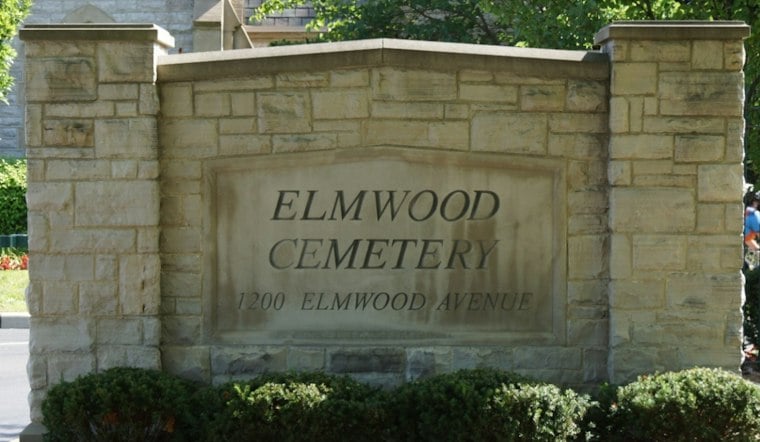
Detroit's oldest cemetery traded its usual quiet for a glowing nighttime art walk this month, as Elmwood Cemetery hosted the third night of Elmwood Alight on Saturday. The event sent visitors down a three-quarter-mile path lined with light displays and artwork from eight local artists, turning 86 acres of historic grounds into an after-dark gallery.
The festival, now in its second year, has grown considerably since it first launched. As reported by ClickOnDetroit | WDIV Local 4, organizers joined the station ahead of the event to preview the installations. Elmwood Alight debuted in October 2025 as the cemetery's first public after-dark light event, running across two nights before expanding into the three-night run staged this year, according to PLAYGROUND DETROIT.
PLAYGROUND DETROIT, a local contemporary art organization, curated the show, bringing in eight Metro Detroit artists who created 13 installations across the grounds, per Daily Detroit. Among the centerpiece works is a projection-mapping display by Kresge Arts fellow Gabriel Hall, cast onto the cemetery's historic 1856 chapel, a structure that was previously restored after a 1976 fire, the outlet reports.
A Burial Ground Rooted in Detroit History
Elmwood Cemetery was established in 1846 across 86 acres and is recognized as Michigan's oldest continuously operating non-denominational cemetery, sitting roughly two miles from downtown Detroit. The grounds were added to the National Register of Historic Places in 1982 as part of the Eastside Historic Cemetery District, which also includes Mount Elliott Cemetery and Lafayette Street Cemetery — three sites that historically served Detroit's Protestant, Catholic, and Jewish communities, according to the Detroit Historical Society.
The landscape itself carries its own pedigree. Frederick Law Olmsted, the renowned landscape architect who co-designed New York City's Central Park, was commissioned in 1890 to advise Elmwood's trustees, recommending native flora and natural contours to preserve a rural refuge as Detroit urbanized — guidance the cemetery later published in an 1895 booklet, the historical society notes.
Tucked within the grounds is the only visible above-ground section of Bloody Run Creek, the site where Ottawa Chief Pontiac's forces defeated British soldiers during the Battle of Bloody Run on July 31, 1763. The rest of the creek was routed underground into Detroit's municipal drainage system as the city expanded, per Visit Detroit.
An Arboretum and Resting Place for Detroit Leaders
Beyond its history, Elmwood became Detroit's first certified arboretum in 2015 after earning Level I accreditation from ArbNet, and its grounds now hold more than 1,300 trees representing nearly 100 species, some oaks over a century old, according to the Historic Elmwood Cemetery & Arboretum.
The cemetery also serves as the final resting place for 29 former Detroit mayors, including Coleman A. Young, the city's first Black mayor, who served from 1974 to 1993 and was a former Tuskegee Airman, alongside six Michigan governors and 11 U.S. senators, the Detroit Historical Society notes.
A Non-Profit's Push to Reimagine the Grounds
Public programming, educational tours, and historic preservation at Elmwood are managed by the Historic Elmwood Foundation, a 501(c)(3) non-profit established in 2005. Foundation grants support chapel restoration and reforestation projects on the property.
General admission tickets for this year's Elmwood Alight were priced at $25, with free admission for children under 10 and optional $10 tickets for guided curator and history tours. Gates closed nightly at 10 p.m. for the three-night run.





