

























































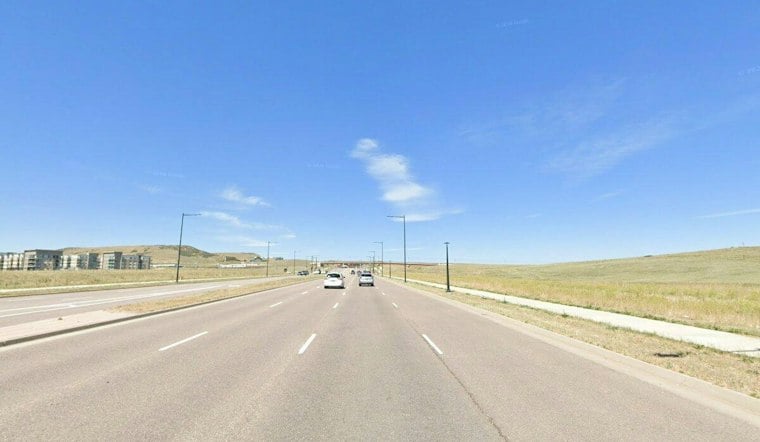
A driver fleeing the wrong way down Interstate 25 in the early morning hours Tuesday turned out to have seven prior DUI convictions, according to Douglas County deputies who intercepted and arrested him before anyone was hurt. The arrest has drawn attention not just for the danger of a wrong-way pursuit on one of metro Denver's busiest highways, but for the sheer number of prior convictions trailing the man behind the wheel.
Denver7 reported that deputies stopped a wrong-way driver on I-25 who had seven prior DUI convictions.
Seven convictions is not just a bad driving record — under Colorado law, it could mean serious prison time. In Colorado, a fourth or subsequent DUI offense is a felony. The state counts every prior lifetime DUI conviction nationwide with no lookback time limit, according to Flatiron Legal Advisors. Colorado added those felony penalties for repeat DUI offenders back in 2015, closing a gap that once let habitual offenders avoid prison.
A High Legal Bar for Prosecutors
Proving seven prior convictions in court is not as simple as reading off a rap sheet to a judge. In Linnebur v. People, the Colorado Supreme Court took up the question of whether prosecutors in felony DUI cases must prove a defendant's prior convictions to a jury beyond a reasonable doubt. That question could matter if Tuesday's arrest proceeds toward felony charges.
The Colorado Supreme Court resolved that question in 2020: prior DUI convictions are an element of felony DUI, not merely a sentencing factor, and prosecutors must prove them to a jury beyond a reasonable doubt. The ruling, Linnebur v. People, means the reported conviction count alone does not establish felony liability; the state must prove the required prior convictions in court.
This month, deputies wrapped up “Operation Tag Sweep,” a two-week crackdown that produced nearly 2,000 proactive traffic stops and 994 citations, along with arrests related to drugs and illegal firearms.
Not the County's First Wrong-Way Scare
Tuesday's I-25 incident is the latest in a string of wrong-way driving cases that have rattled Douglas County this year. In September, Lone Tree Police arrested a driver going the wrong way on RidgeGate Parkway who was found driving on a revoked license with three prior DUI convictions, according to the City of Lone Tree. He was charged with DUI and possession.
The pattern reflects a troubling statewide trend. Wrong-way driving crashes across Colorado climbed nearly 20% in 2024, according to Colorado State Patrol data reported by 9News, prompting troopers to urge drivers to stay alert on the state's highways. Nationally, the numbers are even starker: research from the AAA Foundation for Traffic Safety, published by the Colorado Department of Transportation this past April, found that fatal wrong-way crashes on divided highways nearly doubled from 278 in 2014 to 520 in 2023, with alcohol or drug impairment involved in roughly three-quarters of those incidents.
The latest national analysis adds detail to the risk picture: AAA Foundation research published by CDOT found elevated fatal-crash risk among wrong-way drivers who were alcohol-impaired or lacked a valid license. The analysis also identified darkness and dawn or dusk as risk factors. Those are population-level findings, not evidence about what caused this particular driver to enter the wrong lanes.
Technology Aimed at Catching Drivers Before a Crash
Colorado has also invested in infrastructure meant to catch wrong-way drivers before they collide with oncoming traffic. CDOT has tested thermal sensor detection technology on I-25 ramps that triggers flashing electronic warning signs and alerts state dispatchers within two to three seconds of a driver entering the wrong way, according to CBS Colorado. The system was designed specifically to give drivers and responders a critical head start on a corridor where split-second timing can mean the difference between an arrest and a tragedy.
For drivers who encounter a vehicle traveling the wrong way, Colorado State Patrol guidance is to protect themselves first: steer right and slow down or stop if it is safe, avoiding sudden braking that could cause a rear-end crash. Once clear of danger, call 911 and give a location such as a mile marker or nearby landmark. A driver who realizes they are going the wrong way should pull over, turn on hazard lights and call 911, the patrol advises in its wrong-way driving safety guidance.
Hoodline has previously reported on the sheriff's office's holiday DUI crackdowns.





