

























































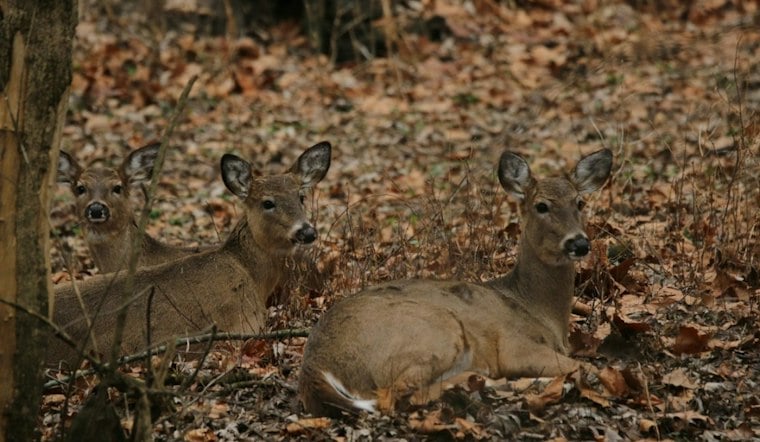
Dublin, Ohio is moving ahead with a plan to remove more than 100 deer from the city over the next year, with nighttime culling operations set to begin November 1 and run through the end of March. City leaders say nearly 500 deer are currently roaming Dublin, and the goal is to shrink that population enough to ease traffic collisions and restore balance to local ecosystems.
Dublin residents got a chance to weigh in on the plan at a public meeting Thursday evening in council chambers, starting at 6 p.m., according to Fox 28. The meeting served as a final community touchpoint before licensed professionals from the USDA's Wildlife Services program begin targeted removals at night, focusing on areas of city-owned land where deer gather most, per the same report.
Why Dublin Says the Herd Has to Shrink
The push for active population control traces back to a May 2023 study from the Ohio State University School of Environment and Natural Resources, which estimated Dublin's deer density at 50 to 85 deer per square mile, according to the City of Dublin. That figure sits well above the 20 to 25 deer per square mile that wildlife experts consider healthy, and OSU researchers established the baseline using camera traps and field observations across the city.
To pinpoint exactly where deer were congregating, Dublin brought in commercial operator Dark Horizon Drones in April 2026 to conduct an aerial thermal imaging survey, with two enterprise drone pilots systematically mapping the entire municipal boundary to track herd movements ahead of the program, the city says.
The Price Tag and Where the Meat Goes
Dublin City Council has pegged the overall cost of the program at approximately $168,263, covering the USDA Wildlife Services contract, meat processing, Dublin Police Department staffing, and entrail composting, with funding structured through the city's third-quarter supplemental budget request. Harvested venison will be processed for the Dublin Food Pantry through a contract with Thurn's Specialty Meats in Columbus, at $130 per deer, for an estimated total of $13,000 to $16,250 — Thurn's was chosen for its proximity to Dublin compared to regional correctional facilities that are sometimes used for similar processing elsewhere.
City leaders say the removals are meant to do double duty: help balance the local ecosystem while also lowering the number of car crashes tied to deer on city roads, per Fox 28's reporting.
Why Non-Lethal Options Were Off the Table
Dublin didn't jump straight to culling. The city first tried non-lethal measures, adopting Ordinance 47-23 in November 2023 to ban feeding wild animals on private property, a step meant to stop deer from gathering in residential neighborhoods; that ordinance was later amended in April 2024 to refine its regulatory language.
But broader non-lethal fixes simply aren't legal options in Ohio. Relocating captured deer is prohibited under state law due to animal welfare concerns and the risk of spreading chronic wasting disease, while fertility control and sterilization are restricted to research projects only, the city explains. That left USDA-led culling as the primary viable path forward for reducing the herd.
Clearing the Way for Night Operations
In September 2026, Dublin City Council introduced Ordinance 51-26 to temporarily waive firearm discharge prohibitions on designated city-owned non-park parcels and approved non-residential private lands, clearing the way for USDA crews to operate, according to Citizen Portal. The waiver applies specifically from November 1, 2026, through March 31, 2027, and residential properties remain excluded from the operations.
A Regional Pattern Playing Out in Parks Too
Dublin isn't alone in grappling with surging deer numbers. At neighboring Glacier Ridge Metro Park, officials removed 54 deer in 2022, 43 in 2023, 66 in 2024, and 19 in 2025, after rapid land development pushed regional herds into park spaces, the City of Dublin notes. Metro Parks conducted its own controlled culling there alongside OSU vegetation study plots, mirroring the pressures Dublin is now responding to.
The timing lines up with a well-documented seasonal spike in danger on the roads. According to Ohio State Highway Patrol data reported by WBNS-TV in 2023, nearly half of all deer-vehicle crashes in Ohio happen during the fall breeding season between October and December, and state agencies remove more than 13,000 deer carcasses from roadways every year. Locally, Dublin recorded 11 deer-vehicle collisions in 2024 and Dublin Police dispatched 19 severely injured deer found on city roadways that same year, according to the city, which tracks the incidents on a public digital dashboard mapping dead deer pickups and collision locations.



